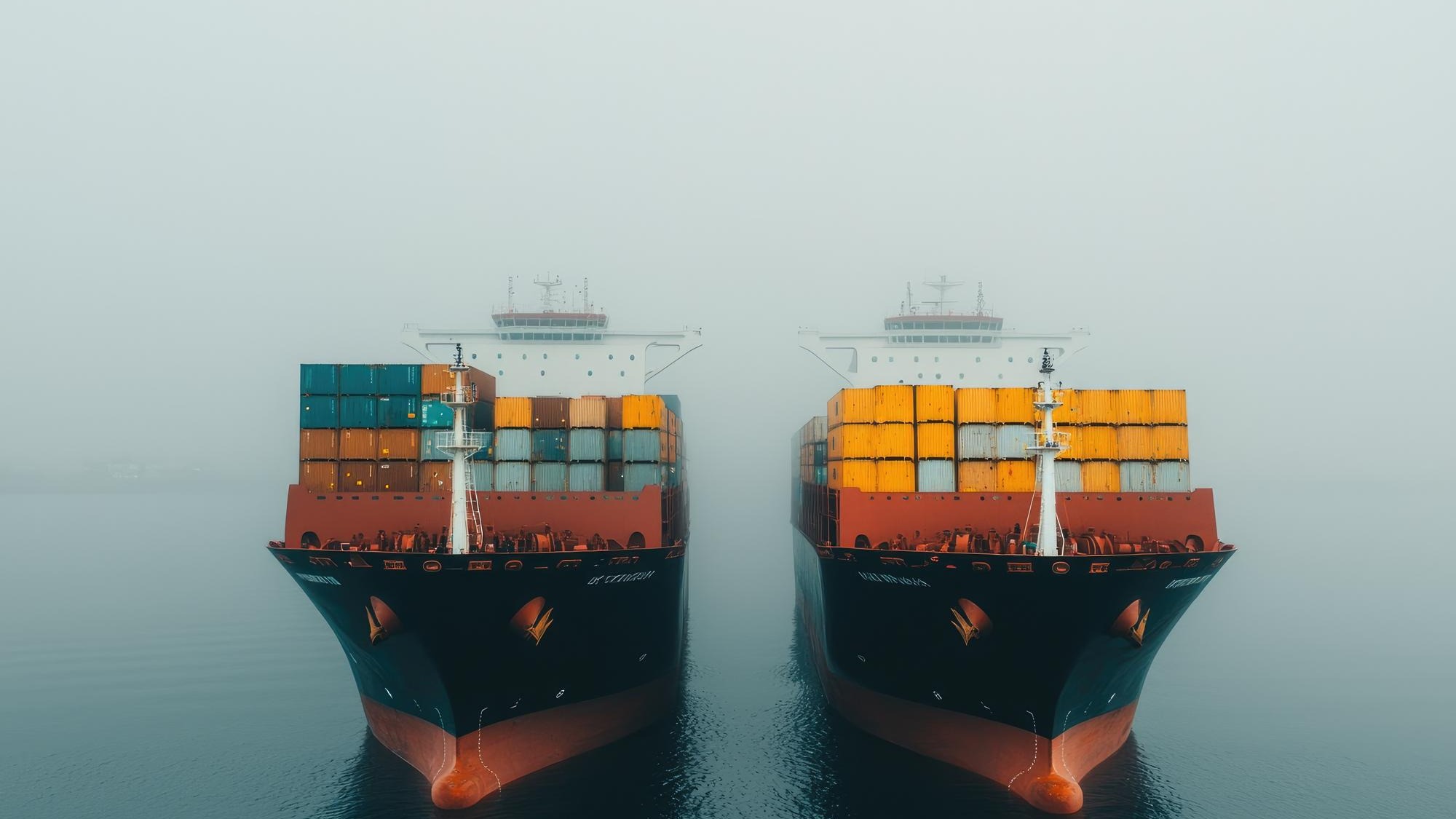
The first wave of federal tariff refund checks began landing in importer accounts this week, part of a roughly $166 billion repayment effort that ranks among the largest customs reversals in U.S. history. The money, collected under the International Emergency Economic Powers Act and now being returned with interest, is flowing exclusively to the companies that originally paid duties at the border. Consumers who spent months absorbing those same costs through higher prices on electronics, clothing, auto parts, and household goods will not receive any portion of the refunds. No federal program, no pending legislation, and no executive order requires importers to pass a single dollar along to the people who ultimately bore the burden.
Where the $166 billion figure comes from
The refund total traces to a court filing by Brandon Lord, a senior U.S. Customs and Border Protection official, who detailed the scale of the undertaking. Lord disclosed that CBP would need to reprocess millions of individual import entries and warned that doing so through the agency’s existing manual system would require an estimated 4.4 million hours of labor, a workload that could stall refunds for years.
To avoid that bottleneck, CBP is building an automated electronic system designed to recalculate duties, flag overpayments tied to IEEPA tariffs, and generate refunds with interest. A CBP official projected in the same filing that the system could be operational within roughly 45 days, though the agency has not published a firm launch date. Government technology rollouts routinely slip past initial targets due to testing requirements, cybersecurity reviews, and integration problems with legacy databases.
CBP has also posted a public FAQ on its website spelling out which tariff codes and collection periods qualify for reimbursement. The document defines eligibility, outlines required documentation, and makes clear that claims falling outside the specified codes will be denied. Certain earlier or unrelated levies are explicitly excluded.
What nobody knows yet
Lord’s filing references the number of importers and entries covered by the $166 billion total, but CBP has not released a breakdown by industry, product type, or company size. That means there is no public accounting of whether the largest refund checks are going to multinational retailers, mid-sized manufacturers, or niche importers. It also means small businesses that paid tariffs on a handful of shipments have no way to gauge where they stand in the processing queue relative to companies with dedicated trade-compliance teams.
The 45-day timeline for the automated system carries its own uncertainty. CBP has not described a fallback plan if development runs behind schedule, and the agency is simultaneously managing its regular enforcement caseload.
The largest unknown sits on the consumer side. During the period IEEPA tariffs were in force, prices rose on a wide range of imported goods. A Federal Reserve analysis found that tariff costs were largely passed through to U.S. buyers in the form of higher retail prices, consistent with decades of economic research showing that import duties function, in practice, as a tax on domestic purchasers. No government agency has published a study quantifying exactly how much of the IEEPA tariff burden specifically reached retail shelves, but the Federal Reserve’s findings and the broader body of trade economics leave little doubt that consumers carried a substantial share of the cost.
Why consumers are left out
The refund mechanism CBP built was designed to correct an overpayment between two parties: the federal government and the importers who remitted duties at the border. Consumers were never a party to that transaction. They paid higher prices at stores, dealerships, and online retailers, but those price increases were set by private companies, not by a government invoice. No receipt ties a specific household purchase to a specific tariff payment, and no federal agency tracks that chain in reverse.
That structural gap means there is no administrative pathway to reimburse shoppers, even if policymakers wanted one. Building such a program would require Congress to authorize it, fund it, and solve the problem of matching billions of individual retail transactions to the tariff entries that drove their prices up.
“There is simply no precedent for the federal government clawing back price increases that private companies imposed on their own customers,” said Clark Packard, a trade-policy research fellow at the Cato Institute, in a May 2026 interview. “The tariff refund goes to the entity that paid the tariff. That is how customs law works. Consumers are downstream, and the law does not reach them.”
Consumer advocacy groups have pushed back against that framing. Rick Claypool, a research director at Public Citizen, argued in a June 2026 statement that “if the government can find $166 billion to send back to importers, it can find a way to make sure working families who footed the bill are not left holding the bag.” Public Citizen called on Congress to require public reporting of how importers use refund proceeds and to explore rebate mechanisms for affected households.
As of June 2026, no member of Congress has introduced legislation requiring importers to share refund proceeds with downstream buyers. Several lawmakers have publicly raised concerns about the consumer impact of tariff refunds, but no congressional committee has scheduled formal hearings on the issue. No consumer-protection agency has announced an investigation into whether companies that raised prices during the tariff period are lowering them now that duties are being reversed. And nothing in CBP’s published guidance suggests the government plans to monitor how importers use the money once it arrives.
What importers can do with the money
Companies receiving refund checks face no restrictions on how they spend them. The payments can be reinvested in operations, used to pay down debt, returned to shareholders, or simply absorbed into general revenue. Some businesses may choose to reduce prices on goods that were marked up during the tariff period, but that decision is entirely voluntary and, for now, invisible to regulators.
Trade attorneys who represent importers say the refunds, for many clients, do not amount to a windfall. Companies borrowed against inventory, delayed hiring, and absorbed margin compression for months while tariffs were in effect. For those businesses, the refund brings them closer to whole rather than ahead. Whether that reasoning holds across industries, or whether it becomes a political flashpoint as refund checks grow larger, will depend on how much public scrutiny the program attracts in the coming months.