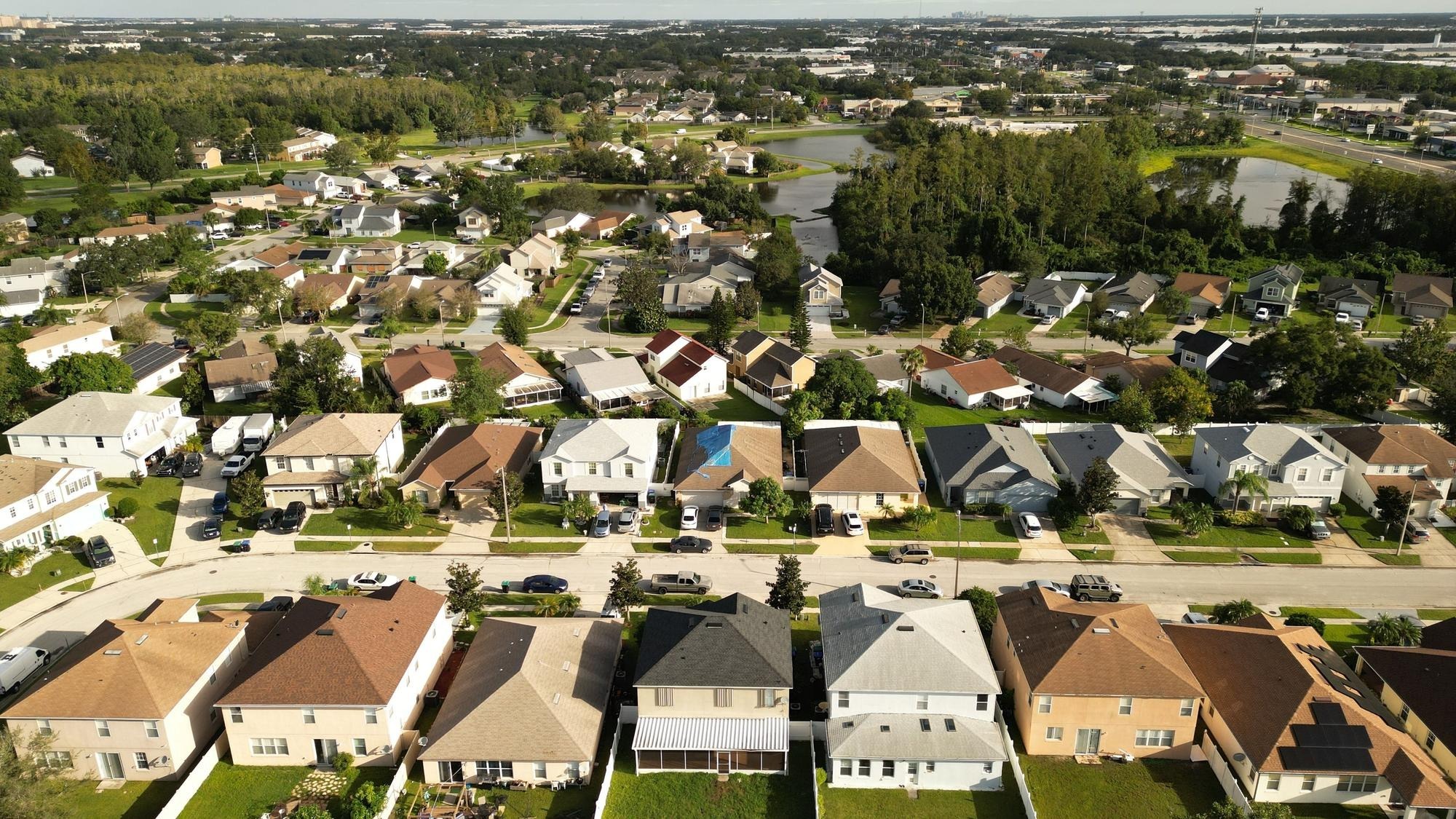
The roof over Brenda Colquitt’s head in Baton Rouge, Louisiana, needs patching. She knows it. But when her homeowners insurance premium jumped by more than $800 last year, she made a calculation millions of Americans are now making: pay the insurer or fix the house. She paid the insurer. The roof still leaks.
Colquitt’s dilemma is not unusual. A May 2026 survey from the Pew Research Center found that 71% of U.S. homeowners say the cost of their home insurance has risen in recent years. Of that group, 42% described the increase as significant. And the financial fallout is reshaping household budgets: according to consumer research from Bankrate and the Insurance Information Institute, roughly six in ten homeowners who experienced premium hikes have cut spending elsewhere to keep coverage in place, from canceling vacations to postponing home repairs they know they need.
The problem cuts across geography and income, but it hits hardest where budgets are already stretched thin.
How steep the increases have gotten
Pew’s nationally weighted survey, conducted through its American Trends Panel, offers the most rigorous public snapshot of how homeowners perceive the cost shift. Among the 71% who reported increases, the split was stark: 42% said premiums went up “a lot” while 29% said “a little.” The rest either saw no change or were unsure.
Those perceptions align with hard pricing data. According to S&P Global Market Intelligence, the average annual homeowners insurance premium in the U.S. crossed $2,300 by late 2025, up roughly 30% from five years earlier. In disaster-prone states, the increases have been far steeper. Florida homeowners paid an average of more than $4,400 annually as of early 2026, according to the Insurance Information Institute, nearly triple the national average.
Several forces converged to push prices higher. Reinsurance costs (what insurance companies pay to insure themselves against catastrophic losses) surged after consecutive years of billion-dollar weather events, with global insured catastrophe losses exceeding $100 billion annually in recent years, according to Swiss Re. At the same time, rebuilding costs climbed as lumber, roofing materials, and labor all got more expensive. Carriers responded by raising rates, tightening underwriting, or pulling out of high-risk markets entirely.
Homeowners absorbed the shock.
Who feels it most
Income shapes the experience dramatically. Pew’s data shows that lower-income homeowners were more likely to report premium increases, a finding that tracks with straightforward math: when a household earning under $30,000 a year faces the same dollar increase as one earning six figures, the practical weight is entirely different. Groceries get trimmed. A leaking roof stays leaking.
That deferred maintenance creates its own vicious cycle. Neglected repairs raise the risk of future claims, which can push premiums even higher. In some cases, insurers deny claims when damage stems from maintenance the homeowner failed to perform, or they decline to renew the policy altogether.
Geography compounds the pressure. Homeowners in states battered by hurricanes, wildfires, and flooding have absorbed some of the steepest increases. In parts of Florida, Louisiana, and California, annual premiums have doubled or more over the past five years. In extreme cases, private insurers have refused to renew policies, pushing homeowners toward state-backed insurers of last resort or into the ranks of the uninsured. The Insurance Information Institute estimated in 2025 that roughly 12% of homeowners nationally carried no homeowners insurance at all, a figure that has been creeping upward.
The sacrifices homeowners are making
Consumer surveys from Bankrate, the National Association of Insurance Commissioners, and other industry groups have consistently found that large shares of homeowners are cutting elsewhere to keep their insurance current. The specific tradeoffs reported include reducing discretionary spending, delaying home improvements, raising deductibles, and in some cases dropping optional coverages like flood or earthquake riders.
The nature of those tradeoffs matters. Canceling a vacation is a short-term disappointment. Skipping a roof repair or delaying electrical work is a compounding risk. Deferred maintenance can lower a home’s value, trigger claim denials if damage worsens, and in some cases void coverage provisions that require the property to be kept in reasonable condition. For homeowners already stretched thin, the choice between paying the premium and maintaining the home becomes a lose-lose calculation.
What states are doing about it
Florida offers the most visible example of a state trying to intervene. In a December 2022 special session, the legislature passed Senate Bill 2A, a sweeping reform package targeting the property insurance market. The law restricted one-way attorney fee provisions that insurers blamed for driving up litigation costs, restructured elements of Citizens Property Insurance Corporation (the state’s insurer of last resort), and aimed to lure private carriers back into the market.
More than three years later, the results are mixed. Several private insurers have re-entered or expanded in Florida, and Citizens’ policy count has declined from its peak. But average premiums remain among the highest in the nation, and homeowners in the most storm-exposed counties have seen little relief. The law addressed structural problems in the insurance market, but it could not repeal the underlying climate and construction-cost pressures that drive pricing.
Other states have tested different approaches. California imposed a temporary moratorium on policy non-renewals in wildfire zones and is overhauling its rate-setting process to allow insurers to factor in catastrophe modeling, a change regulators hope will keep carriers in the market rather than driving them out. Louisiana created a grant program to help homeowners fortify roofs in exchange for potential premium discounts. Colorado and several other states have explored community-level mitigation incentives.
None of these measures have eliminated the affordability problem, but they represent the range of policy tools states are testing as the gap between insurance costs and household budgets continues to widen.
What homeowners can do before their next renewal
Systemic fixes move slowly. Homeowners facing premium increases have several options worth exploring now:
- Shop aggressively. Insurance is not a set-it-and-forget-it product. Getting quotes from at least three carriers every year, or working with an independent agent who can compare multiple companies, remains the single most effective way to find a lower rate. Savings of 20% or more between carriers for the same coverage are not uncommon.
- Raise your deductible carefully. Increasing a deductible from $1,000 to $2,500 can meaningfully reduce annual premiums, but only if you have enough savings to cover the higher out-of-pocket cost in the event of a claim.
- Ask about mitigation credits. Many insurers offer discounts for impact-resistant roofing, storm shutters, updated electrical and plumbing systems, or monitored security systems. The savings vary by state and carrier, but they can add up to 15% to 25% off the base premium in some cases.
- Bundle policies. Combining home and auto insurance with the same carrier often triggers a multi-policy discount, typically 5% to 15%.
- Check state programs. Residents in high-risk states should look into whether their state offers wind mitigation grants, FAIR plan coverage, or other assistance programs designed to keep insurance accessible. Your state’s department of insurance website is the best starting point.
A problem that is not going away
The Pew data confirms what millions of homeowners already feel: insurance is taking a bigger bite out of the household budget than it did just a few years ago. For some, the increase is manageable but irritating. For others, especially lower-income homeowners in disaster-prone regions, it is forcing real tradeoffs between protecting the home and paying for everything else.
The forces driving premiums higher, including climate-related losses, rising construction costs, and volatile reinsurance markets, are not receding. If anything, they are intensifying. The 71% of homeowners who have already seen increases may not have seen the last of them.
The question now is whether the market can adapt fast enough to keep coverage within reach, or whether a growing number of Americans will quietly let their most valuable asset go unprotected. For people like Brenda Colquitt, the answer may depend on whether anyone fixes the system before the next storm fixes her roof for her.