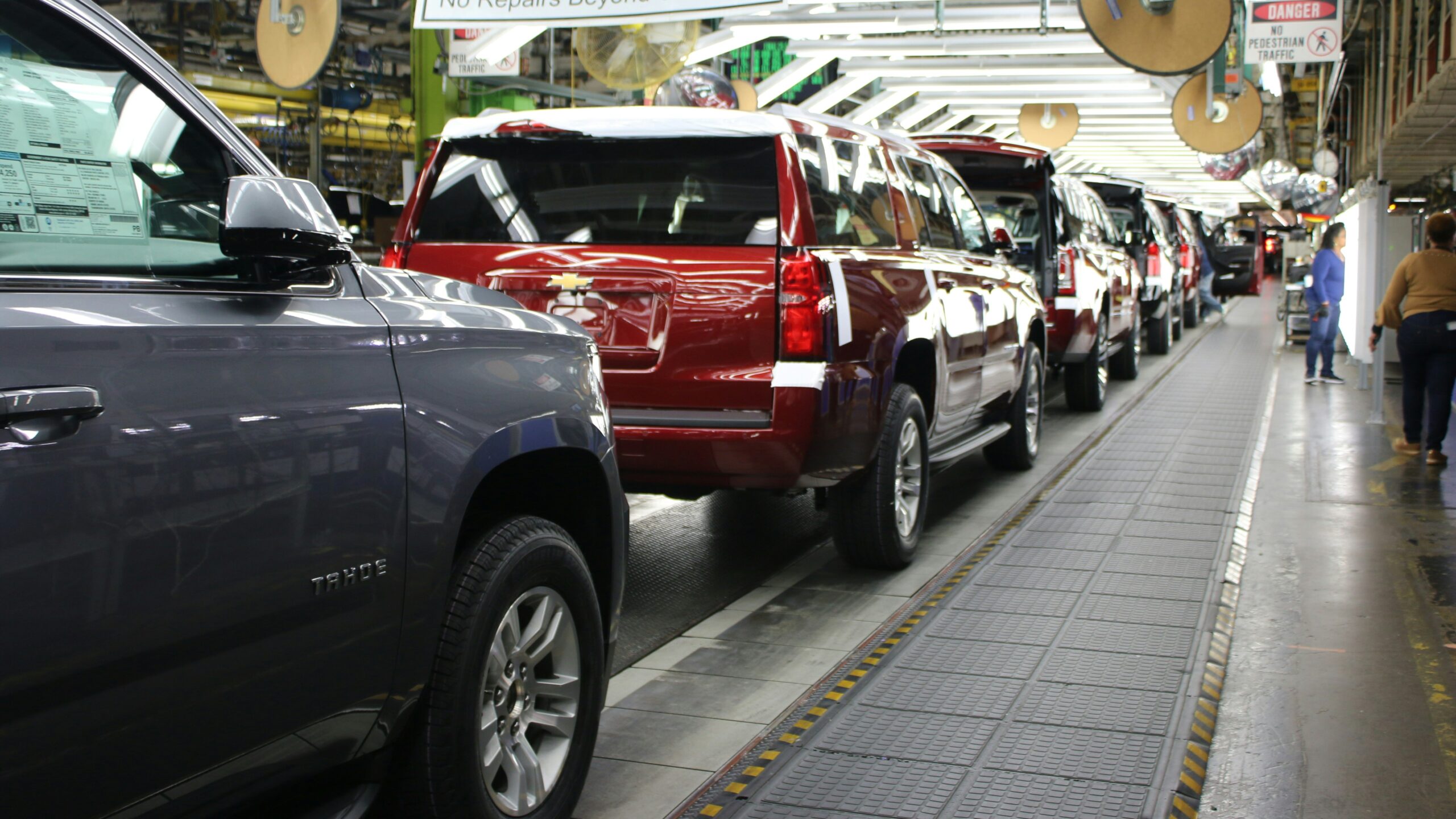
Ken Schnitzer has been selling luxury cars in Dallas-Fort Worth for more than 40 years. The CEO of Park Place Dealerships has watched oil busts, credit crunches, and a global pandemic rattle his showrooms. But when he stood before a North Texas business forum this spring and put a price tag on what tariffs have done to the auto industry, the figure still landed hard: roughly $35 billion in cumulative costs absorbed by major automakers since the first steel and aluminum duties took effect in 2018.
“That number represents what this industry has absorbed in tariff and compliance costs since 2018,” Schnitzer told the audience, describing the estimate as a composite drawn from automaker earnings disclosures, supplier conversations, and industry trade data.
A critical caveat: no transcript or recording of the event has been published, and Park Place Dealerships has not released a formal statement elaborating on the figure. No single manufacturer has confirmed it publicly. The $35 billion should be understood as Schnitzer’s characterization, not an independently audited total. But the economic research behind it tracks closely with what dealers and buyers are living through every day: tariffs and trade-compliance expenses are now quietly embedded in the price of nearly every new vehicle sold in the United States.
Where the costs come from
Start with the paperwork. A Federal Reserve research note published in July 2025 lays out how the U.S.-Mexico-Canada Agreement forces automakers to clear strict rules-of-origin thresholds before a vehicle qualifies for duty-free treatment. In practice, that means sourcing more steel, aluminum, and key components from higher-cost North American suppliers. Miss the regional-value-content target, and the vehicle gets hit with tariff penalties instead. The Fed’s analysis pegs these compliance costs at hundreds of dollars per vehicle. Multiply that across the roughly 15.5 million new cars and trucks sold in the U.S. each year, and the numbers climb fast.
That USMCA layer sits on top of the 25% tariffs on imported steel and aluminum that have been in place since 2018, plus the 25% tariff on finished vehicles imported from outside North America that the Trump administration imposed in April 2025 under a Section 232 proclamation. Even models assembled domestically carry exposure. A Ford F-150 rolling off the line in Dearborn still contains imported wiring harnesses, semiconductors, and drivetrain parts subject to duties at varying rates.
An effective tariff analysis from the Penn Wharton Budget Model, updated in December 2025, reinforces a point that often gets lost in political debate: importers pay tariffs at the border, not foreign governments. For automakers, those payments become line items on internal cost sheets that eventually surface as higher invoice prices sent to dealerships.
Domestic vs. import brands: who absorbs more
The tariff burden does not fall evenly. Automakers that assemble most of their U.S.-sold vehicles in North American plants, including General Motors, Ford, and Stellantis, face USMCA compliance costs and steel and aluminum duties but largely avoid the 25% finished-vehicle tariff. Brands that still import a significant share of their U.S. lineup from overseas, among them several European luxury marques and some Korean and Japanese nameplates, face that additional layer on every unit that crosses the border.
Some manufacturers have moved aggressively to reduce their exposure. Hyundai fast-tracked its Georgia assembly plant, the Hyundai Motor Group Meta Plant, which began production in late 2024, in part to shift volume out of the import column. Toyota has absorbed certain costs to protect market share on high-volume models like the RAV4, some trims of which are built in Japan or Canada. The net effect for shoppers: sticker-price increases tied to tariffs can vary by thousands of dollars depending on where a particular model is sourced.
What dealers and buyers are seeing on the ground
Average new-vehicle transaction prices in the U.S. have hovered near an estimated $49,000 in early 2026, based on Cox Automotive’s monthly market reports. (Cox publishes updated transaction-price data each month; the figure cited here is approximate and reflects trend data from its spring 2026 releases.) That is up from roughly $38,000 before the pandemic. Tariffs are far from the only force behind that jump. Supply-chain disruptions, the semiconductor crunch, a consumer shift toward higher-trim trucks and SUVs, and the cost of advanced safety technology have all played roles. But dealers say tariff-related surcharges now appear on factory invoices in ways they simply did not five years ago.
Schnitzer has described the mood on his own showroom floors in blunt terms, telling the forum audience that customers regularly ask why a sedan that listed for $42,000 two years ago now starts above $47,000. “They see the sticker and they walk,” he said, adding that his sales staff increasingly fields questions about tariffs that would have drawn blank stares a decade ago. While Park Place has not published data on walk-away rates, the pattern Schnitzer describes is consistent with broader industry trends: buyers are either trading down in trim level, extending loan terms, or leaving the new-car market altogether.
On the retail floor, the pressure shows up as shrinking incentives and tighter inventory. Automakers that once dangled thousands of dollars in rebates on slow-moving models have less room to discount when their own cost basis has climbed. Buyers who might have stretched into a new truck are holding onto older vehicles instead. S&P Global Mobility reported the average age of cars on American roads at 12.6 years in its 2024 study, a record at the time, and analysts expect the trend to continue through 2026 as affordability pressures persist.
Why the $35 billion figure resists easy confirmation
There are concrete reasons Schnitzer’s estimate is hard to pin down. Automakers do not isolate tariff expenses on a single line in their earnings reports. The costs scatter across customs payments, supplier price hikes, logistics rerouting, and compliance staffing, then get folded into cost-of-goods-sold figures that Wall Street analysts have to pick apart quarter by quarter.
Corporate strategy complicates the math further. GM has shifted sourcing to reduce tariff exposure. Hyundai’s Georgia plant is a billion-dollar capital bet driven partly by trade policy. Because the split between costs absorbed by manufacturers and costs passed to consumers varies by brand, model, and quarter, any single industry-wide total is inherently rough.
The Federal Reserve note and the Penn Wharton model both confirm that tariff-driven costs are real and substantial, but neither produces a consolidated automotive figure. Their value lies in documenting the channels through which tariffs generate expenses, not in endorsing a specific dollar total. Without more granular disclosure from automakers or the U.S. Trade Representative, the precise cumulative bill remains an open question.
How tariff costs follow buyers into the finance office
For a shopper walking onto a lot in North Texas or anywhere else, the policy debate over exact totals matters far less than the practical outcome. Research from the Federal Reserve and the University of Pennsylvania confirms that tariffs and compliance rules are adding measurable cost somewhere between the factory floor and the finance office. Whether that cost shows up as a higher monthly payment, a smaller trade-in offer, or fewer manufacturer incentives, it squeezes buyers already stretched by elevated interest rates.
Automakers do not routinely disclose tariff payments, compliance spending, or how much of those costs they pass along to consumers. That lack of transparency makes it harder for independent researchers to pressure-test claims like Schnitzer’s and leaves buyers with little way to know how much of their monthly payment traces back to trade policy rather than to the vehicle itself.
What the verified evidence makes plain: tariffs and USMCA rules are imposing substantial, ongoing costs on the American auto industry. The precise total, and how it splits between corporate balance sheets and consumer wallets, is still being written. The burden is real. The accounting is not finished.