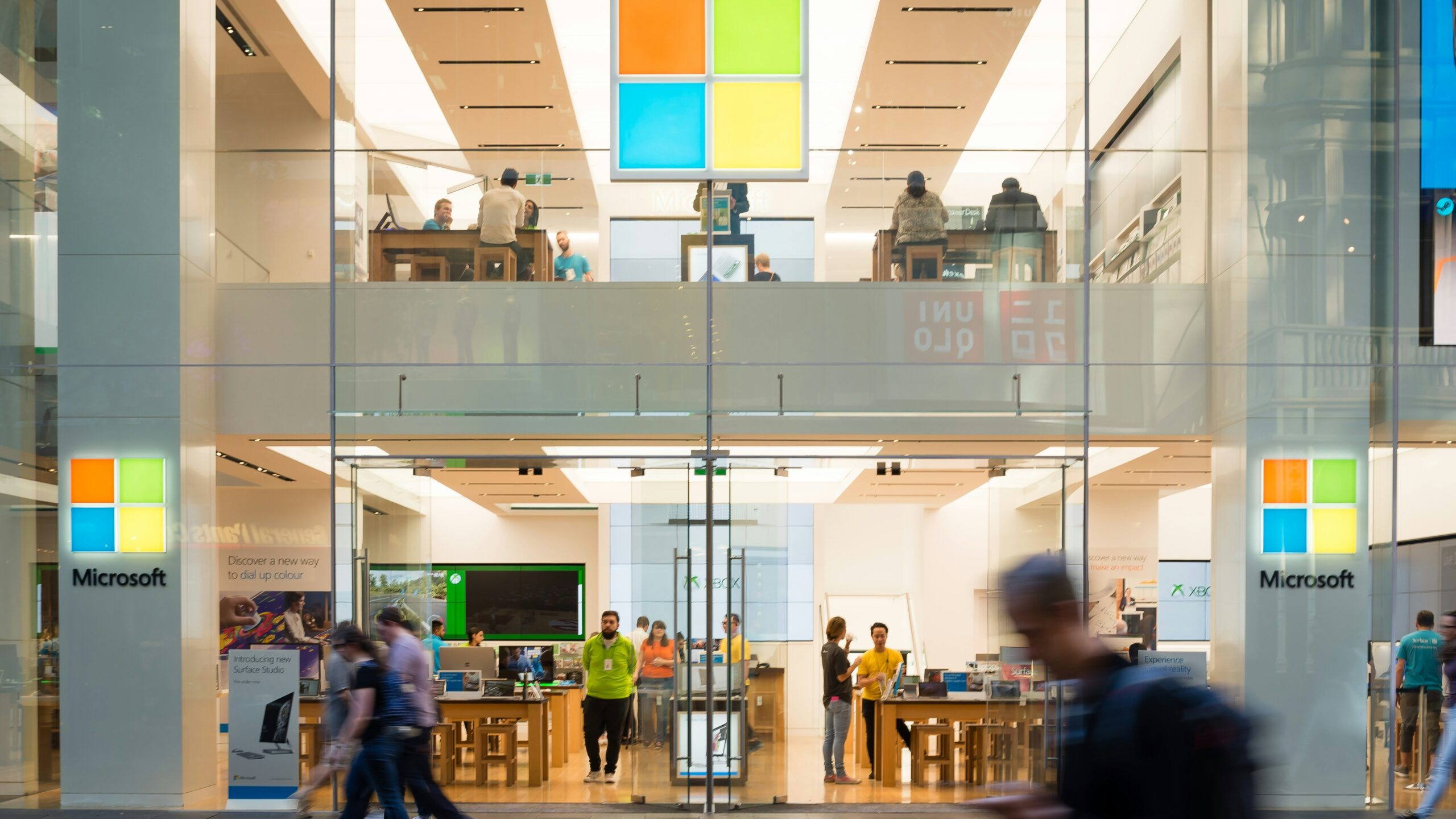
Microsoft is offering voluntary buyouts to roughly 8,750 U.S. employees, an estimated 7% of its domestic workforce, through a program set to begin in early May 2026. The offer, disclosed in an internal memo from Chief Human Resources Officer Amy Coleman and reported by the Associated Press, puts thousands of workers in front of a high-stakes choice: take a severance package and leave on their own terms, or stay and hope the next round of changes does not come involuntarily.
The buyouts arrive as the broader tech industry continues to shed jobs at a striking pace. The tracking site Layoffs.fyi, which aggregates confirmed reductions from press reports and company announcements, shows cumulative 2026 cuts surpassing 90,000 workers across startups and major firms as of early May.
Why Microsoft is trimming again
This is not the company’s first workforce reduction in recent memory. In May 2025, Microsoft cut approximately 6,000 roles, primarily in middle management, as part of a push to flatten its organizational structure. Earlier that year, a smaller round of performance-based terminations swept through several divisions. The new buyout program signals that leadership still sees headcount misaligned with where the company is headed.
The driving force is a massive bet on artificial intelligence. Microsoft has committed to spending $80 billion in its fiscal year 2025 alone on AI-capable data centers, according to a company blog post from CEO Satya Nadella in January 2025. That investment supports Azure cloud infrastructure and the company’s partnership with OpenAI. Redirecting capital at that scale means pulling resources from slower-growth areas, and voluntary buyouts offer a way to do that without the legal exposure and morale damage of mass involuntary layoffs.
Coleman’s memo, as described by the AP through people familiar with its contents, framed the program as support for employees navigating organizational change. The full text has not been released publicly.
How the buyout compares to rivals’ approaches
Microsoft’s opt-in model stands apart from the blunter tactics other large tech firms have used this year. Meta carried out direct layoffs during the same period, notifying workers that their positions were eliminated with no option to volunteer. Intel, still working through a restructuring announced in 2024, has also relied on involuntary cuts to hit cost targets.
A voluntary buyout shifts some control to employees, but it also shifts uncertainty. Workers closer to retirement or already interviewing elsewhere often view a package as welcome leverage. Mid-career employees with mortgages and limited local job alternatives can feel trapped between two bad options. Microsoft has not said whether further cuts would follow if buyout uptake falls short of internal targets, which deepens that anxiety for anyone considering staying.
The playbook is familiar. Large companies from IBM to Cisco have periodically offered voluntary separation packages ahead of broader restructurings. Labor analysts tend to treat a buyout announcement as a signal to watch for deeper changes in the quarters that follow.
What a buyout typically looks like
Microsoft has not publicly detailed the severance duration, benefits continuation, or eligibility criteria for this round. In past tech industry buyouts of this scale, packages have commonly included several weeks to several months of base pay (often tied to tenure), a period of continued health insurance coverage, and outplacement services such as career coaching or job placement assistance.
During Microsoft’s 2023 layoffs, which affected roughly 10,000 workers, the company offered severance, continued healthcare, stock vesting acceleration for some employees, and career transition support, according to reports at the time. Whether the 2026 buyout matches or exceeds those terms remains unknown, and employees are weighing a decision with incomplete information.
The 2026 layoff landscape
The tech sector’s contraction, which accelerated in late 2022 and continued through 2023 and 2024, has not reversed. The Layoffs.fyi tracker’s 90,000 figure for 2026 carries caveats: the site relies partly on crowd-sourced submissions, smaller reductions at private companies often go uncounted, and the definition of “tech” varies across tallies. The number is best understood as a floor on total cuts rather than a precise census.
Still, the direction is unmistakable. Year after year since 2022, large-scale cuts have continued across the industry. Hiring freezes, return-to-office mandates used partly to encourage attrition, and targeted reductions in recruiting and corporate functions have all become standard tools for companies trying to protect margins while funding AI buildouts.
What workers and observers still do not know
Several important details remain unconfirmed. Microsoft has not disclosed which business units or job families are most affected. It is unclear whether the buyouts are concentrated in legacy software products, sales and support, corporate functions, or spread broadly. Without that information, it is difficult to assess how the program fits into the company’s strategic pivot toward cloud and AI.
The geographic scope is also limited so far. The current program covers U.S. employees, but multinational companies often follow domestic actions with parallel moves in other regions, subject to local labor laws. Microsoft employs more than 220,000 people globally, so a U.S.-only program, even at 8,750 workers, addresses only a fraction of the total workforce.
Perhaps the most consequential unknown is what comes next. If a large share of senior employees accept the buyout, teams could lose institutional knowledge that is hard to replace. If too few accept, Microsoft may face pressure to move to involuntary reductions. Either outcome reshapes the company in ways that will not be visible for months.
How the 8,750 estimate was calculated
The 8,750 figure and the 7% share cited throughout this article are this publication’s own estimates, derived by applying the reported buyout scope to Microsoft’s known U.S. headcount. They are not official Microsoft disclosures and have not been attributed to external analysts. Readers should treat them as reasonable approximations rather than confirmed numbers.
A contraction with no clear end date
Microsoft’s buyout offer is the latest move in a tech industry that has been shedding workers for more than three years running. For the roughly 8,750 employees weighing the decision, the calculus is personal: their tenure, their financial cushion, their read on whether their team is safe. For the industry, the pattern is now structural. Companies are spending aggressively on AI while trimming the workforce that built the previous era’s products. How long that trade-off continues depends on whether AI revenue eventually catches up to AI spending, a question no one in the industry has convincingly answered yet.

Paul Anderson is a finance writer and editor at The Financial Wire. He has spent seven years writing about investment strategies and the global economy for digital publications across the US and UK. His work focuses on making sense of economic policy, cost-of-living issues, and the stories that affect everyday Americans.

