American warships began escorting oil tankers through the Strait of Hormuz on May 4, 2026, the first day of a presidentially ordered operation that has already drawn a sharp warning from Tehran: any U.S. interference in the waterway violates the ceasefire between the two countries, and Iran reserves the right to respond.
The stakes are enormous. Roughly one-fifth of the world’s daily oil supply passes through the strait, a chokepoint barely 21 miles wide at its narrowest. A miscalculation between Iranian patrol boats and American destroyers could spike energy prices worldwide and unravel the fragile truce that halted months of military escalation between Washington and Tehran earlier in 2026.
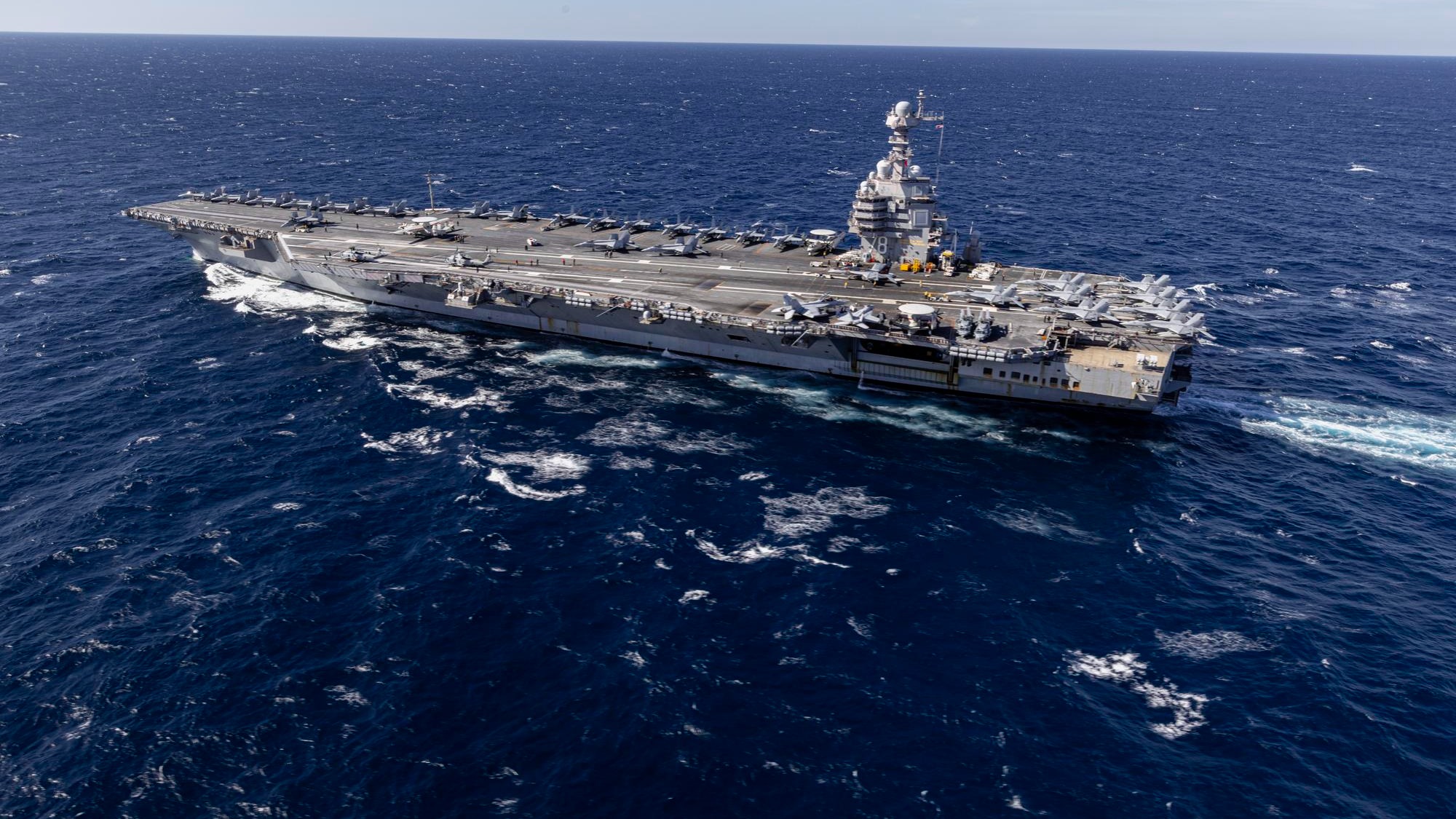
President Trump announced the mission, which the Pentagon calls Project Freedom, in a social media post that warned any interference would be met “forcefully,” according to the Associated Press. U.S. Central Command followed with a press release confirming the deployment includes guided-missile destroyers and more than 100 land and sea assets, describing it as a “multinational maritime task force” with allied navies participating. CENTCOM did not name the partner nations involved.
What Project Freedom looks like on the water
On the operation’s first day, the U.S.-led task force directed commercial vessels to reroute through a newly designated “enhanced security area” running through the narrowest stretch of the strait. The advisory, circulated through standard maritime safety channels, warned of hazards including mines and instructed ship captains to maintain radio contact with coalition warships while transiting, according to AP reporting that cited U.S. defense officials and shipping industry sources.
CENTCOM described the mission’s goal as restoring freedom of navigation for commercial shipping disrupted by months of tensions and sporadic attacks. The command’s statement referenced “over 100” assets but did not break down the specific mix of mine-clearing units, maritime patrol aircraft, or logistics ships. That omission makes it difficult to assess how long the Pentagon intends to sustain the operation or how aggressively it plans to enforce the new transit corridor.
Iran calls the escorts a “clear red line”
Tehran’s pushback came fast and from multiple directions.
Ebrahim Azizi, head of Iran’s parliamentary National Security Commission, posted on X that any American interference in the strait’s “new maritime regime” would be treated as a ceasefire violation. He warned that Tehran could reconsider its commitments if U.S. warships attempted to dictate shipping routes. Turkey’s Anadolu Agency quoted Azizi calling the operation a “clear red line,” and Spain’s Agencia EFE independently confirmed both his statement and his institutional role, reinforcing that his words carry weight inside Iran’s legislature.
Separately, an unnamed Iranian Major General delivered a statement on state broadcaster IRIB, warning that foreign militaries bore responsibility for any escalation and insisting Iran retained the right to defend its territorial waters. Wire summaries of the broadcast indicate the general portrayed Project Freedom as an intrusion, though the full text of his remarks has not been published.
Neither Azizi nor the unnamed general, however, speaks for Iran’s executive branch or the Islamic Revolutionary Guard Corps. As of early May 2026, no public statements from Iran’s Foreign Ministry, the president’s office, or the IRGC’s senior commanders have appeared in available reporting. That distinction matters: Azizi may be articulating the government’s position, or he may be staking out a harder line to shape internal debate. Until Iran’s top decision-makers weigh in, the official posture remains ambiguous.
The ceasefire that hangs in the balance
The U.S. and Iran reached a ceasefire earlier in 2026 after months of escalating military confrontations that included strikes on shipping, retaliatory missile exchanges, and a surge in proxy attacks across the Middle East. The truce’s precise terms have not been made fully public, but both sides agreed to de-escalate military activity in and around the Persian Gulf. Iran has since claimed it established a “new maritime regime” in the strait under the ceasefire framework, though Washington has not acknowledged any such arrangement.
That disconnect is now at the center of the dispute. The U.S. frames Project Freedom as a defensive measure to protect commercial shipping. Iran frames the escorts as a unilateral military action that breaches the agreement. Both interpretations hinge on ceasefire language that neither government has released in full.
What is still missing from the picture
Several critical details remain unknown. The full text of Trump’s social media post has been summarized by wire services but not released as a White House transcript. Without that verbatim record, it is unclear whether the president specified what would trigger the “forceful” response he threatened or left the threshold deliberately vague.
On the operational side, public sources have not established how many commercial ships actually rerouted through the enhanced security area on the first day, whether any captains declined the advisory, or whether Iranian patrol boats or drones shadowed the convoys. Oil markets, which have been volatile throughout the broader U.S.-Iran standoff, will be closely watched in the days ahead for signs that traders view the escorts as stabilizing or as a prelude to further confrontation.
Why the next 48 hours matter
The immediate danger is an incident at sea: a close encounter between an Iranian fast boat and a U.S. destroyer, a mine strike on a tanker, or a misread radar contact in waters where military and commercial vessels operate within yards of each other.
For now, both sides appear to be calibrating. Washington is projecting strength while insisting the operation is about protecting trade. Tehran is signaling displeasure through parliamentary and military voices without yet committing its executive leadership to a formal response. The question is whether that restraint holds once American and Iranian vessels are operating in the same narrow lanes, day after day, with rules of engagement the Pentagon has not publicly defined.