Consumer confidence just hit an all-time low at 48.2 — worse than 2008, worse than COVID — and a third of Americans point to gas prices as the top reason
Americans have not felt this pessimistic about the economy in at least 74 years. The University of Michigan’s preliminary Index of Consumer Sentiment for May 2026 dropped to 48.2, the lowest reading since the survey began in 1952. That figure falls below the previous record of 50.0 from June 2022, below the 55.3 trough hit during the worst of the 2008 financial crisis, and well below the 71.8 final reading from April 2020, when COVID-19 lockdowns were just beginning to shut down the country.
What pushed sentiment to a place it has never been? Two forces showed up over and over in the survey’s open-ended responses: roughly one in three respondents named gasoline prices as a top concern, and about 30% separately flagged tariffs. Those groups overlap considerably, meaning a large share of Americans cited both pressures in the same answer. That dual-threat pattern sets this moment apart from previous sentiment collapses, which tended to revolve around a single dominant shock like a housing crash or a pandemic.
Gas prices are doing measurable damage
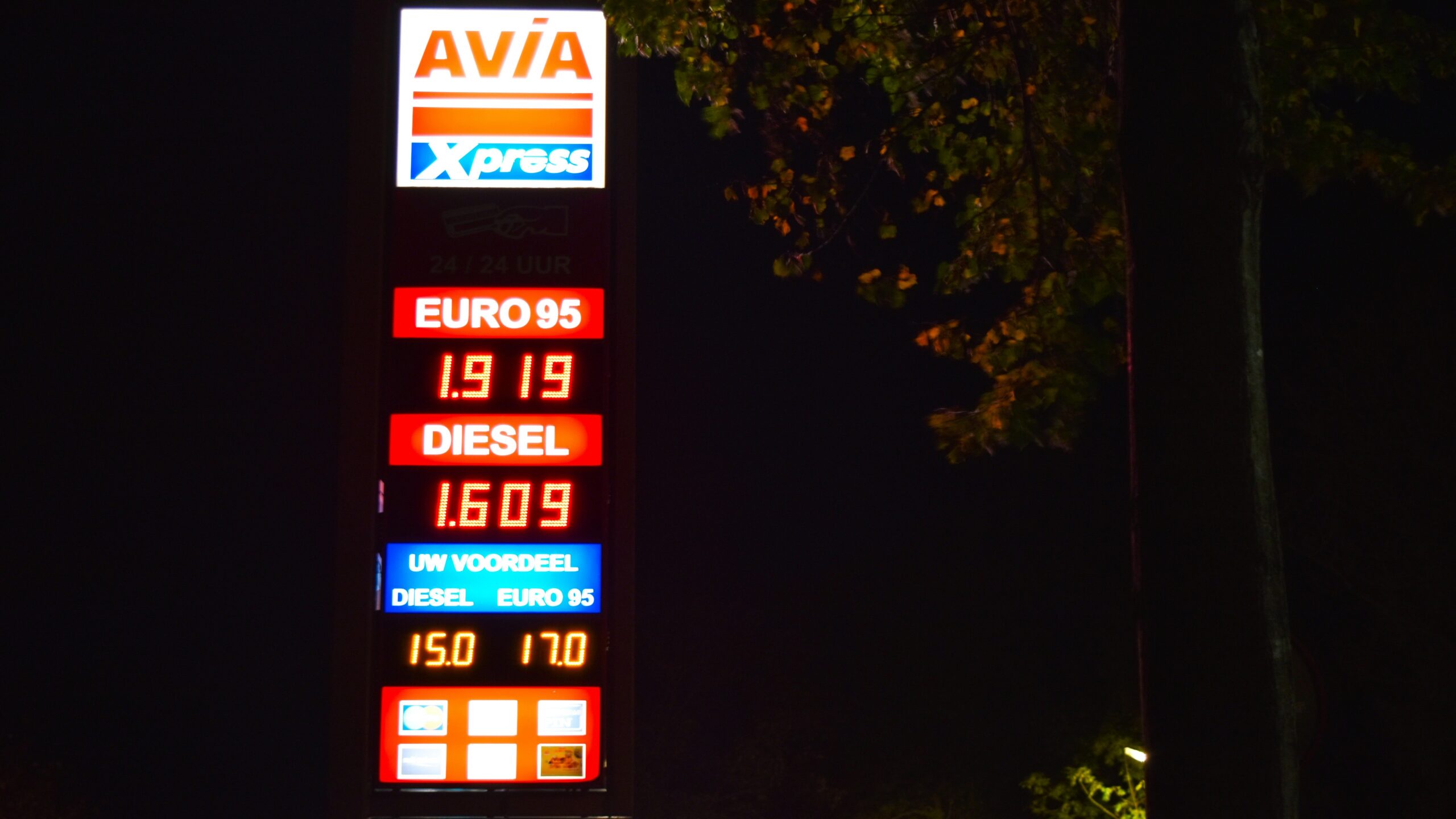
The national average price of regular gasoline has climbed above $4 per gallon as of early May, the highest level since the summer of 2022, according to AAA’s daily fuel gauge. The Energy Information Administration’s weekly retail data confirms the same upward trajectory. And the Bureau of Labor Statistics’ Consumer Price Index report for March 2026, released in April, showed the energy index contributing meaningfully to a monthly inflation increase, with gasoline as the primary driver.
For the tens of millions of households that commute by car or live in areas with little public transit, the arithmetic is punishing. A family filling a 15-gallon tank once a week at $4.10 per gallon is spending roughly $25 more per month than it was a year ago at $3.40. Scale that across two vehicles and the annual hit approaches $600. That is money pulled directly from restaurant meals, weekend outings, or the savings account that was already too thin.
The frequency of gasoline mentions in the open-ended portion of the Michigan survey reached its highest share in years, with many respondents also citing tariff-related price increases in the same response. The preliminary release does not quote individual respondents, but the volume and consistency of fuel-cost complaints stood out in the data summary.
Tariffs add a second layer of anxiety
The roughly 30% of respondents who flagged tariffs as a concern reflect something that has shifted in the past year: trade policy is no longer an abstraction debated in Washington. It has become a kitchen-table worry, voiced unprompted by nearly a third of surveyed Americans.
The Michigan survey’s preliminary release does not specify which tariffs or which goods respondents had in mind, and it does not distinguish between prices consumers have already paid and prices they expect to pay. That gap matters. Anticipated inflation can suppress spending before actual price increases reach store shelves, as households pull back preemptively on big purchases and discretionary items.
Joanne Hsu, director of the University of Michigan’s Surveys of Consumers, noted in the preliminary release that “the breadth of concerns is striking” and that “consumers are contending with cost pressures on multiple fronts simultaneously.” Updated Consumer Expenditure Survey data from the Bureau of Labor Statistics, which would quantify the precise dollar-level shift in household budgets tied to tariffs, has not been published beyond March 2026 figures. But the sentiment data makes one thing clear: Americans are not waiting for economists to measure the damage. They already feel it.
What the data does not yet show
Several important questions remain open. No publicly available regional breakdown from the University of Michigan clarifies whether the sentiment collapse is concentrated in car-dependent Sun Belt metros or spread more evenly. A national average gas price above $4 tells a very different story in rural Oklahoma, where driving is unavoidable, than in New York City, where most residents take the subway.
Concrete behavioral data is also lagging behind the sentiment signal. The Census Bureau’s advance retail sales report for April 2026 has not yet been released, and major credit card companies do not publish real-time transaction-level spending data publicly. Without those figures, it is not yet possible to confirm whether the record pessimism captured in the Michigan survey has already translated into measurable pullbacks at registers and online checkouts. The gap between what consumers say they feel and what they are actually doing with their wallets remains, for now, an open question.
The FRED time series for UMCSENT and the University of Michigan’s Surveys of Consumers page confirm the 48.2 headline figure, but the final May reading, due later this month, could revise the number in either direction. Preliminary and final readings have diverged by as much as two points in recent months, so the record could either soften or deepen.
It is also worth noting what has not happened yet. Federal Reserve officials have not issued on-the-record statements connecting this specific reading to any monetary policy shift. The Conference Board’s Consumer Confidence Index, a separate and widely followed measure that weights employment conditions more heavily, has not released its May figure. If that index shows a similar plunge, the case for broad-based consumer distress becomes considerably harder to dismiss.
Why 48.2 matters beyond the headline
Consumer sentiment is not just a mood indicator. The Michigan index has historically tracked with shifts in household spending, which accounts for roughly two-thirds of U.S. GDP. When the index fell to 50.0 in June 2022, consumer spending on goods contracted in the following quarter. When it dropped to 55.3 during the 2008 crisis, the economy was already in a recession that would grind on for 18 months.
A reading of 48.2 does not guarantee a recession. But it signals that a broad cross-section of Americans feels squeezed from multiple directions at once, with no single relief valve in sight. Gas prices hit the wallet every week. Tariff-driven price increases, whether already showing up on receipts or just anticipated, create uncertainty about everything from grocery bills to the cost of replacing a broken appliance. The combination is unusual, and the depth of the response is unprecedented in the survey’s history.
What the final May reading will settle about dual-shock pessimism
The final May reading is expected in the last week of May 2026. If it holds near 48.2 or drops further, it will confirm that American consumers have entered a stretch of pessimism with no modern parallel. And unlike past sentiment troughs, this one has no single cause that a single policy response could fix.