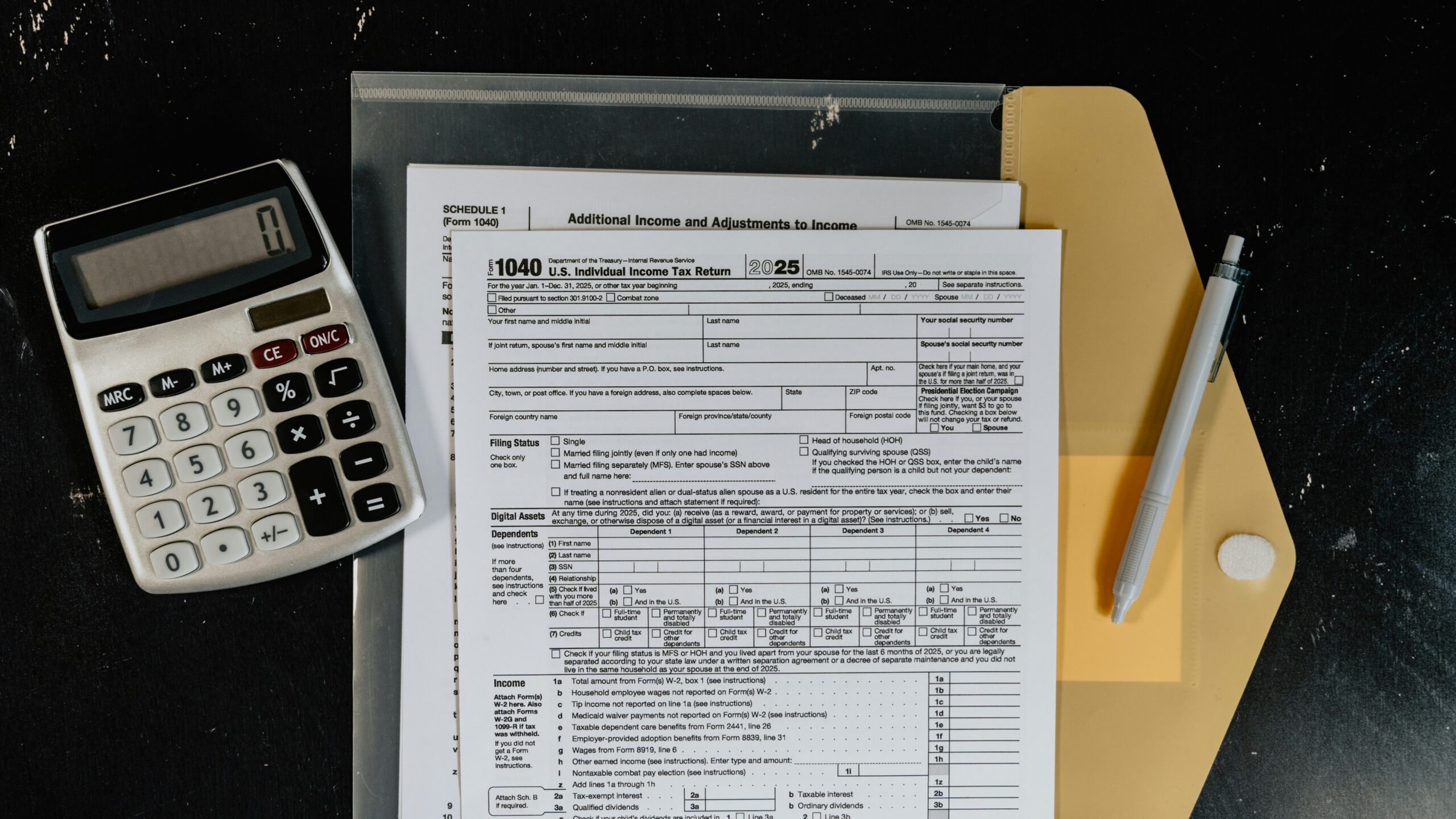
If you sold Bitcoin, Ethereum, or any other digital asset through a brokerage in 2025, the IRS is set to know about it before you file your 2026 return. Starting with the 2025 tax year, crypto brokers must report gross proceeds from digital-asset sales on a new form, Form 1099-DA, handing the agency the same kind of third-party transaction data it has relied on for decades to catch unreported wages and bank interest.
That alone would mark a turning point. But it is landing at the same moment the IRS is rapidly scaling its artificial-intelligence operations, with roughly 125 AI and machine-learning models now listed in the agency’s use-case inventory, per federal disclosure records maintained under OMB Memorandum M-21-06. That figure has more than doubled in approximately two years. Together, the new data stream and the expanding algorithmic toolkit are creating a compliance environment that bears little resemblance to the one crypto traders navigated as recently as 2023.
How Form 1099-DA changes the game
For years, crypto occupied a reporting blind spot. The IRS added a digital-asset question to Schedule 1 of Form 1040 beginning with the 2019 tax year, then elevated it to the front page of the return starting in tax year 2022. But the question only asked whether a taxpayer had transacted in digital assets. The agency had limited ability to verify the answers because no standardized broker-reporting mechanism existed for individual crypto trades.
That gap closed in June 2024, when the Treasury Department and the IRS finalized regulations requiring brokers to report gross proceeds on digital-asset sales and exchanges starting with transactions in calendar year 2025. The IRS simultaneously published Revenue Procedure 2024-28 and Notice 2024-56, granting transitional relief on certain backup-withholding and reporting mechanics so brokers could build the necessary infrastructure.
The result is a data pipeline that mirrors what already exists for stocks and mutual funds. When a covered broker files a 1099-DA, the IRS can automatically match the reported proceeds against what the taxpayer claims on Schedule D and Form 8949. If someone sells $40,000 worth of crypto through Coinbase or Kraken in 2025 and leaves it off a 2026 return, that mismatch can surface through the agency’s Automated Underreporter (AUR) program without a human auditor ever opening the file.
Anyone who has received a CP2000 notice for an overlooked 1099-INT from a savings account already knows what that process feels like. The same logic now applies to crypto.
What tax professionals are telling clients
The shift has not gone unnoticed by practitioners who advise crypto-heavy clients. Shehan Chandrasekera, head of tax strategy at CoinTracker, a crypto tax-software provider, told reporters earlier this year that the 1099-DA rollout “moves crypto from the honor system to the information-reporting system,” adding that taxpayers who relied on the absence of third-party forms to justify not reporting now face a fundamentally different calculus.
Lisa Zarlenga, a partner at Steptoe LLP who focuses on digital-asset tax policy, has noted that the phased approach to cost-basis reporting creates a transitional period in which the IRS will see that a sale happened but may not yet have the data to verify the gain calculation independently. “That does not mean you can be sloppy with your basis records,” she cautioned in a May 2026 industry webinar. “It means the burden of proof stays squarely on the taxpayer, and the agency now has a trigger to ask the question.”
Consider a taxpayer who bought two ETH at $1,600 each in 2023 through a centralized exchange, then sold both in March 2025 at $3,800 each. The exchange will file a 1099-DA showing $7,600 in gross proceeds. If that taxpayer fails to report the sale on Schedule D, the AUR system can generate a CP2000 notice proposing tax on the full $7,600 because, without a corresponding return entry, the system assumes zero basis. The taxpayer would then need to substantiate the $3,200 cost basis to reduce the proposed adjustment, a process that can take months and accrues interest from the original due date of the return.
The IRS’s expanding AI arsenal
Form 1099-DA is not arriving on its own. The IRS has been building out its AI capabilities across compliance operations under a governance framework codified in Internal Revenue Manual section 10.24.1. That policy requires the agency to maintain an AI Use Case Inventory, a catalog of every AI and machine-learning model deployed in operations from fraud detection to return selection. New models must pass through a documented review process before they can be used in enforcement.
Federal inventory disclosures, required of all agencies under Executive Order 13960 and subsequent OMB guidance, show the number of IRS AI audit models has grown from roughly 50 to approximately 125 active models over a two-year span. The IRS has not published a granular breakdown of which models target which tax issues, but the trajectory is unmistakable: the agency is investing heavily in automated pattern recognition. A large new stream of structured transaction data from 1099-DA filings gives those models significantly more to work with.
The IRS also has a track record of pursuing crypto holders through targeted enforcement. Its Operation Hidden Treasure initiative, launched in 2021 as a joint effort between IRS Criminal Investigation and the Office of Fraud Enforcement, paired data-analytics specialists with revenue agents to identify unreported crypto income. Separately, a series of John Doe summonses served on exchanges including Coinbase, Kraken, and Circle yielded account records for hundreds of thousands of users. Standardized broker reporting means future enforcement will lean less on those one-off legal actions and more on the systematic matching the IRS already runs across billions of information returns every filing season.
It is worth noting the tension between this technological expansion and recent workforce reductions at the agency. Significant staffing cuts in early 2025 and 2026 have raised questions about the IRS’s capacity to act on the flags its systems generate. AI can surface discrepancies at scale, but converting a computer-generated notice into a resolved case still requires people. How effectively the agency balances its shrinking headcount against its growing algorithmic reach will shape the real-world impact of these tools.
DeFi and self-custody: the gaps that remain
The new rules do not cover everything. A separate set of final regulations attempted to extend broker-reporting obligations to certain decentralized-finance front-end service providers, but Congress nullified that rule in early 2025 through a resolution under the Congressional Review Act, which President Trump signed into law. That means DeFi platforms, at least for now, are not required to file 1099-DAs.
Even before the nullification, industry groups including the Blockchain Association and the DeFi Education Fund had filed suit arguing the Treasury’s definition of “broker” was stretched beyond what Congress intended. With the DeFi broker rule off the books, peer-to-peer transfers, transactions executed through self-custodied wallets, and activity routed through platforms outside the regulatory definition of a broker remain largely invisible to the IRS’s automated matching systems.
Taxpayers are still legally required to report gains and losses on those transactions. The agency could pursue new rulemaking or expand its use of blockchain-analytics contractors to trace on-chain activity, but no definitive timetable for either approach has been announced as of June 2026.
There is also a phased element to the rules that did survive. Cost-basis reporting, which would let the IRS verify not just that a sale occurred but whether the taxpayer calculated the gain correctly, applies to digital assets acquired on or after January 1, 2026. And by 2027, brokers must submit customer names and taxpayer identification numbers to the IRS TIN-matching program, adding another automated verification layer that can flag mismatches between platform records and individual returns.
How crypto holders can prepare before filing season
On-exchange crypto activity now sits inside the same reporting ecosystem that governs traditional brokerage accounts. That does not mean every discrepancy will trigger an audit. The IRS processes roughly 150 million individual returns each year, and its resources, even with AI augmentation, are finite. But the odds of an unreported crypto sale slipping through unnoticed have dropped sharply.
The penalty exposure for omissions is real. Accuracy-related penalties of 20% on underpaid tax, plus interest, are standard on AUR matching-program adjustments. Willful failures to report can carry steeper consequences.
Several steps are worth taking now. First, check whether your exchange or broker plans to issue a 1099-DA for 2025 transactions and reconcile it against your own records well before filing. Discrepancies between your records and the form the IRS receives are exactly what the matching engines are designed to catch. Second, review any activity on platforms that may not qualify as covered brokers, because the reporting obligation falls on you regardless of whether a form is generated. Third, if you have unreported gains from prior years, consider whether a voluntary disclosure or amended return makes sense before the new data flows make the omission obvious to the agency’s systems.
Why the 2026 filing season marks a permanent shift for digital-asset enforcement
The IRS spent years building toward this moment. Standardized broker reporting, a growing inventory of AI-driven audit models, and a governance framework designed to scale those tools have collectively redrawn the enforcement map for digital assets. The reporting infrastructure is live, the data is flowing, and the matching engines are running. For crypto holders who have been diligent about reporting, little changes. For those who have not, the window to get right with the IRS is narrowing fast.