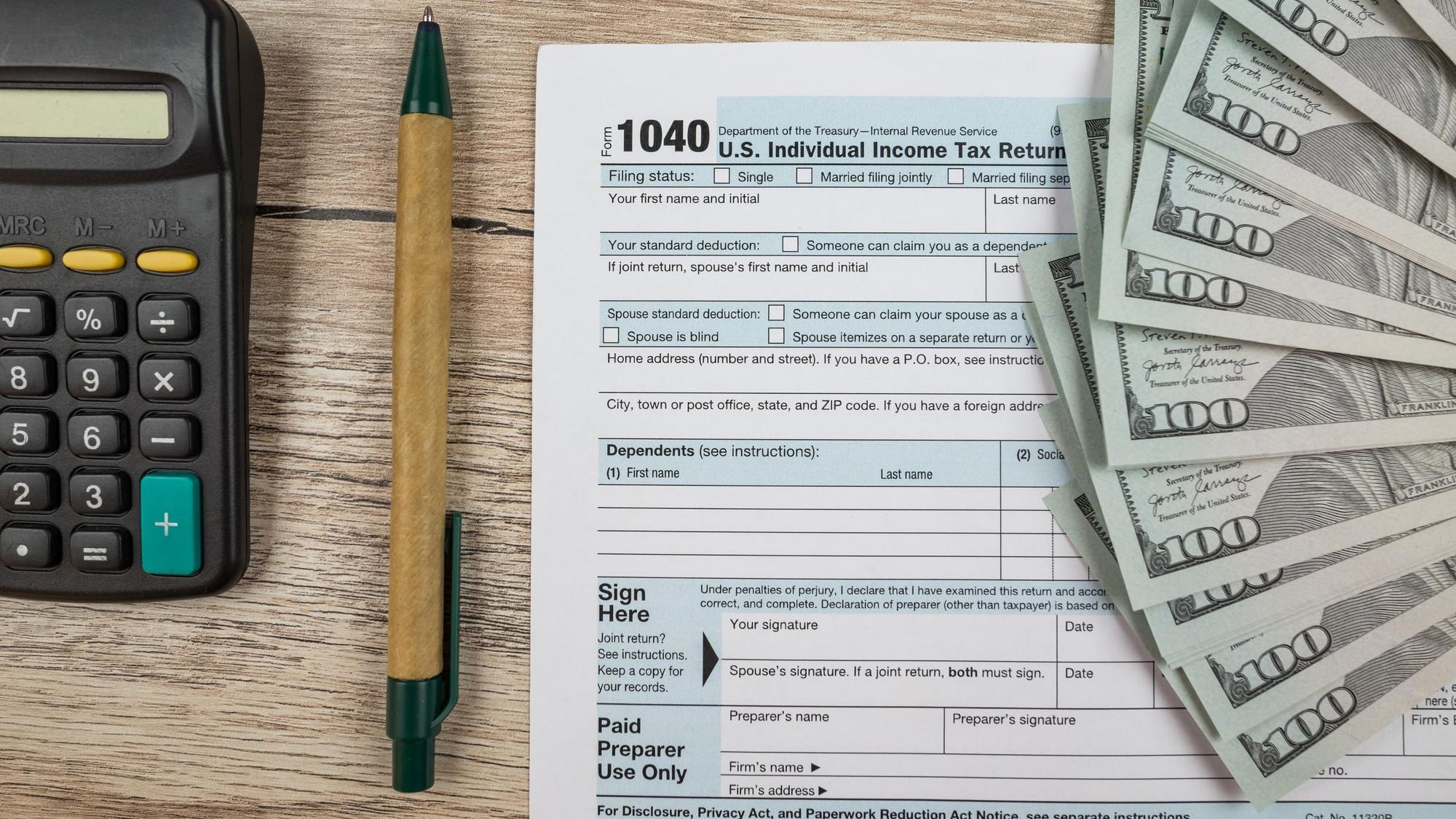
Millions of Americans who paid late-filing or late-payment penalties on federal tax returns between 2020 and 2023 may be entitled to get that money back from the IRS. But the window to act is closing fast: the deadline to file a claim is July 10, 2026, roughly 51 days away.
The Taxpayer Advocate Service (TAS), an independent watchdog within the IRS, sounded the alarm in an April 2026 blog post. The agency said “tens of millions” of taxpayers could be eligible for refunds tied to penalties the IRS collected during the COVID-19 national emergency. The legal basis is a federal law signed in late 2025 that changed how the IRS must calculate deadline extensions during federally declared disasters. Because the pandemic emergency overlapped with those tax years, penalties assessed during that period may not have been legally valid.
The protective claim itself costs nothing to file. The potential payoff, depending on how much you owed and how late your return was, could run into thousands of dollars. Here is what you need to know.
Where the refund opportunity comes from
The story starts with H.R. 1491, the Disaster Related Extension of Deadlines Act, which became Public Law 119-64 on December 26, 2025. The statute revised the formula the IRS uses when postponing filing and payment deadlines during a federally declared disaster.
Under existing IRS regulations (26 CFR 301.7508A-1), the agency must grant at least a 60-day postponement of certain tax deadlines whenever a federal disaster declaration is in effect. The COVID-19 national emergency qualified. The new law tightened and, in some cases, expanded how those postponements apply, which means penalties and interest that accrued during the disaster window are now subject to fresh legal scrutiny.
The legal argument builds on litigation in which taxpayers challenged the IRS’s interpretation of its own disaster-postponement rules. In those cases, filers contended that if a penalty was assessed during a period that should have been postponed under the regulation, the IRS collected it without legal authority. TAS referenced this litigation as part of the basis for the refund theory. Detailed court opinions have not been widely published in public legal databases as of June 2026, but the statutory change in Public Law 119-64 gives the argument a stronger foundation than case law alone.
This opportunity is separate from, and broader than, the IRS’s earlier administrative penalty relief program. In 2023, the agency announced automatic waivers for certain failure-to-pay penalties on 2020 and 2021 returns through guidance document FS-2023-28. That program was narrower, covering only one penalty type across two tax years, and it was based on the IRS’s own discretion. The current opportunity spans four tax years, covers both failure-to-file and failure-to-pay penalties, and rests on a statutory argument rather than agency goodwill.
Who might qualify and how much is at stake
You may be eligible if you paid a failure-to-file or failure-to-pay penalty on a federal return for tax year 2020, 2021, 2022, or 2023.
The numbers add up quickly. The failure-to-file penalty is typically 5% of unpaid taxes for each month a return is late, capped at 25%. The failure-to-pay penalty runs at 0.5% per month, also capped at 25%. A taxpayer who owed $10,000 and filed six months late could have been hit with $3,000 or more in combined penalties. Someone who owed $25,000 and was a year late could be looking at a refund well above $5,000.
TAS used the phrase “tens of millions” to describe the pool of potentially eligible filers. The IRS has not released aggregate data to independently verify that estimate, but the figure is plausible: the Treasury Inspector General for Tax Administration (TIGTA) has reported that the IRS issues tens of millions of penalty notices each year, and the four-year window here captures a large share of them.
One open question is whether taxpayers who already received relief under the 2023 administrative waiver might also qualify for additional refunds under this broader legal theory. TAS did not address that overlap in its blog post, and the IRS has not issued guidance on the point. If you received partial relief in 2023, filing a protective claim now preserves your right to seek whatever additional amount may be owed.
How to file a protective claim before July 10
TAS recommends filing a “protective claim” using Form 843, Claim for Refund and Request for Abatement, available on the IRS website. A protective claim is a standard tool in tax practice: it lets you assert a right to a refund based on a legal issue that has not yet been fully resolved, without requiring the IRS to pay immediately. Think of it as planting a flag before the deadline passes.
Here is what to do:
- Gather your records. Pull copies of the penalty notices you received (IRS notices CP14, CP501, or similar) or request an account transcript from the IRS online at IRS.gov/transcripts. You need the exact penalty amounts and the tax years involved.
- Download Form 843. Complete the form for each tax year in which you paid a penalty. In the explanation section, reference the disaster-postponement theory under 26 CFR 301.7508A-1, cite Public Law 119-64, and identify the specific penalties you are requesting be refunded.
- Mail it to the correct IRS service center. The form instructions specify which address to use based on where your original return was processed. Double-check this; sending it to the wrong center can cause delays.
- Send it by certified mail or a delivery service with tracking. You need proof that your claim was postmarked before July 10, 2026. Keep a copy of everything you send.
Form 843 cannot be e-filed. There is no filing fee. For many taxpayers with straightforward situations, the form is manageable without professional help. But if your penalties are large, if you have multiple tax years in play, or if your situation involves business returns, consulting a tax professional or contacting TAS directly is worth the effort.
Why July 10 matters so much
The deadline is driven by the statute of limitations for refund claims under Internal Revenue Code Section 6511. That provision generally bars refund requests filed more than three years after the original return was due or two years after the tax was paid, whichever is later. TAS identified July 10, 2026, as the critical cutoff for many 2020-era returns and penalties that are approaching or have already crossed those limits.
Miss the date, and it does not matter how strong the legal argument turns out to be. The IRS is legally prohibited from issuing a refund on a time-barred claim. Filing before July 10 preserves your rights while the legal questions play out, even if it takes months or years for the IRS to process the claims.
What remains unresolved
As of June 2026, several important questions are still open. The IRS has not issued formal guidance explaining how it will handle the expected surge of protective claims. Whether the agency will process them administratively, negotiate a global settlement, or contest them in court is unknown.
There is also a practical concern: a large wave of Form 843 filings close to the deadline could strain IRS processing capacity. Taxpayers who wait until the final days may face significantly longer waits for any resolution. Filing sooner rather than later reduces that risk.
State-level implications are another gray area. State tax agencies often piggyback on federal penalty assessments, but whether state penalties are also subject to challenge under this theory depends on each state’s own disaster-relief statutes. Taxpayers who paid state penalties in addition to federal ones should check with their state tax agency or a local tax professional.
A no-cost claim with real upside
The legal theory behind these refunds is credible but not guaranteed. Congress passed a law that changed how disaster-period deadlines work. An independent IRS watchdog is publicly urging tens of millions of taxpayers to act. The penalties at stake can amount to thousands of dollars per filer. And the protective claim costs nothing to submit.
For anyone who paid a late-filing or late-payment penalty on a 2020 through 2023 federal return, the calculus is straightforward: a few minutes with Form 843 now could protect a refund that disappears forever after July 10, 2026.

Paul Anderson is a finance writer and editor at The Financial Wire. He has spent seven years writing about investment strategies and the global economy for digital publications across the US and UK. His work focuses on making sense of economic policy, cost-of-living issues, and the stories that affect everyday Americans.


How would I know if I’m owed any moey
Great question. You may be owed money if you paid a late-filing or late-payment penalty on a federal tax return for 2020, 2021, 2022 or 2023. To check, log into your IRS account at IRS.gov and request an account transcript for those tax years. The transcript will show any penalties that were assessed and paid. Look for entries labelled “failure to file” or “failure to pay.” If you see penalty charges on any of those returns, you are potentially eligible to file a protective claim using Form 843 before the July 10, 2026 deadline. You can also call the IRS directly at 1-800-829-1040 and ask them to confirm whether penalties were applied to your account during those years.