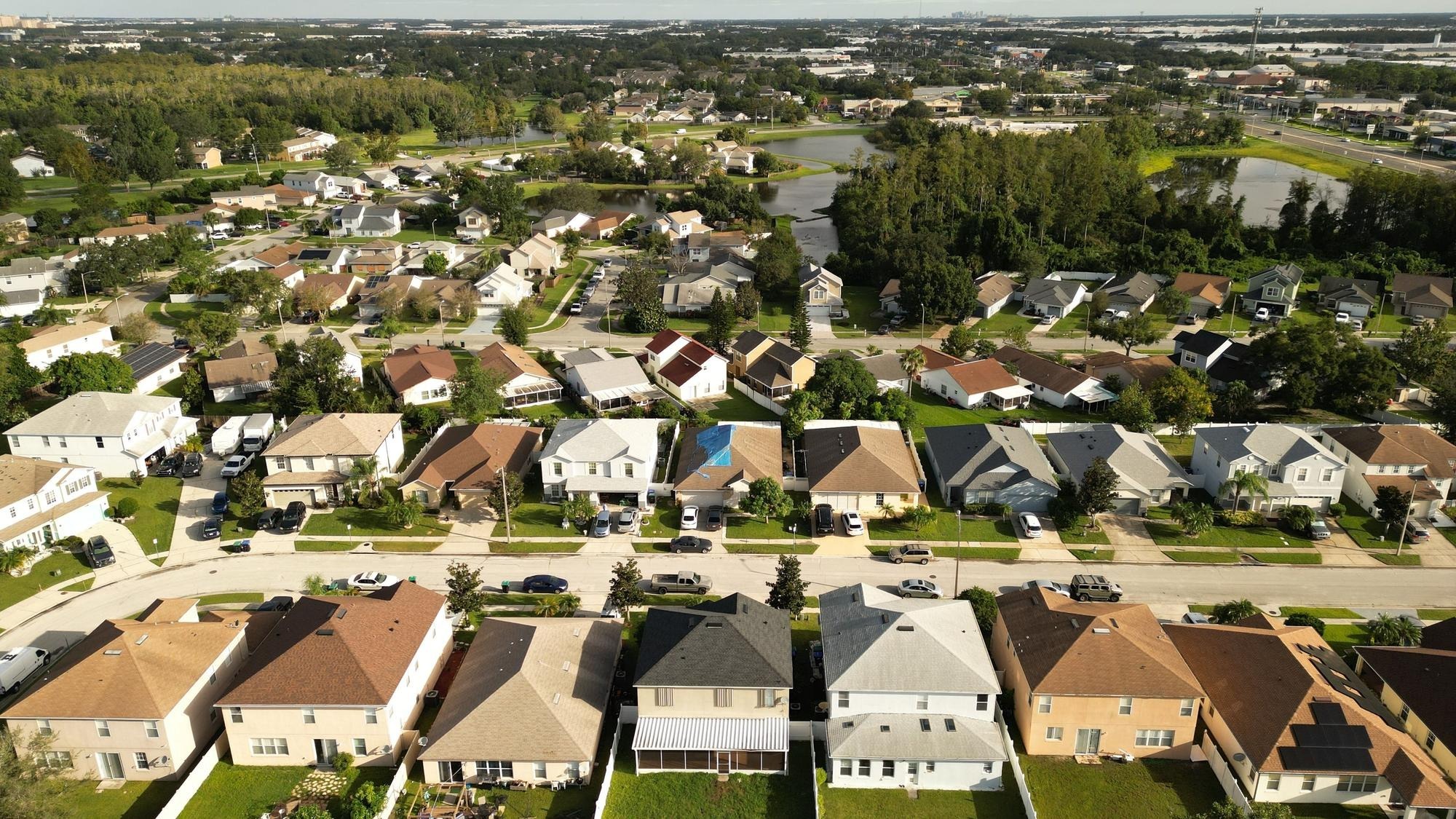
Somewhere north of 48 million American homeowners could walk into a bank tomorrow and borrow six figures against their house. On paper, the average mortgage holder now has roughly $213,000 in tappable equity, the portion a lender will actually extend credit against, according to ICE Mortgage Technology’s Mortgage Monitor reports from early 2026. That figure is a record, built by years of home price gains that far outpaced the rate at which borrowers paid down their loans.
The catch: pulling that money out now costs roughly twice what it did four years ago. The average home equity line of credit carries an interest rate near 8 percent, according to weekly survey data tracked by Bankrate and published through the Federal Reserve’s FRED database. During 2020 and 2021, the same product priced in the low-to-mid 4 percent range. The result is a standoff that has defined household finance through the first half of 2026: record wealth sitting inside the walls of American homes, and a borrowing cost high enough to keep most of it there.
Why HELOC rates are stuck near 8%
HELOC pricing follows a simple formula. Lenders add a margin, typically 1 to 2 percentage points, on top of the prime rate, which itself moves in lockstep with the federal funds rate. The Federal Reserve’s H.15 statistical release, updated weekly, shows the prime rate has remained elevated through mid-2026 despite modest Fed rate cuts that began in late 2024. Those cuts were not deep enough to pull HELOCs back toward the levels borrowers remember from the pandemic era.
Because HELOCs carry variable rates, they respond fast when the Fed moves. That was a windfall on the way down in 2020 and a penalty on the way up through 2023 and 2024. Borrowers who opened lines at around 4 percent during the pandemic and still carry balances have watched their monthly costs nearly double. New applicants face the full weight of current pricing from day one.
A concrete example: interest-only payments on a $100,000 HELOC at 8 percent run about $667 per month. At 4 percent, the same draw costs roughly $333. That $334 monthly gap is often the difference between a kitchen renovation that pencils out and one that stays on the wish list.
Where the $213,000 figure comes from
The tappable equity estimate originates from ICE Mortgage Technology’s monthly Mortgage Monitor, one of the most widely cited private datasets in housing finance. ICE combines public records on outstanding mortgage balances with its own home price index, then applies an 80 percent combined loan-to-value cap. That is the threshold most lenders use before requiring additional approval or mortgage insurance. The methodology is industry-standard and regularly referenced by Reuters, The Wall Street Journal, and the Federal Reserve Bank of New York’s quarterly household debt reports.
That said, the number has limits. Small shifts in home price assumptions or LTV thresholds can move the national average by thousands of dollars. The $213,000 figure, drawn from ICE’s reporting through early 2026, is best understood as a credible market estimate showing the scale of available housing wealth, not a government-audited statistic precise to the dollar. Even conservative adjustments leave it historically high: homeowners as a group hold far more borrowable equity than at any point in the past two decades.
What homeowners are actually doing with all that equity
High rates have clearly cooled demand, but they have not killed it. HELOC originations dropped sharply from their 2022 pace as borrowing costs climbed, according to the Mortgage Bankers Association. Cash-out refinances, the other main channel for extracting equity, have been hit even harder. Most current homeowners hold first-lien rates below 5 percent (ICE data shows roughly 60 percent of outstanding mortgages were originated at sub-5% rates), and trading a 3.5 percent mortgage for a 7 percent one just to pull out $50,000 is a deal almost no one is willing to make.
“Homeowners are effectively locked in on both sides,” Marina Walsh, vice president of industry analysis at the Mortgage Bankers Association, told reporters earlier this year. “They don’t want to give up their low first-lien rate, and the second-lien alternatives are expensive enough to give anyone pause.”
That squeeze has pushed some borrowers toward fixed-rate home equity loans, which lock in a rate for the life of the loan and remove the variability of a HELOC. Rates on these products have hovered between roughly 7.5 and 9 percent depending on credit profile and lender, but the predictability appeals to homeowners wary of further swings. A smaller but growing group is turning to home equity investment agreements from companies like Hometap and Unison, which provide cash in exchange for a share of future appreciation rather than monthly interest payments. These products carry their own tradeoffs, including giving up a slice of your home’s upside, but they sidestep the rate question entirely.
And then there are the homeowners who are simply waiting, betting that additional Fed cuts later in 2026 will bring HELOC rates back toward 6 or 7 percent before they need to act.
The tax wrinkle borrowers keep overlooking
Interest paid on a HELOC or home equity loan is tax-deductible, but only if the borrowed funds are used to “buy, build, or substantially improve” the home securing the loan. That rule, established by the Tax Cuts and Jobs Act of 2017 and confirmed by the IRS in a 2018 advisory, draws a hard line. A homeowner who borrows $80,000 to add a second story can deduct the interest. One who borrows the same amount to consolidate credit card debt cannot.
The distinction matters more at 8 percent than it did at 4 percent, because the dollar value of the deduction is larger. Consider a homeowner in the 24 percent federal tax bracket who borrows $80,000 at 8 percent for a qualifying renovation. Annual interest of $6,400 yields a federal tax savings of roughly $1,536, effectively reducing the borrowing cost to about 6.1 percent. For homeowners using equity for non-qualifying purposes, the full 8 percent applies with no offset. At a time when every percentage point matters, that gap can change the calculus.
How the Fed’s next move changes the math
The Federal Reserve’s path forward will determine how long the current rate environment lasts. As of mid-2026, Fed officials have signaled a cautious, data-dependent approach, with further cuts possible but not guaranteed. If the prime rate drops by half a percentage point, HELOC rates would follow almost immediately, shaving roughly $42 off the monthly interest cost on a $100,000 balance. A full percentage-point cut would save about $83 per month on the same balance.
For homeowners trying to time a decision, the tradeoff is straightforward but uncomfortable. Waiting for lower rates means delaying a project, a consolidation, or a tuition payment that may not wait. Borrowing today locks in a high rate on a variable product that could drop later, though no one can say when or by how much. Fixed-rate home equity loans remove the timing gamble but offer no relief if rates do fall.
“We’ve never seen this combination of record equity and record reluctance to tap it,” Andy Walden, vice president of enterprise research at ICE Mortgage Technology, said in the firm’s most recent Mortgage Monitor commentary, describing the tension between wealth on paper and the cost of reaching it.
What is not in dispute is the underlying wealth itself. American homeowners collectively hold more equity than at any point on record, a buffer built by a decade of rising prices and steady mortgage paydowns. The question for each household is narrower and more personal: does the reason for borrowing justify the price of borrowing right now? A family facing a failing roof and a family eyeing a pool will answer that differently. And both answers could shift the next time the Fed acts.