Americans have never felt this pessimistic about the economy. Not during the 2008 financial crisis, not during the COVID-19 lockdowns, not during the inflation surge of 2022. The University of Michigan’s Index of Consumer Sentiment dropped to a preliminary 48.2 in May 2026, the lowest reading in the survey’s 74-year history, and the single biggest grievance driving the collapse is one that stares back at consumers from every street corner: the price of gasoline.
Roughly one-third of respondents in the university’s Surveys of Consumers program volunteered complaints about gas prices without being asked, according to the survey team’s topline summary. No other topic came close. At a time when grocery bills, rent, and car insurance are all elevated, it is fuel that has become the emotional shorthand for an economy that feels broken to the people living in it.
Why gas prices carry so much psychological weight
The national average for a gallon of regular gasoline hovered near $3.80 in late May 2026, according to the U.S. Energy Information Administration. That is not the highest price Americans have ever paid. In June 2022, the national average briefly topped $5.00. But context matters: wages have not kept pace with cumulative price increases since 2020, and drivers who remember $2.50 gas during the pandemic feel the gap viscerally every time they fill up.
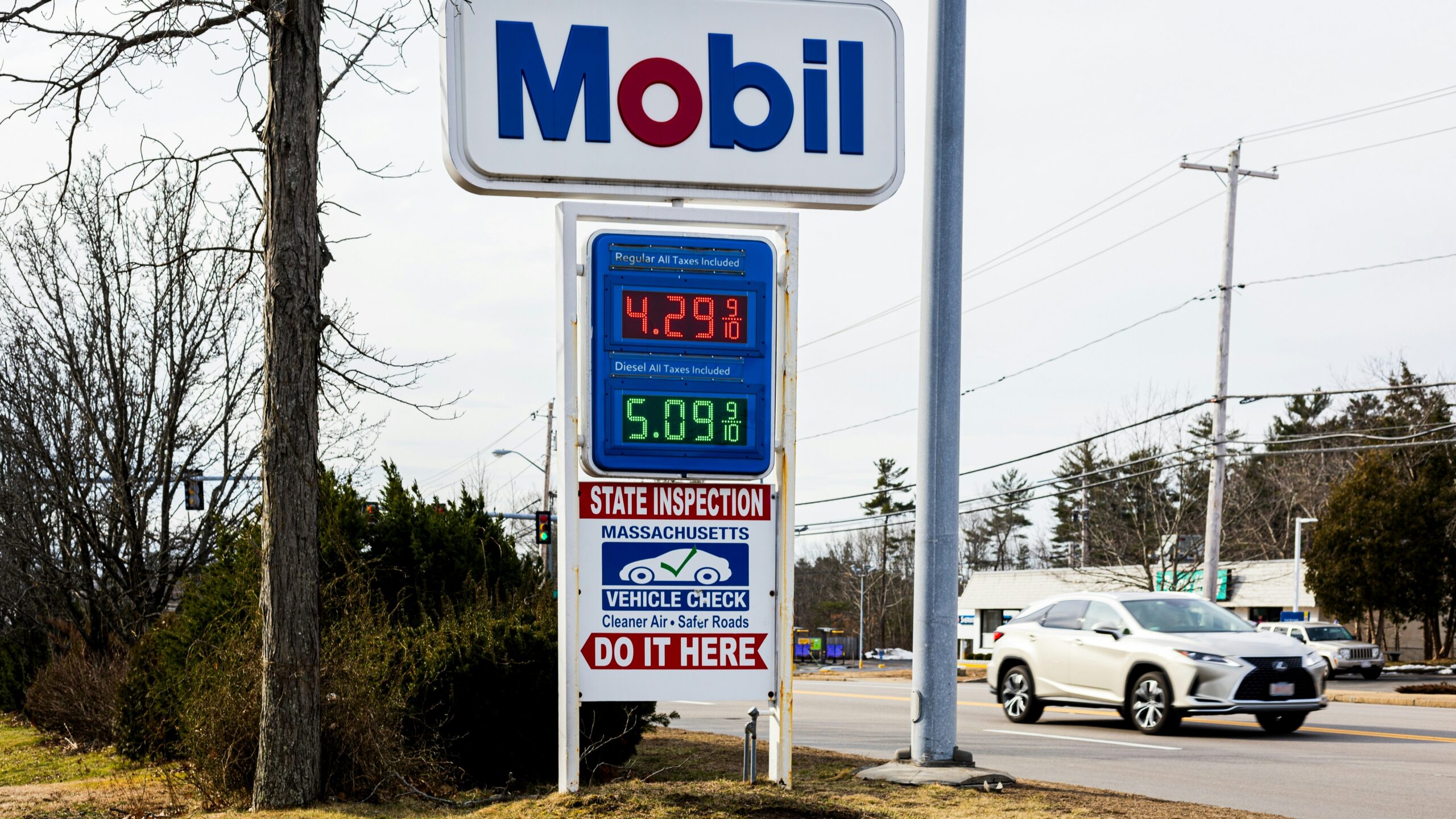
Fuel is also uniquely visible. Unlike rent or health insurance, which hit once a month or once a year, gas prices are broadcast in four-foot-tall numbers on signs that line commuter routes. Behavioral economists have long noted that this visibility gives fuel an outsized role in shaping how people feel about inflation, even when other categories are rising faster.
The Michigan sentiment index is built from five questions covering personal finances, business conditions, and buying attitudes. When gas prices climb, they tend to drag answers down across all five because consumers treat the pump price as a leading indicator for everything else they buy.
Inflation expectations are climbing in lockstep
The Michigan survey also tracks where consumers think inflation is heading, and those expectations have been rising alongside the sentiment decline. That combination worries economists because it can become self-reinforcing: households that expect higher prices may pull back on spending or push for larger wage increases, both of which can feed the inflation they fear.
The Federal Reserve watches this expectations channel closely. Chair Jerome Powell has repeatedly cited the Michigan survey’s inflation expectations data as one input the central bank monitors when setting interest rate policy. With the federal funds rate still elevated after years of tightening, a further deterioration in sentiment could complicate the Fed’s path, making rate cuts riskier if inflation expectations are unanchored but more urgent if consumer spending starts to buckle.
The Federal Reserve Bank of St. Louis maintains the full historical sentiment series through its FRED database, stretching back to 1952. That record shows a clear pattern: readings below 60 have historically coincided with reduced consumer spending. Several economic analyses have noted that sustained readings below 55 have preceded or accompanied every U.S. recession since the 1970s, though the relationship is not perfectly predictive and the sample of recessions is small. At 48.2, the index is in territory no prior data point has mapped.
How deep the pessimism runs is still unclear
The university has not yet released its detailed subgroup breakdowns for May 2026, which split results by income, region, and political affiliation. Those tables will reveal whether the gloom is concentrated among lower-income households and long-distance commuters or whether it cuts across demographic lines. Given that gas prices hit rural and suburban drivers harder than urban residents with shorter commutes or access to public transit, the geographic distribution will matter enormously for understanding what comes next.
The labor market adds another layer of ambiguity. The unemployment rate remains historically low, and employers are still adding jobs. That disconnect between how the economy looks on paper and how it feels to households is one of the defining tensions of this period. Sentiment surveys capture the “feels” side, and right now, the feels side is at rock bottom.
What a record-low reading means for spending and politics through mid-2026
Consumer spending accounts for roughly two-thirds of U.S. GDP, according to the Bureau of Economic Analysis. When confidence craters, households tend to delay big purchases, cut back on dining out and travel, and trade down to cheaper brands at the grocery store. Retailers, automakers, and airlines all track the Michigan index because a sustained drop often shows up in their revenue within a quarter or two.
The political stakes are just as real. Gas prices have shaped elections before. In 2022, fuel costs dominated midterm campaigns, and the prior sentiment low of 50.0 that June coincided with deep voter dissatisfaction over inflation. A reading below that threshold heading into the second half of 2026 gives both parties ammunition: one side will frame it as evidence of policy failure, the other as a lagging effect of global supply disruptions and years of accumulated price increases.
For now, 48.2 is a preliminary number. The University of Michigan will publish a final May figure later in June 2026, incorporating additional interviews conducted through the end of the month. If the reading holds or falls further, it will confirm something that millions of Americans already feel in their wallets: the economy, by the measure of the people who power it, has never looked worse.