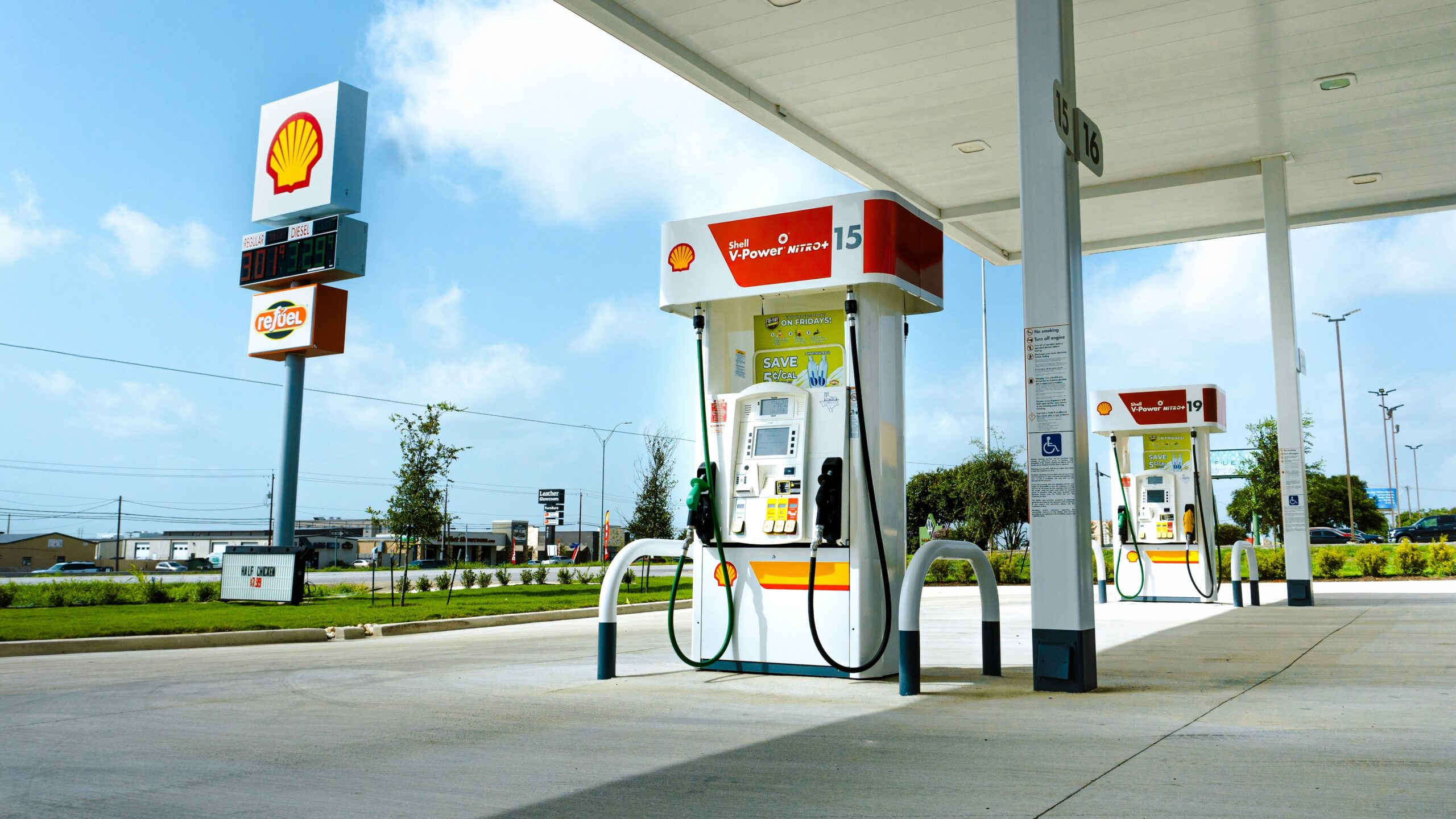
A gallon of regular gasoline now costs the average American driver $4.30, the most expensive fill-up the country has seen since the summer of 2022, according to the latest weekly survey from the U.S. Energy Information Administration. The price has climbed roughly 60 cents since early March 2026, driven largely by a military confrontation between the United States and Iran that has put the world’s most critical oil shipping lane at risk and rattled global energy markets.
President Trump, speaking at a press availability in late May, warned that a potential Iranian blockade of the Strait of Hormuz could last “months, not weeks.” The remark sent crude oil futures past $95 a barrel on both the Brent and West Texas Intermediate benchmarks, according to market data, and underscored a reality that energy traders had already priced in: this crisis has no clear end date.
The timing could hardly be worse. Millions of families are locking in summer travel plans, and household budgets are already under pressure from grocery costs that remain elevated and mortgage rates that have held above 6.5 percent for much of the year.
Why the Strait of Hormuz matters so much
Roughly one-fifth of all petroleum liquids traded globally, about 20 million barrels a day, pass through the narrow waterway separating Iran from Oman, according to the EIA’s chokepoint analysis. Even a partial disruption would yank enough supply from the market to push prices sharply higher. A sustained full blockade would represent the most severe oil supply shock since the 1973 Arab embargo.
That threat moved from theoretical to operational this spring. The Trump administration launched strikes against Iranian nuclear and military sites, and Tehran responded with missile volleys and public threats to close the strait. The Pentagon moved a second carrier strike group into the region. Defense Secretary Pete Hegseth told the Senate Armed Services Committee that U.S. operations remained “limited in scope,” and the administration formally notified Congress that military action had been “terminated” before a 60-day War Powers Act deadline, according to AP reporting on the legal and authorization posture.
But the legal declaration and the reality on the water do not quite match. Naval forces remain deployed, Iran has not stood down, and the president’s own public statements suggest the administration expects disruption to continue well into the fall. That gap between the White House’s legal position and its operational posture is keeping risk premiums elevated and oil traders guessing.
What drivers are paying right now
The national average obscures sharp regional differences. Drivers in California, Nevada, and Washington are already paying well above $5.00 a gallon, while motorists in Gulf Coast states like Texas and Louisiana are closer to $3.80, according to AAA’s daily fuel gauge. The spread reflects differences in state taxes, refinery proximity, and fuel-blend requirements, but the direction is the same everywhere: up.
For a household driving 1,000 miles a month in a vehicle averaging 25 miles per gallon, the jump from $3.70 in early March to $4.30 in late May means roughly $24 more a month at the pump. That figure sounds modest in isolation. It is less modest stacked on top of a grocery bill that has risen more than 20 percent since 2020, according to Bureau of Labor Statistics consumer price data.
“People notice gasoline prices more than almost any other cost because they see them on giant signs every time they drive,” said Tom Kloza, global head of energy analysis at OPIS, a Dow Jones company that tracks fuel pricing. “When the number starts with a four, it changes consumer psychology.”
That psychology carries political weight. Gas prices have historically tracked closely with consumer confidence and presidential approval ratings. The White House has not yet announced any specific measures aimed at lowering pump prices, though administration officials have pointed to U.S. crude production, which is running near a record 13.4 million barrels a day according to EIA weekly supply data, as evidence that domestic energy policy is sound.
What could push prices higher, or bring relief
Several forces will determine whether $4.30 is a ceiling or just a waypoint.
Escalation risk. If Iran follows through on threats to mine or physically block the strait, oil analysts at major Wall Street banks have warned that Brent crude could spike above $120 a barrel, which would translate to national gasoline prices approaching $5.50 or higher. No blockade of that scale has occurred in modern history, and projections carry significant uncertainty.
OPEC+ response. Saudi Arabia and the United Arab Emirates hold the largest spare production capacity among major exporters. Both nations could, in theory, ramp up output to offset lost Iranian and Iraqi barrels. But neither has made a public commitment to do so, and OPEC+ production policy has favored restraint for the past two years to support prices and revenue.
The Strategic Petroleum Reserve. The U.S. SPR holds roughly 370 million barrels after drawdowns during the 2022 energy crisis, according to Department of Energy inventory data. The Biden administration used the reserve aggressively to tamp down prices; the Trump administration has signaled it prefers to refill the reserve rather than tap it again. No formal criteria for an emergency release have been published.
Refinery capacity. U.S. refineries are running at about 90 percent of operable capacity heading into peak summer driving season, according to the EIA’s weekly petroleum status report. That leaves some room to increase finished gasoline output, but planned maintenance at several Gulf Coast facilities in June could temporarily tighten supply along the East Coast.
Domestic production. The United States is producing more crude oil than any country in history, yet that output alone cannot insulate American consumers from a global price shock. Oil is priced on world markets, and a disruption in the Persian Gulf raises costs for every barrel, regardless of where it was pumped. This is the dynamic that often frustrates calls to simply “drill more” as a short-term fix.
What official data shows, and what it does not
The EIA’s weekly gasoline price survey is the most reliable benchmark for tracking what Americans pay at the pump. It is collected directly from stations nationwide and published on a consistent schedule. When the agency’s historical series shows the current average as the highest since mid-2022, that claim rests on its own data, not on third-party interpretation.
What no government agency has published, however, is a model isolating exactly how many cents per gallon the Iran conflict has added to the price. Oil markets respond to dozens of variables simultaneously: refinery throughput, seasonal demand, currency fluctuations, inventory levels, and speculative positioning all play roles. The Iran standoff is clearly a dominant factor, but anyone claiming to know its precise contribution is estimating, not measuring.
The EIA has not released a specific forecast tying Iran tensions to a projected gasoline price range for the summer. The State Department has not published an economic impact assessment of a blockade scenario. Until those institutional analyses appear, specific predictions about $5 or $6 gasoline should be treated as informed speculation, not established fact.
Three signals to watch this summer
The next several weeks will reveal whether the price spike is peaking or still building momentum. Three indicators matter most.
First, the EIA’s weekly petroleum status report, released every Wednesday, tracks gasoline inventories and refinery utilization. Falling inventories heading into the July 4 holiday weekend would be a warning sign for consumers.
Second, diplomatic channels between Washington and Tehran. Any resumption of direct or back-channel talks would likely ease risk premiums quickly. Oil markets price in fear as efficiently as they price in supply, and a credible de-escalation signal could shave dollars off a barrel of crude within days.
Third, OPEC+ meetings and public statements. If Saudi Arabia signals a willingness to boost output, markets will price in relief before additional barrels actually flow.
For now, the picture is clear. Gasoline is at a four-year high. The military standoff fueling much of the increase shows no sign of resolution. And the tools that could bring relief, from diplomacy to reserve releases to production increases, remain on the shelf. Families planning summer road trips in June 2026 should budget for prices at or above current levels and watch those three indicators closely before counting on cheaper gas anytime soon.