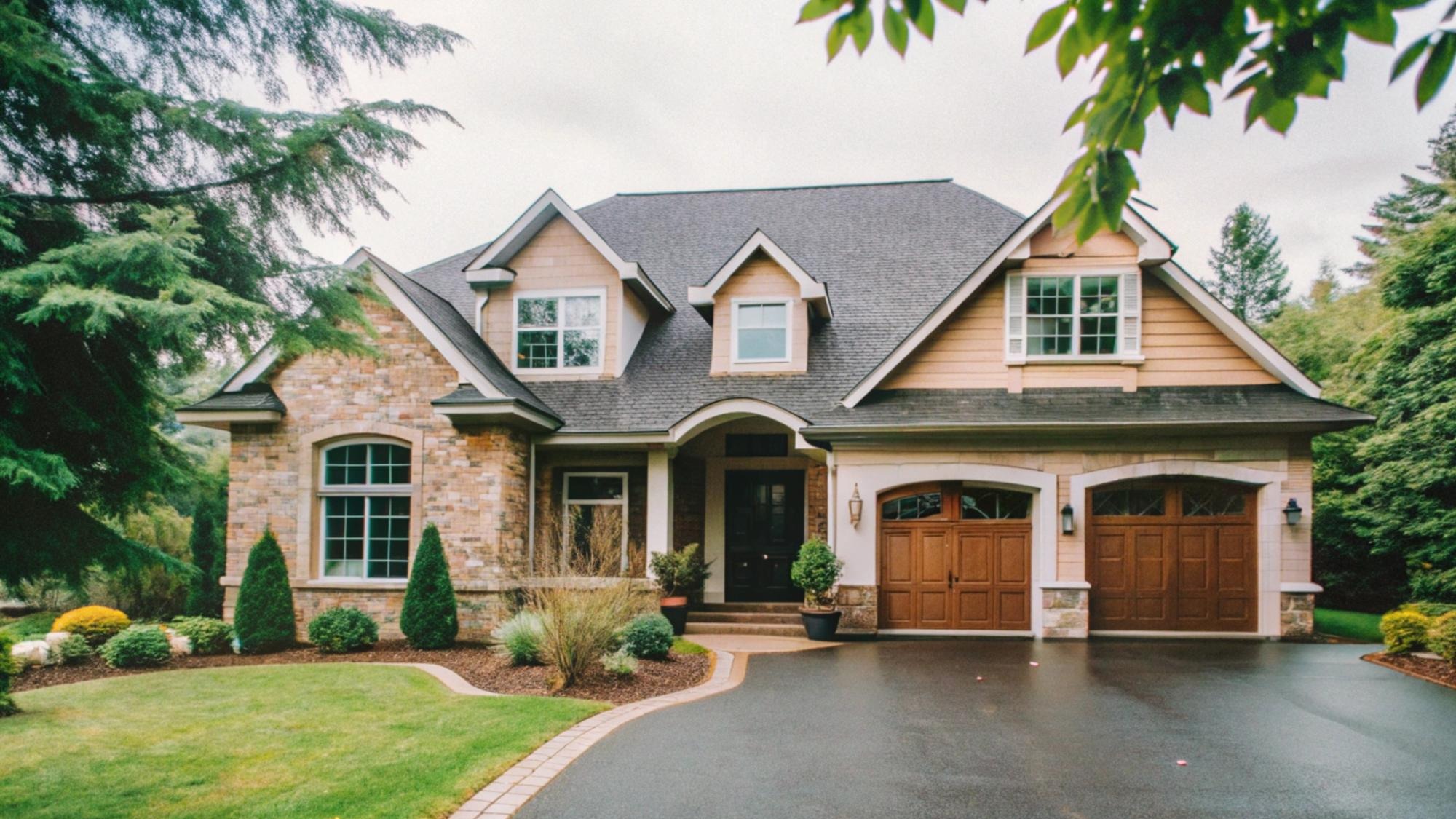
Spring is supposed to be when the housing market wakes up. In April 2025, it barely stirred. The median existing-home sale price climbed to $417,800, the highest figure ever recorded, according to the National Association of Realtors. Sales, meanwhile, slid to their weakest seasonally adjusted annual rate in nine months, dropping 0.5% from March and roughly 2% from a year earlier. The busiest stretch of the real estate calendar delivered more price pain and fewer closed deals.
The reason is sitting in plain sight on every mortgage rate sheet. Thirty-year fixed rates averaged 6.65% in late April, according to the Freddie Mac Primary Mortgage Market Survey tracked by the Federal Reserve Bank of St. Louis. At that level, financing a home costs so much that sellers’ record asking prices and buyers’ actual budgets no longer overlap for millions of households. The result is a standoff: listings priced for yesterday’s rates, shoppers stuck with today’s.
The monthly payment gap tells the whole story
A buyer putting 20% down on April’s median-priced home borrows roughly $334,240. At 6.65%, the principal-and-interest payment on a 30-year fixed loan comes to about $2,145 per month. Rewind to early 2022, when rates briefly dipped below 3%, and that identical loan would have cost around $1,410. The difference: more than $730 a month, or close to $8,800 a year, for the same house with the same square footage and the same leaky faucet.
Stack that against incomes and the squeeze becomes concrete. The U.S. Census Bureau’s most recent American Community Survey, covering 2023 and released in September 2024, pegged median household income at approximately $80,600. At current rates, the mortgage payment alone on a median-priced home would eat about 32% of gross monthly income, and that is before property taxes, homeowners insurance, or maintenance enter the picture. Most conventional lenders cap total housing costs between 28% and 31% of gross income, which means the median home now sits just beyond the qualifying threshold for the median household unless a larger down payment or secondary income closes the gap.
Rate readings have also been a moving target this spring. A separate weekly Freddie Mac survey, reported by the Associated Press in late spring 2025, placed the average long-term rate at 6.38%, which it described as the highest in more than six months. The difference between that figure and the 6.65% reading reflects different survey weeks, not conflicting data. The broader point holds: rates have been volatile and trending upward through the spring, making it hard for buyers to plan with any certainty.
Fewer sales, but sellers are not budging
April’s decline extended a slide that has been building since late 2024. Transaction volume remains well below the pace of the pre-pandemic market, when annual existing-home sales regularly landed between 5.0 and 5.5 million units, according to NAR historical data. Yet prices keep climbing, defying the textbook expectation that softer demand would force concessions.
Supply is the main reason. Inventory has ticked up in scattered metro areas, particularly in parts of the Sun Belt where pandemic-era migration has cooled, but nationally it remains thin by historical standards. Millions of homeowners locked in mortgages at 3% or lower during 2020 and 2021. Trading that rate for one north of 6.5% on a new purchase is a financial penalty few are willing to accept. Research from the Federal Housing Finance Agency has documented this “lock-in effect” extensively: when the gap between a homeowner’s current rate and the prevailing market rate is wide enough, mobility drops sharply. The practical consequence is a market with too few listings to satisfy even reduced demand, which keeps prices elevated.
NAR’s existing-home sales report covers roughly 90% of all U.S. resale transactions and serves as the standard benchmark for the secondary market. By that measure, the spring 2025 season has failed to deliver the rebound that many brokerages and economists projected heading into the year.
First-time buyers are absorbing the worst of it
No group feels the affordability crunch more acutely than people trying to buy their first home. NAR’s annual Profile of Home Buyers and Sellers has tracked the first-time buyer share declining for years; the combination of record prices and near-7% financing has only accelerated the trend. In many metro areas, starter homes that once served as the entry ramp to ownership now carry monthly payments that rival or exceed what renters pay for larger apartments, stripping away the financial logic that traditionally pushed people from renting to buying.
Younger households face a compounding problem. Rising rents make it harder to stockpile savings, and the down-payment bar itself has climbed alongside prices. Putting 20% down on a $417,800 home requires more than $83,500 in cash. For most first-time buyers without family wealth or access to specialized assistance programs, that number is a wall, not a hurdle.
Whether federal or state governments will expand down-payment assistance at a meaningful scale, or whether homebuilders will redirect production toward smaller, lower-cost units, remains unresolved. As of late spring 2025, no major new legislation or executive action has been enacted that would materially shift the math for entry-level buyers, though several proposals at the state level are in various stages of debate.
What could break the standoff
A few forces could tilt the balance in the second half of 2025, though none comes with a guarantee. If the Federal Reserve signals rate cuts later this year, mortgage rates could drift back toward 6% or slightly below. Even that modest move would shave roughly $100 to $150 off the monthly payment on a median-priced home, enough to pull some sidelined buyers back into the market. But a quarter-point or half-point rate decline would not, on its own, unwind the deeper affordability erosion created by years of home prices outrunning wage growth.
On the supply side, a sustained jump in listings, perhaps 15% or more above current levels, could start to soften price pressure. That would likely require either a psychological shift among locked-in homeowners or a meaningful pickup in new construction. Builders have been offering rate buydowns and closing-cost incentives in recent months, but production of entry-level homes remains well short of estimated demand. The National Association of Home Builders has repeatedly cited labor shortages, zoning restrictions, and elevated material costs as constraints on the lower end of the market.
There is also the possibility that the stalemate simply grinds on. If rates hold above 6.5% and sales volume keeps sliding, some sellers will eventually cut prices or pull their homes off the market. But that process tends to unfold slowly and unevenly, playing out over quarters, not weeks, and varying sharply by region.
Strain without collapse, but no relief in sight
Nothing in the April data points to a crash. Prices are rising, not falling. Distressed sales remain a sliver of overall volume. Homeowner equity is near record levels, and underwriting standards are far stricter than they were in the years leading up to 2008. What the numbers do reveal is a market grinding through a prolonged affordability squeeze with no clear release valve.
For buyers, the calculus is uncomfortable: waiting for a dramatic price drop may not be realistic when inventory is this scarce, but stretching to buy at today’s rates carries genuine financial risk if incomes do not keep pace. For sellers, a record median price looks strong on paper, but it means less when the pool of qualified buyers keeps contracting and days on market start creeping up.
April 2025’s pairing of an all-time-high price with a nine-month sales low captures the central tension in American housing right now. Until mortgage rates or home prices give meaningfully, the market is likely to stay locked in this uneasy standoff, with both sides watching the other and waiting for someone to move first.