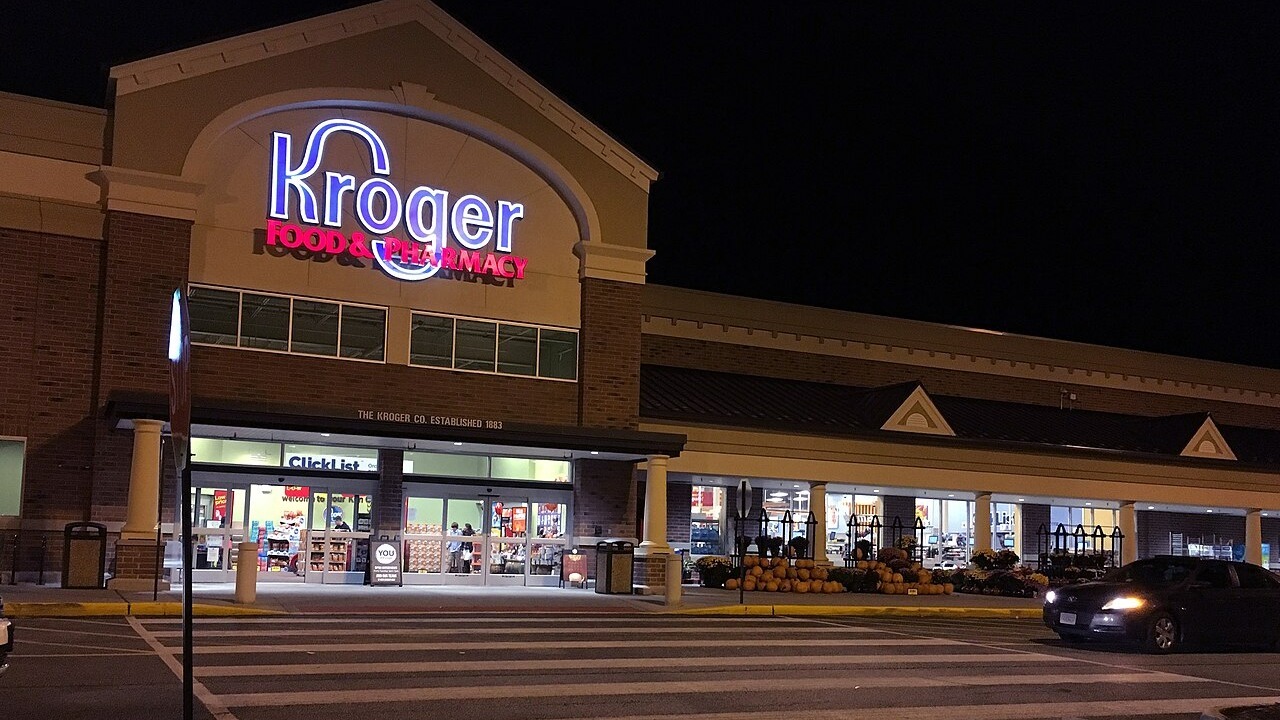
A federal court in Ohio has cleared the way for eligible Kroger pharmacy customers to file for a share of a $17 million settlement over how the company priced prescriptions for insured shoppers. The case centers on a narrow accounting question — what price a pharmacy reports to an insurer as its “usual and customary” charge — but the practical effect for older shoppers is straightforward: anyone who used insurance to fill a prescription at a Kroger-family pharmacy in the last several years may be owed a payment, and most of them will not need to dig up a single receipt to collect it.
The Pricing Dispute Behind the Settlement
The case, Kirkbride et al. v. The Kroger Co., No. 2:21-cv-00022, is pending in the U.S. District Court for the Southern District of Ohio before Judge Algenon L. Marbley. According to the court-authorized settlement notice, plaintiffs allege Kroger inflated the “usual and customary,” or U&C, price it reported to insurers when processing prescription claims by leaving out the lower prices available to members of its Kroger Savings Club discount program. Because insurers often calculate a customer’s copay off that reported U&C figure, the suit claims insured shoppers ended up paying more than they should have. Kroger denies any wrongdoing and maintains it correctly reported its retail prices, arguing that Savings Club pricing — available only to members who pay an annual fee — was never its “usual” price. The court has not ruled on which side is right; the settlement resolves the case without any finding of liability.
Free weekday retirement brief: Social Security, Medicare, and the IRS change the rules every year — and no notice arrives in the mail. The Retirement Money Brief by RetireShield explains one change every weekday: what moved, who it affects, and the step to take. Get the free brief.
Who Qualifies and What the $8,000 Threshold Means
The settlement class covers anyone in the United States or its territories who paid, in whole or in part, for one or more prescription drugs at a Kroger-owned or Kroger-operated pharmacy using insurance between December 9, 2018, and August 23, 2026, per the official settlement notice. Membership in the Savings Club is not required — the claim covers anyone who used insurance, whether or not they ever joined the discount program. A prescription paid entirely in cash or through a discount card instead of insurance falls outside the class.
The notice sets a documentation line at $8,000. Anyone claiming a total of $8,000 or more must submit records identifying their Kroger prescription payments. Below that amount, most people who already appear on Kroger’s own list of known purchasers can file without submitting proof; only claimants the settlement administrator cannot match to that list will be contacted afterward and asked for supporting records. In practice, that means a large share of eligible customers can file the claim form itself without gathering receipts first, though the administrator retains the right to follow up.
How Much Each Claim Could Be Worth
There is no fixed dollar figure attached to an individual claim. Kroger’s $17,000,000 payment funds a pool from which the court may first deduct attorneys’ fees of up to one-third of the total, litigation costs of up to $610,325.71, and service awards of up to $5,000 to each of the named plaintiffs, according to the settlement tracking page maintained by Open Class Actions, which has followed the case since it was filed. What remains — the Net Settlement Fund — is then split pro rata among everyone who files a valid claim, weighted by how much each person paid for Kroger prescriptions using insurance during the class period. Someone with years of regular prescriptions filled through insurance will recover more than someone with a single copay, and every individual share moves depending on how many other people ultimately file.
How and Where to File a Claim
Filing runs through the official settlement website, and the notice splits filers into two groups. Someone who received a mailed notice with a Notice ID and Confirmation Code is a “known claimant” and enters those numbers to file online in a few minutes. Someone who never received a notice but believes they qualify can still file, though the settlement administrator, Angeion Group, may follow up afterward to confirm eligibility and request records. A paper claim form is also available for anyone who prefers to mail it in rather than file online, and filing through the official channel costs nothing — no claims-recovery firm or third-party service is required to participate.
Doing nothing carries a real cost. Anyone who qualifies for the settlement class but never files a claim will not receive a payment, and — unless they separately opted out by the October deadline — will still be bound by the settlement’s release of claims against Kroger, forfeiting the right to sue over the same pricing dispute later. Even after final approval, the notice says the first distribution of settlement funds will go out within 120 days of the settlement’s “effective date,” which itself depends on when any appeals of the court’s approval are resolved; the notice warns an appeal could take several years, so there is no fixed payment date yet.
Deadlines on the Court’s Calendar
The claim form itself is due December 21, 2026. Two earlier dates apply only to people who want to opt out of the settlement or object to its terms: both the exclusion deadline and the objection deadline fall on October 22, 2026, well ahead of the claim cutoff, and the two paths are mutually exclusive — someone who opts out cannot also submit a claim. A fairness hearing where the court will decide whether to grant final approval is scheduled for January 11, 2027, in Columbus, before Judge Marbley, and no payments will go out until that approval is final and any appeals are resolved. Filing now, rather than waiting for final approval, is the only way to preserve a spot in the distribution once it happens.
Where the help is written down
The programs that lower Medicare costs each run on a different form and a different office, and no single notice lists them together.
The Medicare Cost & Coverage Protection Kit includes a 10-page kit, 51 state Medicare cost-help packs and the new Part D out-of-pocket cap.
See the state cost-help packs in The Medicare Cost & Coverage Protection Kit.
AI tools assisted in researching and drafting this article, which was reviewed prior to publication.