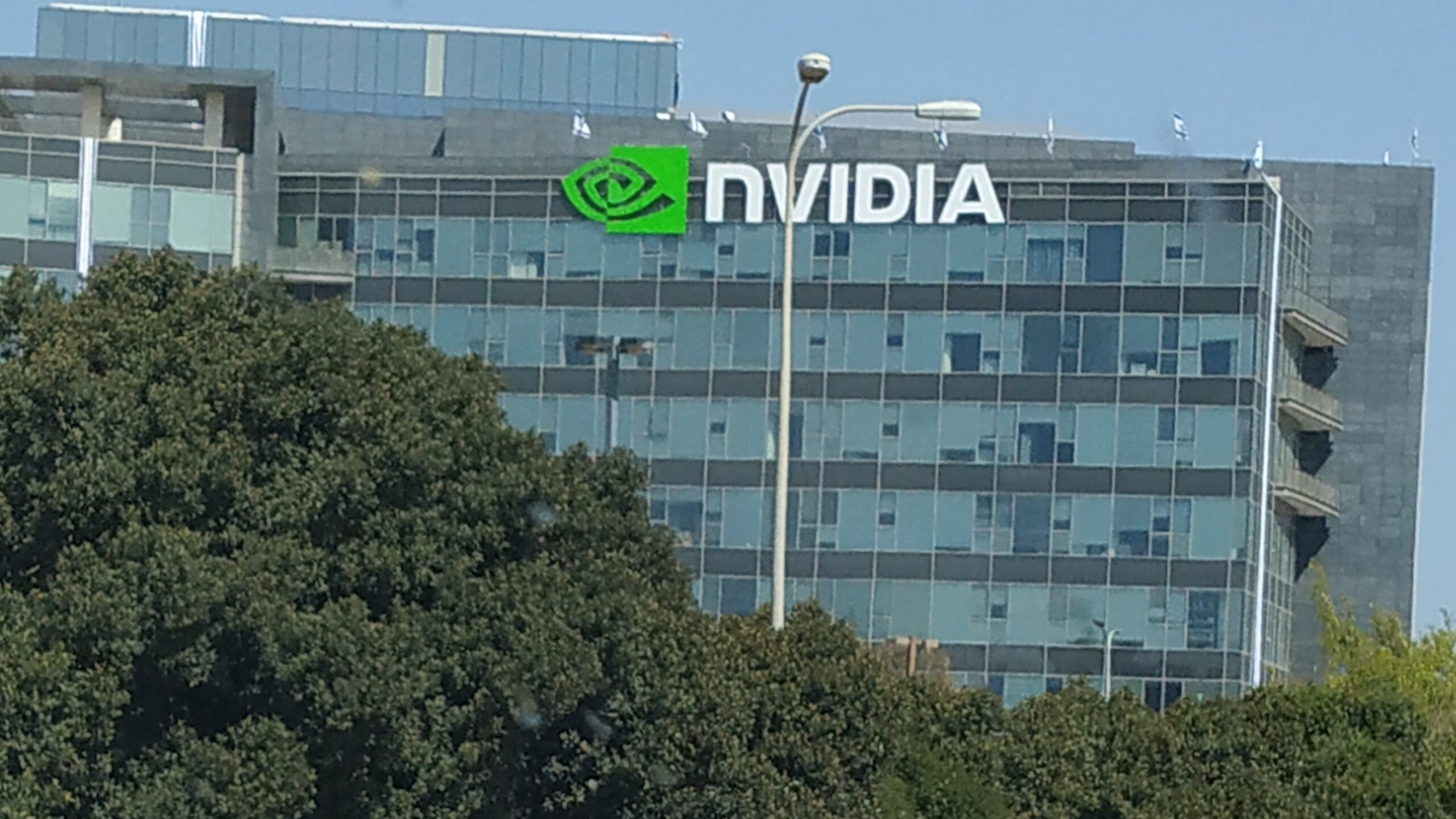
Nvidia Corp. surged roughly 4% in a single session in May 2026, pushing its market capitalization to a record near $5.3 trillion and widening its lead as the world’s most valuable publicly traded company. Based on approximately 24.5 billion diluted shares outstanding reported in the company’s most recent annual filing, the record close implied a share price in the neighborhood of $216, though exact intraday figures vary by data provider. The chipmaker first passed Apple for that title in early 2026, according to real-time data from Bloomberg and Refinitiv, though the ranking has flipped more than once as daily price swings shuffle the leaderboard. For context, Nvidia crossed the $3 trillion market-cap threshold in mid-2024 and the $4 trillion mark later that year, meaning the climb to $5.3 trillion unfolded in under two years.
The move added more than $200 billion in market value in a matter of hours. “The hyperscaler capex cycle is not slowing down, and Nvidia is the clearest beneficiary,” one senior equity trader at a major Wall Street bank told colleagues on the desk, summarizing the consensus view. On trading desks and in analyst notes, the explanation was straightforward: investors are growing more confident that spending on artificial-intelligence infrastructure is still accelerating, not leveling off. Nvidia’s data-center segment, which its most recent annual filing shows accounts for the vast majority of total revenue, sits squarely at the center of that bet.
What Nvidia’s own filings reveal
The strongest foundation for judging the rally is Nvidia’s Form 10-K for the fiscal year ended January 2026, filed with the U.S. Securities and Exchange Commission. The audited document lays out revenue by segment, operating margins, and cash-flow generation, all reviewed by independent auditors and submitted under securities law.
The numbers confirm what Wall Street had been pricing in for months. For fiscal year 2026, Nvidia reported total revenue of approximately $130 billion, with data-center revenue accounting for well over 80% of that total, according to the segment breakdown in the filing. Data-center revenue dwarfs every other business line, fueled by AI training and inference workloads purchased by hyperscale cloud providers, enterprises, and sovereign-government programs. In the management discussion section, Nvidia CEO Jensen Huang noted that “demand for accelerated computing continued to broaden across every industry and geography,” even as U.S. export controls continued to block shipments of advanced chips to China and other restricted markets.
Share-count disclosures in the same filing anchor the approximate $5.3 trillion market-cap figure. Market capitalization is simply stock price multiplied by shares outstanding; the 10-K provides the authoritative share count after adjusting for buybacks, stock-based compensation, and new issuances. Real-time data providers then apply the latest trading price to that total, which is why the record number should be understood as an approximate intraday peak rather than a precise audited figure.
Why a 4% move is harder to explain than it looks
No official Nvidia announcement or regulatory filing pointed to a single trigger for the session’s gains. A 4% swing in a stock this large can reflect institutional rebalancing, options-market dynamics, macro signals, and momentum trading all at once. Calling it an “AI demand” rally captures the prevailing narrative but papers over the mechanical forces that routinely amplify large-cap tech moves on heavy-volume days.
The AI-demand thesis itself rests on two pillars: Nvidia’s own revenue trajectory and public capital-expenditure commentary from hyperscaler executives during recent earnings calls. Microsoft, Alphabet, Amazon, and Meta have each signaled elevated infrastructure budgets stretching into calendar 2026 and beyond, though the precise split between GPU purchases and other data-center spending is rarely broken out.
Nvidia’s risk-factor disclosures add important caveats. The 10-K warns that demand patterns can shift quickly, that revenue concentration among a handful of hyperscalers remains elevated, and that geopolitical developments around chip exports are fluid. The company has previously disclosed billions of dollars in charges and lost revenue tied to China export restrictions, and any further tightening could pressure both the top line and margins.
The bull-bear divide at $5.3 trillion
At this valuation, Nvidia’s stock price already assumes years of compounding data-center growth. Bulls point to the Blackwell GPU architecture ramp. Blackwell-based products, including the B200 and GB200 accelerators positioned at the top of Nvidia’s data-center lineup, began shipping to major cloud customers in late 2024 and early 2025, and the ramp is expected to drive a broad upgrade cycle through 2026. Proponents also highlight the rise of inference workloads that could eventually rival training in total GPU consumption. “Inference is the next leg of the story,” Bernstein semiconductor analyst Stacy Rasgon wrote in a recent note. “Every new AI model deployed creates a recurring stream of compute demand that did not exist two years ago.” They also note that Nvidia’s software ecosystem, particularly its CUDA platform, creates switching costs that custom-chip efforts have yet to overcome.
Bears counter that capital-expenditure cycles are inherently lumpy. Competition from AMD’s MI-series accelerators and custom silicon projects at Google (TPUs), Amazon (Trainium), and Microsoft (Maia) is intensifying. A valuation larger than the GDP of all but a few countries, they argue, leaves almost no margin for execution missteps or a slowdown in orders.
Both camps start from the same set of audited numbers in Nvidia’s SEC filings. Revenue growth rates, gross-margin trends, and free-cash-flow generation will ultimately determine whether the stock can sustain its current altitude. The next quarterly earnings report will offer the first post-fiscal-year data point, and Wall Street expects it to set the tone for the months ahead.
Three forces shaping Nvidia’s trajectory into mid-2026
First, the pace of Blackwell shipments. Any sign of supply constraints, different-than-expected customer uptake, or a delay in the next-generation Rubin architecture will move the stock in either direction. Second, the regulatory landscape around U.S. chip exports. Bipartisan pressure to tighten restrictions on China remains strong, even as the Commerce Department weighs industry feedback on existing rules. Third, hyperscaler earnings calls over the current quarter, which will reveal whether elevated capex pledges are converting into firm purchase orders or being stretched over longer timelines.
Nvidia’s record close caps a run that has redefined what investors thought a semiconductor company could be worth. Whether the stock keeps climbing depends less on any single trading session and more on a straightforward question: Is the AI infrastructure buildout as durable as $5.3 trillion already assumes?