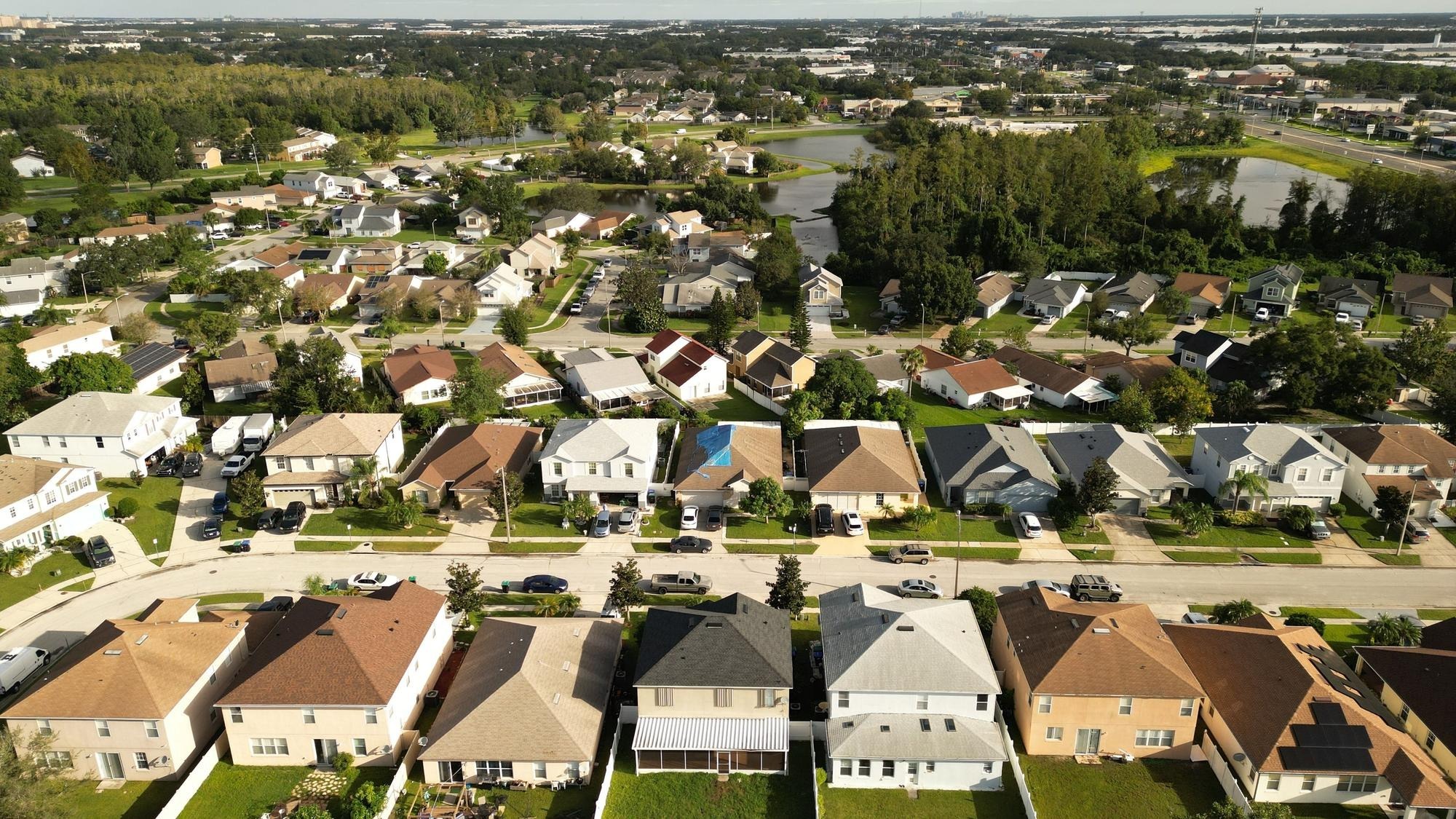
The U.S. economy added 115,000 jobs in April 2026 and the unemployment rate held steady at 4.3 percent, the Bureau of Labor Statistics reported on May 8. The gain topped most forecasts, especially given the drag from higher energy prices. Tensions between the United States and Iran that escalated earlier in 2026 have disrupted oil shipping routes and pushed crude prices higher, raising fuel and input costs across the economy. But for millions of homeowners, a steady paycheck is losing ground to a cost that keeps climbing: home insurance.
A Pew Research Center survey published May 6, based on a nationally representative sample of roughly 5,000 U.S. adults (margin of error: plus or minus 1.8 percentage points), found that 71 percent of homeowners say their premiums have risen in recent years. Forty-two percent called the increase substantial. Among those who saw higher bills, 57 percent said they made financial sacrifices to keep paying, from canceling vacations and skipping home repairs to cutting back on groceries.
A resilient but cooling labor market
Health care led April’s hiring with 37,000 new positions. Transportation and warehousing added 30,000, and retail trade picked up 22,000. Federal government payrolls edged lower, continuing months of public-sector restraint. The broader payroll trend shows monthly gains that have cooled from the rapid post-pandemic rebound but have not tipped into contraction.
“The 115,000 number is better than what most of us penciled in, but it is not a blowout,” said Mark Zandi, chief economist at Moody’s Analytics. “The labor market is bending under the weight of higher energy costs, but it has not broken.”
At 4.3 percent since February, the unemployment rate signals that employers are still hiring rather than resorting to large-scale layoffs, even as fuel and input costs rise. Still, 115,000 is well below the 200,000-plus monthly averages seen in 2023 and 2024. The labor market is downshifting, even if it has not stalled.
What the topline numbers do not reveal is the quality of those new jobs. The April data confirm sector-level gains but do not break out how many positions are full-time, how many offer benefits, or how wages in those roles compare to the rising cost of housing and insurance. For workers in health care and retail, where median pay tends to be moderate, a paycheck that covers rent but not a surprise premium hike is a familiar bind.
Why insurance bills are outpacing wages
The Government Accountability Office, in a 2026 analysis of premium trends, reported that homeowners insurance costs have broadly tracked inflation nationwide but have spiked far above it in disaster-prone regions. The GAO report placed the national average annual premium at roughly $2,300 in 2025, up from about $1,900 two years earlier. In high-risk states such as Florida and Louisiana, average premiums have climbed past $4,000, with some policyholders reporting year-over-year increases of $800 to $1,500 or more.
The culprits are familiar: climate-driven catastrophe losses, higher costs for reinsurance (the backup coverage that insurers themselves buy), and surging prices for construction materials and labor needed to rebuild after storms and wildfires.
That uneven geography matters. Homeowners along the Gulf Coast and in California’s wildfire corridors are far more likely to face abrupt nonrenewals or double-digit rate increases than someone in the Upper Midwest. In some markets, insurers have pulled back entirely, leaving state-run plans of last resort as the only option. In lower-risk areas, premiums may rise 3 to 5 percent a year. In high-risk zones, jumps of 20, 30, or even 50 percent are not uncommon, according to the GAO findings.
The Pew survey puts a human face on those numbers. Teresa Morales, a retired teacher in Baton Rouge, Louisiana, told WAFB, the local CBS affiliate, in May 2026 that her annual premium jumped from $2,400 to $3,800 in a single renewal cycle. “I had to cancel a trip to see my grandchildren and put off fixing the gutters,” she said. “You feel like you are choosing between protecting your house and actually living in it.”
Among homeowners who reported higher premiums, the sacrifices were not trivial. Deferred maintenance can compound into larger, costlier problems, and skipped spending ripples through local economies that depend on consumer dollars. Pew’s sample captures self-reported perceptions rather than audited billing records, so the figures are best understood as a measure of felt financial pressure. Even so, when a majority of affected homeowners say they are cutting back, the signal is hard to dismiss.
The gap between a job and financial security
On its own, 115,000 new jobs and a stable unemployment rate look like good news, particularly against the backdrop of an energy shock that many economists expected would slow hiring more sharply. But employment alone does not equal financial stability. If a household’s fixed costs, especially insurance, are rising faster than wages, the math tightens regardless of whether someone has a job.
The Average Hourly Earnings line in the May 8 employment situation report shows wages growing at roughly 3.5 to 4 percent on a year-over-year basis. In high-risk insurance markets, premiums have been climbing at multiples of that rate. For homeowners in those regions, the gap between income growth and cost growth is real and widening.
There is also the question of what comes next. The Iran-related energy price increases have not fully worked through the economy, and economists remain divided on whether hiring will hold up through the summer or soften as businesses absorb higher fuel and shipping costs. On the insurance side, the 2026 hurricane season is just beginning, and another active storm year could trigger a fresh round of rate increases and coverage pullbacks heading into 2027.
Where homeowners can look for relief
For homeowners already stretching to cover premiums, the immediate question is whether any relief is on the horizon. Several states, including Florida, Louisiana, and California, have moved to tighten insurer regulations or expand state-backed coverage pools, but those efforts have produced mixed results so far. Federal proposals to create a national catastrophe insurance backstop have gained attention in Congress but have not advanced to a vote.
Insurance agents and consumer advocates recommend a few concrete steps: shopping multiple carriers at each renewal, raising deductibles to lower monthly costs (while keeping enough savings to cover the higher out-of-pocket amount), asking about mitigation credits for storm shutters or fortified roofs, and checking whether state-run insurers of last resort offer competitive rates. None of these steps solve the underlying cost problem, but they can soften the blow in the short term.
For workers, the May and June jobs reports will be critical tests of whether April’s resilience holds or whether the energy shock begins to bite. The BLS cautions that its archived releases may be revised in subsequent months, so even the 115,000 figure could shift once more complete employer responses are processed.
Why a paycheck alone cannot keep up with rising premiums
What the data support as of late May 2026 is a picture of an economy that is still generating jobs but asking households to absorb costs that paychecks alone cannot always cover. The labor market has not cracked. But for the 71 percent of homeowners watching their insurance bills climb, resilience on a national scale does not automatically translate to security at the kitchen table.