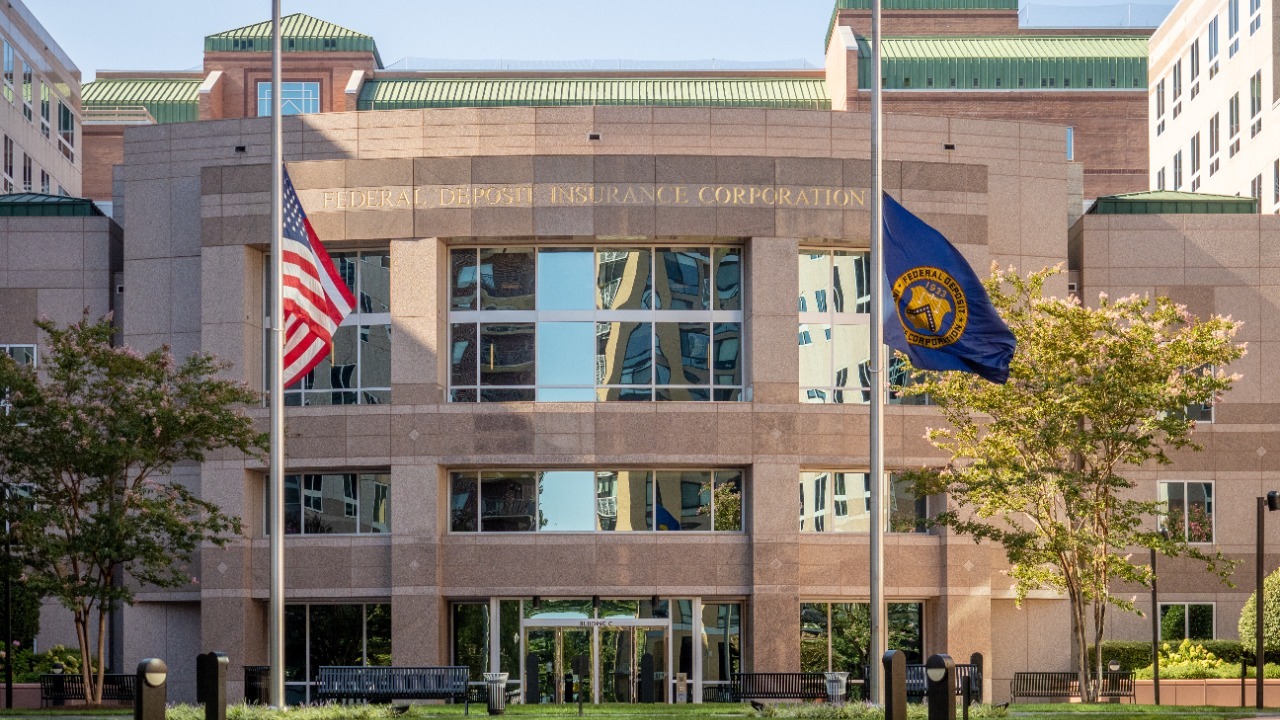
For years, the pattern played out the same way. A firearms dealer in Mississippi would open a business checking account, operate it without incident, and then receive a letter saying the bank was ending the relationship. No overdrafts. No fraud. No explanation beyond a vague reference to “risk.” Cryptocurrency firms, tobacco retailers, adult entertainers, and faith-based nonprofits reported the same thing: accounts shut down not because of how they handled money, but because of what they did for a living.
On June 9, 2026, a joint rule from the Federal Deposit Insurance Corporation and the Office of the Comptroller of the Currency is designed to end that cycle. The regulation bars federal bank examiners from using “reputation risk” as grounds to pressure banks into dropping clients. It explicitly prohibits agencies from encouraging account closures based on a customer’s political views, religious beliefs, or involvement in lawful but politically disfavored industries.
What the rule actually says
The FDIC and OCC finalized the rule together and published detailed implementation guidance. The FDIC’s guidance letter lays out the core mechanics: regulators can no longer cite reputational concerns to influence which customers a bank serves, and all references to reputation risk will be stripped from FDIC examination manuals. The agencies’ joint announcement states that regulators “may not pressure banks to close accounts based on political or religious views or politically disfavored but lawful activities.”
The OCC reinforced those prohibitions through Bulletin 2026-12, which spells out that agencies cannot require or encourage termination of any business relationship on the basis of reputation risk. The bulletin also bars pressure tied to political or religious views or constitutionally protected speech, and it directs OCC examiners to evaluate safety and soundness criteria rather than perceived public controversy around particular customers.
The rule has a backstory. It traces to an executive order titled “Guaranteeing Fair Banking For All Americans.” The specific date and executive order number of that directive have not been confirmed in publicly available federal records as of June 2026. Following the order, the FDIC declared that “debanking law-abiding customers is unacceptable” and previewed the rulemaking process. In that statement, the agency tied its effort to longstanding complaints from small businesses, religious organizations, and advocacy groups that feared losing access to basic financial services because their activities had become politically contentious.
Those complaints did not emerge in a vacuum. Critics have drawn a direct line to Operation Choke Point, the Obama-era initiative launched in 2013 in which the Department of Justice and bank regulators pressured financial institutions to sever ties with legal industries such as payday lending and firearms sales. Although the program was formally ended in 2017, business owners in targeted industries have argued that its effects lingered in bank compliance culture long after the official policy was rescinded.
The Federal Reserve Board has moved in parallel. In January 2025, the Fed’s Vice Chair for Supervision publicly acknowledged what the official called “troubling cases of debanking” and stated that Fed policy should not penalize institutions for serving lawful customers. The official’s name has not been independently confirmed in the source material available for this article. The Fed subsequently proposed removing reputation risk from its own supervisory framework. While the Fed’s rulemaking is on a separate timeline, it mirrors the FDIC and OCC approach by steering examiners away from subjective reputational judgments and toward quantifiable financial risks.
The push extends beyond traditional bank regulators. In February 2025, FTC Chairman Andrew N. Ferguson sent warning letters to the CEOs of PayPal, Stripe, Visa, and Mastercard over publicly reported denials of service based on political or religious views. Those letters flagged potential exposure under Section 5 of the FTC Act, which prohibits unfair or deceptive acts or practices, signaling that payment processors and fintech platforms face scrutiny as well.
What the rule does not do
The most important limitation is one that many affected business owners will find frustrating: the rule does not create a private right of action. A small business owner who believes a bank dropped them for political reasons cannot sue under this regulation. The rule binds federal examiners, not the banks themselves. A bank that independently decides to close an account for its own business reasons, without regulator pressure, is still free to do so.
That distinction matters because the line between a bank acting on its own risk appetite and a bank responding to informal regulatory signals has always been blurry. Whether the FDIC Inspector General, OCC enforcement teams, or internal compliance units will actively audit adherence to the new standards is not addressed in the published guidance. Without an enforcement mechanism that affected customers can invoke directly, the rule’s real-world impact depends heavily on how seriously examiners and bank compliance departments treat it.
No federal agency has published official data quantifying how many account closures were driven by regulator pressure before this rule. The FDIC’s statements and the Fed’s acknowledgment of “troubling cases” confirm that the problem existed, but the scale of past debanking remains undocumented in any publicly available dataset. Without baseline numbers, measuring the rule’s effectiveness after June 9 will be difficult.
The FTC’s warning letters to payment processors expose a separate gap. Fintech companies and card networks are not supervised the same way as FDIC-insured banks. The new rule does not directly apply to PayPal or Stripe because it governs bank examiners, not nonbank payment firms. The FTC’s letters invoke a different legal authority, and whether enforcement actions follow or whether the letters serve primarily as deterrence remains an open question.
State-level dynamics add another layer. Texas and Florida have already enacted their own anti-debanking and anti-ESG banking laws that restrict financial institutions from denying services based on political or ideological criteria. How those state statutes interact with the new federal rule, and whether they offer customers stronger or weaker protections, will vary by jurisdiction and has not been addressed in the federal guidance.
How banks, examiners, and Congress respond after June 9
The strongest evidence supporting this rule comes directly from the regulators themselves. The FDIC’s letter and the OCC’s coordinated release provide clear, on-the-record statements that federal examiners may not use reputation risk as a lever to influence which lawful customers a bank serves. The OCC bulletin adds specificity on how those principles should guide day-to-day supervision, making it harder for informal guidance or off-the-record conversations to undercut the written standard.
But a rule on paper and a change in practice are two different things. Banks may expand their internal documentation explaining why particular accounts were closed or denied, both to demonstrate compliance and to defend against complaints. That could improve transparency. It could also lead to more cautious onboarding of customers perceived as controversial, if compliance teams worry that any misstep will draw scrutiny from oversight bodies. The rule could, paradoxically, make some banks more reluctant to take on borderline accounts rather than less.
There is also the question of durability. The rule is a regulatory action, not a statute. A future administration with different priorities could propose rescinding or weakening it through the same rulemaking process. Several members of Congress have introduced legislation that would codify these protections in federal law, which would make them harder to reverse, but none of those bills had passed as of June 2026.
The indicators worth tracking in the months ahead: how examiners adjust their practices in the field, whether banks continue to cite vague “risk” rationales when challenged on account closures, whether fintech platforms modify their own policies in response to the FTC’s warnings, and whether Congress moves to lock these protections into statute. The rule marks a clear shift in federal supervisory posture. Whether it translates into stable, reliable banking access for lawful but politically controversial customers is the question that June 9 starts to answer.