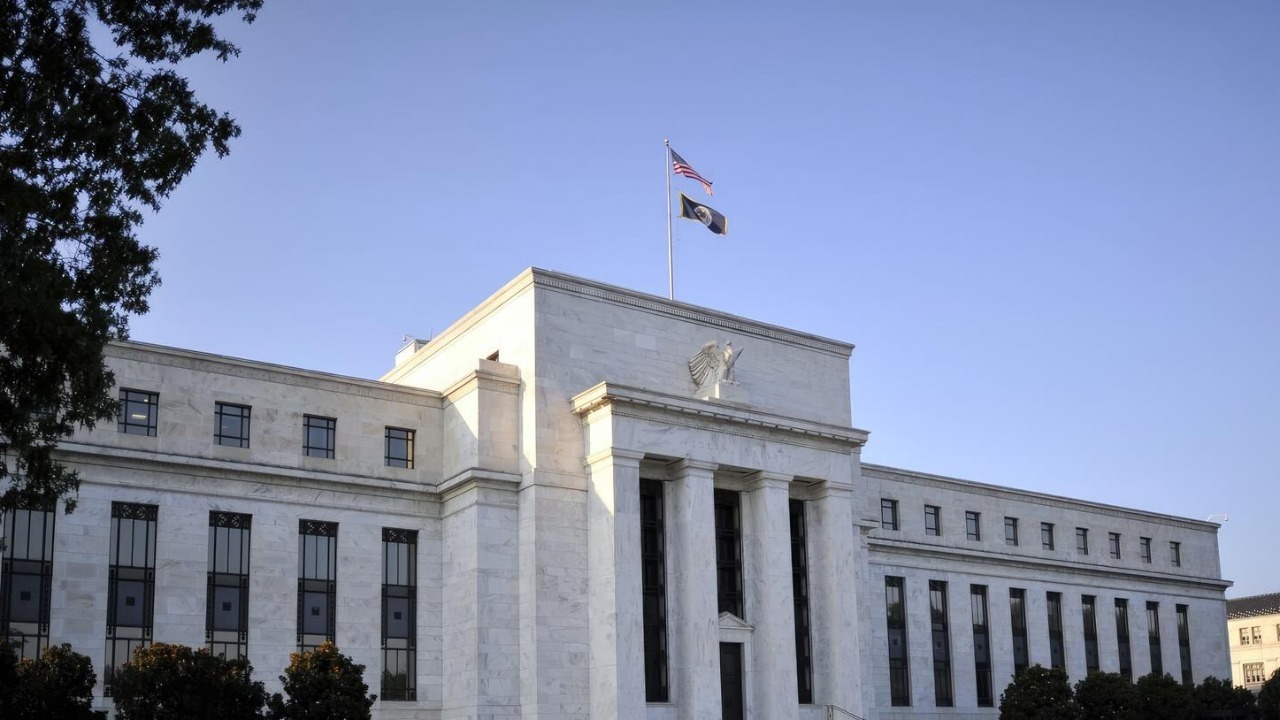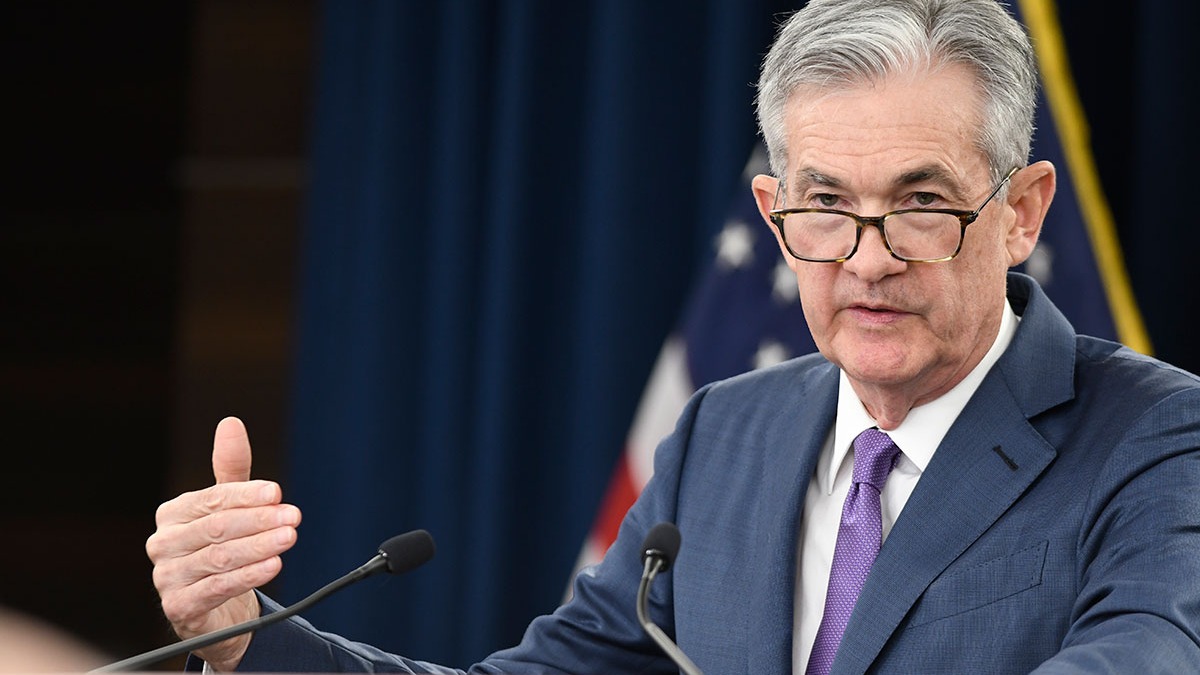
Jerome Powell chaired his last Federal Open Market Committee meeting at the end of April 2026 and left with a result that laid bare just how divided the Federal Reserve has become. The committee voted 7 to 4 to hold the federal funds rate at its current target range, but the four dissenting votes fractured in opposite directions: at least one member pushed for a quarter-point cut, while others favored holding or tightening. It was the largest number of dissents in a single FOMC decision since September 1992, and it arrived just weeks before Powell is set to hand over the chairmanship.
A 7-4 vote and a committee pulling in opposite directions
The official FOMC statement identified four members who broke with the majority. At least one dissenter favored a 25-basis-point rate cut, arguing that the economy had slowed enough to justify easier policy even with inflation still above the Fed’s 2 percent target. Other dissenters leaned in the opposite direction, concerned that easing too soon would undermine the progress made on price stability. The specific reasoning of each voter is expected to become clearer when the full meeting minutes are published in late May 2026.
The last time the FOMC split this visibly was September 1992, during a stretch of sluggish growth following the early-1990s recession. In that meeting, four members also voted against the majority, divided over whether the Fed was doing too much or too little to support a fragile recovery. The parallel is not exact, but the vote count alone signals a level of internal disagreement that the central bank has not displayed publicly in more than three decades.
What the hold means for borrowers and savers
For the roughly 60 percent of American households carrying variable-rate debt, according to Federal Reserve survey data, the decision to stand pat offers no immediate relief. Credit card annual percentage rates, which track the federal funds rate closely, remain near record levels. As of early 2026, the average credit card APR sits above 20 percent, according to Fed consumer credit data. Adjustable-rate auto loans and home equity lines of credit are similarly pinned at elevated levels.
Mortgage rates tell a slightly different story. The 30-year fixed rate is driven more by the 10-year Treasury yield than by the Fed’s overnight rate, and it is unlikely to move sharply until the committee signals a clearer path forward. Prospective homebuyers waiting for a meaningful drop may be waiting longer than they expected.
Savers, meanwhile, continue to benefit. High-yield savings accounts and certificates of deposit are still offering returns that outpace inflation, a dynamic that would reverse quickly if the Fed began cutting. That split, punishing for borrowers and rewarding for savers, is part of what makes the committee’s internal debate so consequential for household finances.
Powell’s exit and the question of what comes next
Powell’s term as chair expires on May 15, 2026, according to AP reporting on the transition timeline. At what is widely expected to be his final post-meeting press conference in the role, Powell confirmed that he plans to remain on the Board of Governors after stepping down from the top job. He cited unresolved legal and institutional matters involving the administration as part of his reasoning, though he did not elaborate. The distinction is significant: as a sitting governor, Powell would retain a vote on bank regulation and financial stability decisions, preserving a measure of institutional continuity even under a new chair.
Kevin Warsh, a former Fed governor who served during the 2008 financial crisis, has been nominated by President Trump to rejoin the Board of Governors. The White House transmitted that nomination to the Senate in March 2026, and the Senate Banking Committee has since advanced it. Warsh is widely regarded as the leading candidate for the chairmanship, but the formal nomination paperwork sent to the Senate covers a governor’s seat, not the chair’s office. Those are legally distinct appointments, and no public document has yet confirmed Warsh as the nominee for chair.
Warsh’s policy views will matter enormously if he does take the top job. During his previous tenure on the Board from 2006 to 2011, he was generally seen as more hawkish than the consensus, skeptical of prolonged easy-money policies and vocal about the risks of the Fed’s expanding balance sheet. Whether he would carry those instincts into a very different economic environment remains an open question.
The policy backdrop: inflation, energy, and softening growth
The Fed’s implementation note set the interest rate on reserve balances at a level consistent with the target range, effective April 30, keeping the technical plumbing of monetary policy aligned with the committee’s headline decision. Standing repo and reverse repo facilities were left unchanged, a signal that officials were not trying to nudge financial conditions through operational tools while the policy rate stayed flat.
Behind those procedural details, the economic picture is genuinely mixed. Consumer prices have been pushed higher in part by rising energy costs, and Fed officials have wrestled publicly with how much weight to give short-term swings in gasoline and electricity prices when setting policy that operates on a lag of 12 to 18 months. At the same time, several growth indicators have softened. The labor market, while still adding jobs, has shown signs of cooling, and consumer spending growth has decelerated from its pace earlier in the year.
That tug of war is exactly what produced the four-way split. A committee that cannot agree on whether rates are too high, too low, or appropriately calibrated is a committee likely to stay on hold until incoming data force a decisive move.
Why four dissents carry more weight than the decision itself
In a typical FOMC meeting, dissents are rare. One is routine. Two draw attention. Three raise questions about the chair’s ability to build consensus. Four, out of 11 voting members, represent something closer to a factional breakdown. It suggests that the quiet, pre-meeting negotiation process Fed chairs have relied on for decades, adjusting statement language and policy nuances to bring skeptics on board, either failed or was deliberately bypassed.
For financial markets, the signal is ambiguous but hard to ignore. A growing minority pulling in one direction can foreshadow a policy shift at the next meeting. But a minority split in multiple directions, as happened here, can also mean the committee defaults to inaction for longer than expected, unable to assemble a majority for any move.
Stock indexes were little changed in the immediate aftermath of the announcement, but Treasury yields ticked higher on the short end of the curve, a sign that bond traders interpreted the dissents as reducing the probability of a near-term rate cut. The dollar strengthened modestly against a basket of major currencies.
Investors, homebuyers, and business owners planning their next moves will get more clarity when the full meeting minutes are released in late May 2026. Those minutes will include a detailed account of the internal debate, the range of economic projections submitted by individual members, and potentially the specific arguments each dissenter made. Until then, the Fed’s direction is unusually opaque. The institution is navigating one of its most consequential leadership transitions in a generation with less internal agreement than it has shown in over 30 years.