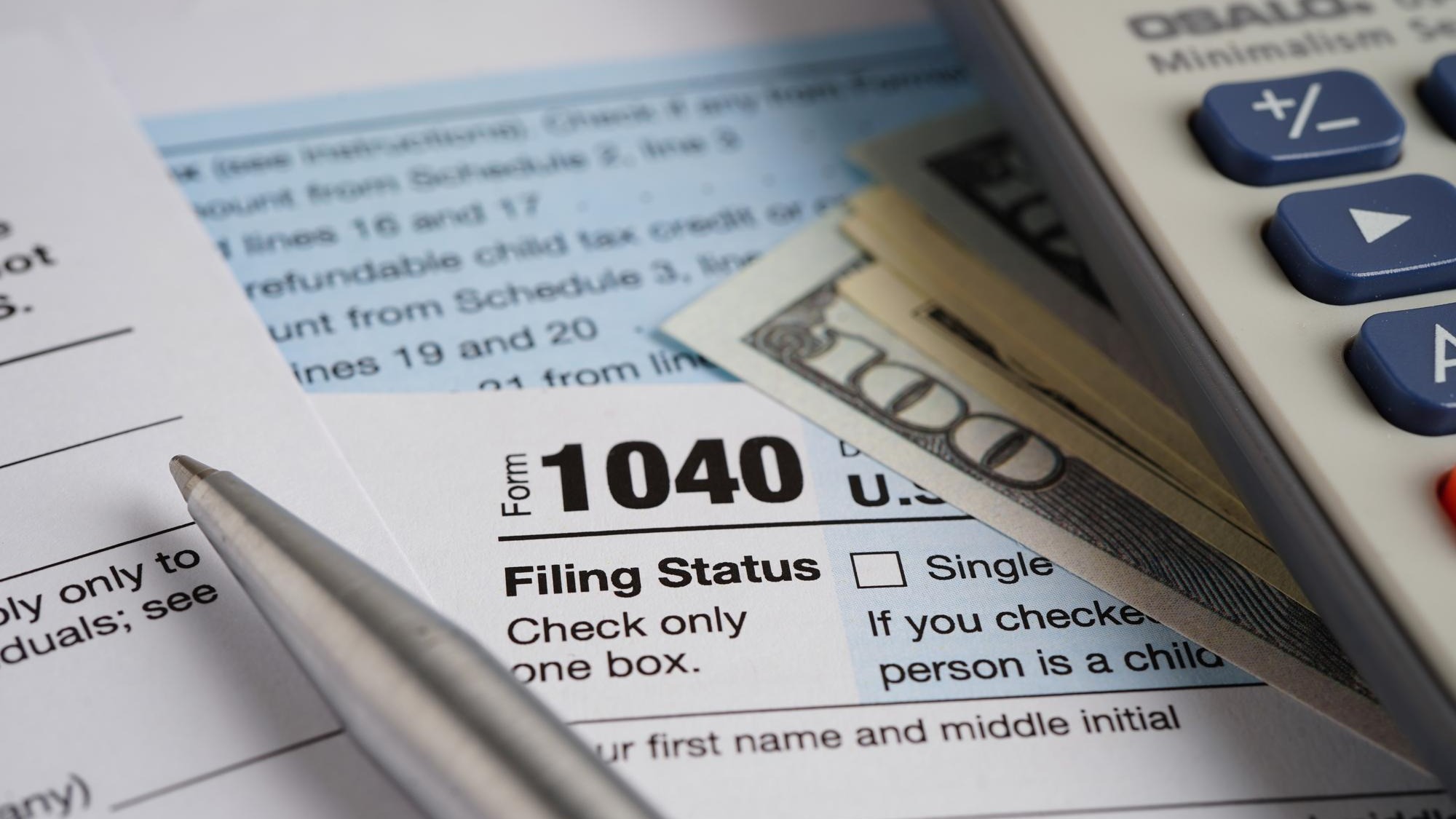
Somewhere in the IRS’s systems, there are penalty charges attached to millions of taxpayer accounts from the pandemic years. Late-filing penalties. Late-payment penalties. Interest stacked on top of both. A federal court ruled last year that many of those charges should never have been assessed. And the independent office inside the IRS that advocates for taxpayers now says “tens of millions” of people may be entitled to get that money back.
But nobody is going to send you a check unprompted. You have to file a paper claim, by mail, before July 10, 2026. That is roughly 66 days from now. Miss it, and you may lose the right to a refund permanently, even if the law turns out to be squarely on your side.
The court case behind the refunds
In November 2025, the U.S. Court of Federal Claims ruled in Kwong v. United States (179 Fed. Cl. 382) that a provision of the tax code, Internal Revenue Code Section 7508A(d), required the IRS to postpone certain tax deadlines for the full duration of the COVID-19 federal disaster period. That period, as defined by the federal emergency declarations, ran from approximately January 20, 2020, through May 11, 2023, when the national emergency officially ended. The court found the statute also added 60 days beyond that closing date, pushing the effective end of the postponement to around July 10, 2023.
Here is why that date controls the current deadline. Under the general statute of limitations for tax refund claims (IRC Section 6511), taxpayers typically have three years from the date a return was due, or two years from the date a tax was paid, to request a refund. Three years forward from July 10, 2023, lands on July 10, 2026.
The National Taxpayer Advocate, the independent office inside the IRS that represents taxpayer interests, issued a public warning in April 2026 flagging that date as the critical cutoff. The office stressed that “relief will not be automatic” and urged affected taxpayers to act before the window closes.
What this means in plain terms: if the IRS charged you a penalty for filing late or paying late during the pandemic era, the Kwong court’s reading of the law suggests you may have actually been within an extended deadline the entire time. If that interpretation holds, those penalties were wrongly assessed, and you are entitled to a refund of the penalty amount plus any interest you paid on it.
Who is likely affected
The NTA’s “tens of millions” estimate is the office’s own characterization; it has not published a breakdown by penalty type, tax year, or dollar amount, and the IRS has released no data on how many accounts might be implicated. Still, the general profile of someone who could benefit is not hard to sketch: anyone who was hit with a failure-to-file penalty, a failure-to-pay penalty, or certain other time-sensitive penalties for tax years whose deadlines fell within the January 2020 through July 2023 window.
Take a taxpayer who filed a 2020 return several months late in 2021 and was assessed a failure-to-file penalty. Under the Kwong ruling, the filing deadline for that return may have been automatically postponed through the end of the disaster period plus 60 days. If the return landed within that extended window, the penalty should not have been charged.
The same logic could apply to estimated tax penalties, late-payment penalties, and related interest charges across multiple tax years (generally 2019 through 2022, depending on when the underlying deadline fell). The exact scope depends on which penalties the IRS assessed, when they were assessed, and whether the original deadline was inside the postponement period.
One important distinction: the IRS already granted automatic penalty relief for certain late-filed 2019 and 2020 returns through Notice 2022-36. If you received that relief, some of your penalties may already be resolved. But Notice 2022-36 was narrower than the Kwong ruling’s reach. It covered only failure-to-file penalties for specific tax years and did not address failure-to-pay penalties, estimated tax penalties, or the broader postponement theory the court endorsed. Taxpayers who already benefited from the 2022 notice may still have additional penalties eligible for refund under Kwong.
How to file a claim before July 10
The IRS directs taxpayers seeking penalty refunds or abatements to use Form 843, “Claim for Refund and Request for Abatement.” As of May 2026, this form cannot be filed electronically. It must be printed, completed, and mailed to the IRS service center that handles the relevant tax type and year. (Check the Form 843 instructions for the correct mailing address.)
The form asks for your identifying information (name, Social Security number or EIN), the tax period in question, the type of tax, the amount you are claiming (if you know it), and a written explanation of why you believe the penalty should be reversed. For claims based on the Kwong ruling, that explanation should reference the COVID-19 disaster-related postponement period under IRC Section 7508A(d), the dates the IRS assessed the penalties, and the court’s finding that the postponement covered the full disaster period plus 60 days.
If you are not sure of the exact dollar amount, you can file what the IRS calls a “protective” refund claim. The Internal Revenue Manual (Part 25.6.1) allows protective claims that do not require a precise figure, as long as they describe the legal basis for the refund, identify the contingency involved (here, the unresolved legal questions around the Kwong interpretation), and specify the tax years at issue. Filing a protective claim by July 10 preserves your right to a refund even if the legal questions take months or years to fully resolve.
A few things to keep in mind:
- Send Form 843 by certified mail or a delivery service that provides proof of the mailing date. If the deadline is ever disputed, your postmark is your evidence.
- Keep copies of everything you send, including the completed form and any attachments.
- If you paid interest on a penalty that gets reversed, you may also be eligible to recover that interest. Include it in your claim.
- Filing an amended return (Form 1040-X) is not the same as filing Form 843. For penalty-specific refunds, Form 843 is the correct vehicle.
What the IRS has not committed to
The largest source of uncertainty is the IRS itself. As of late May 2026, the agency has not issued a formal policy statement on whether it will apply the Kwong ruling broadly, challenge it on appeal, or take some middle path. There is no published IRS notice promising across-the-board relief, no internal directive that has been made public, and no indication the agency plans to proactively review accounts and issue refunds without individual claims being filed.
The Kwong decision interprets the version of IRC Section 7508A(d) that was in effect during the pandemic. Congress has since narrowed the statute through the Disaster Tax Relief Act, which limits the provision’s applicability going forward but does not clearly resolve whether the original, broader language governs pandemic-era penalties. Whether the government will appeal the Kwong decision, seek to narrow its reach, or quietly accept it has not been disclosed.
That ambiguity is precisely why the July 10 deadline carries so much weight. A filed claim preserves your position regardless of how the legal dispute plays out. If the ruling is upheld or the IRS concedes, your claim is already in the system. If the ruling is overturned, you lose nothing by having filed. But if you do nothing and the deadline passes, you may permanently forfeit any right to a refund, even if the law ultimately supports your case.
There is also no guarantee that IRS employees processing Form 843 submissions will handle these claims consistently. Without centralized guidance, front-line staff may take different approaches to similar fact patterns. Taxpayers who receive denials may need to pursue administrative appeals or, in some cases, consider litigation in the U.S. Court of Federal Claims or U.S. Tax Court.
When professional help is worth it
For taxpayers comfortable with IRS paperwork, filing Form 843 is a manageable task, especially using the protective claim option that does not require a precise dollar amount. But the legal reasoning behind these claims is not simple, and the stakes can be meaningful. A tax professional, whether a CPA, enrolled agent, or tax attorney, can help determine which penalties on your account fall within the postponement window, calculate the correct refund amount, and draft the written explanation that accompanies the form.
If you have already used first-time penalty abatement or a reasonable-cause argument to remove some pandemic-era penalties, a professional can also help sort out whether additional penalties remain on your account that are reachable under the Kwong theory.
The National Taxpayer Advocate’s office operates Taxpayer Advocate Service centers in every state, which can assist taxpayers experiencing hardship or those who cannot resolve issues through normal IRS channels. For anyone who suspects they are owed a refund but feels overwhelmed by the process, contacting a local TAS office is a reasonable first step.
Why waiting is the only move that costs you
The legal picture here is genuinely unsettled. The IRS has not said what it plans to do. The Kwong ruling could be upheld, narrowed, or reversed. Congress could act. None of that is within your control. What is within your control is whether a claim with your name on it is sitting in an IRS service center before July 10. Filing costs nothing but time and postage. It locks in your right to a refund no matter what happens next. Letting the deadline pass without acting is the one choice that cannot be undone.