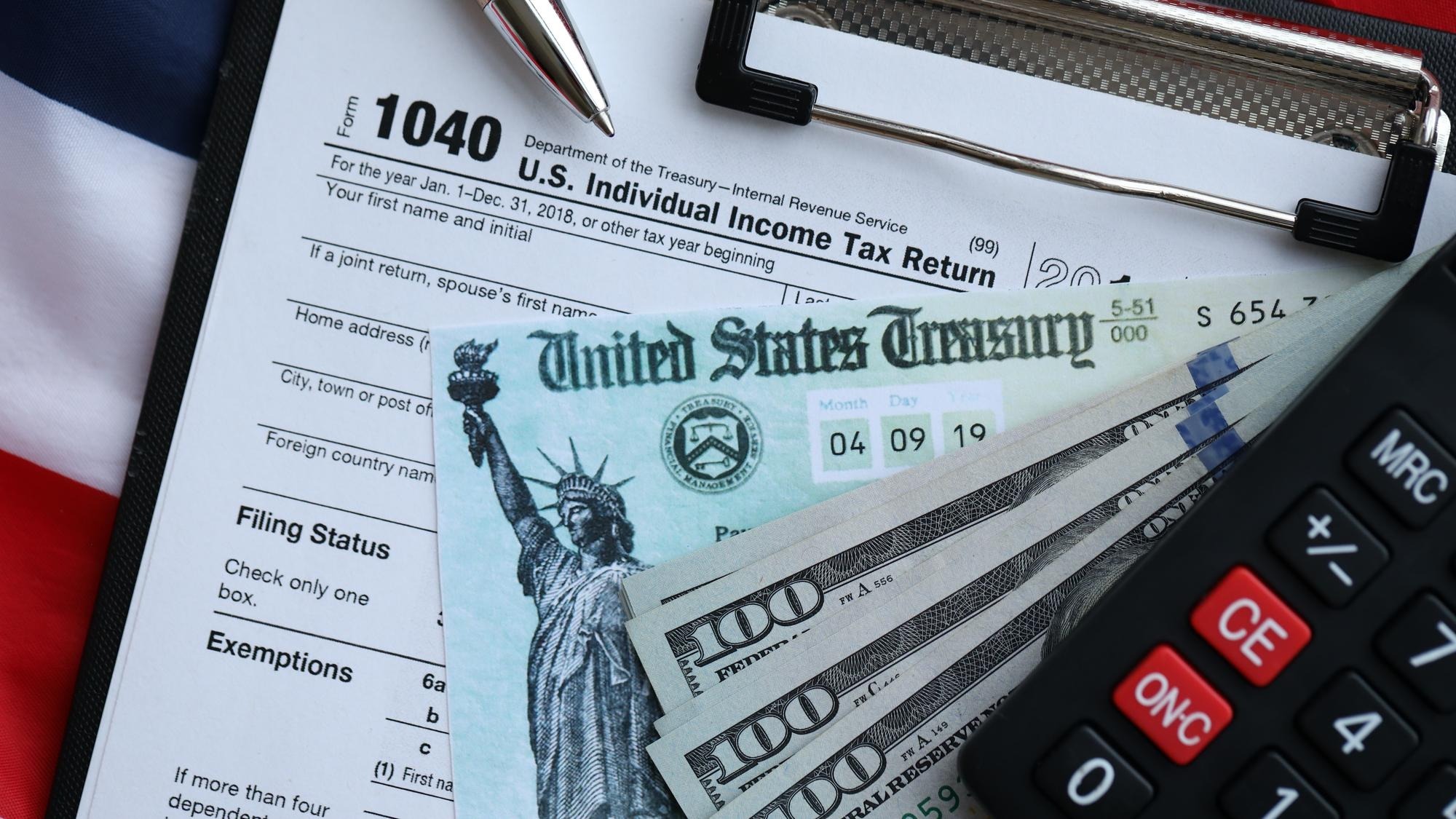
If you paid IRS penalties on your 2020 or 2021 tax return, the federal government may owe you money, and you have until July 10, 2026, to stake your claim. That is roughly 57 days from mid-May 2026, and once the window closes, it likely closes for good.
The IRS has already refunded or credited failure-to-pay penalties on nearly 5 million returns through an automatic relief program announced in late 2023. But a separate legal argument now working its way through federal court could unlock refunds for a much larger group of filers, including some who paid penalties on 2022 and 2023 returns. The National Taxpayer Advocate, the independent watchdog inside the IRS, is urging affected taxpayers to file a protective refund claim before the deadline, even though the court case is unresolved.
The automatic relief the IRS already granted
In December 2023, the IRS announced it would automatically waive failure-to-pay penalties on approximately 4.7 million tax returns for the 2020 and 2021 tax years. The relief covered individuals, businesses, and tax-exempt organizations that owed $100,000 or less per return. Most of those adjustments have been processed, and affected taxpayers should see credits on their IRS account transcripts.
That program was deliberately narrow. It addressed only the failure-to-pay penalties that had accumulated while the IRS suspended its automated collection notices, a pandemic-era pause that ran from early 2022 through late 2023. Failure-to-file penalties, accuracy-related penalties, and other categories were excluded. And the program left a significant question unanswered: what about taxpayers who already paid those penalties out of pocket? How long do they have to ask for that money back?
The legal theory that could expand refund eligibility
That question is now at the center of Kwong v. United States, a case pending at the U.S. Court of Federal Claims. The argument rests on Section 7508A(d) of the Internal Revenue Code, which gives the Treasury Department authority to postpone tax deadlines during federally declared disasters. The COVID-19 pandemic triggered exactly that kind of declaration. In plain terms, this law lets the government hit “pause” on tax deadlines when a disaster strikes, and that pause can give taxpayers extra time to file returns, make payments, or ask for their money back.
Under the standard refund rules in 26 U.S.C. Section 6511, taxpayers generally have three years from the date they filed a return, or two years from the date they paid a tax, to request a refund. The Kwong plaintiffs argue that COVID-19 disaster postponements, including those established under IRS Notice 2021-21, effectively extended those refund windows. Because the last COVID-related postponement period ended on July 10, 2023, adding three years produces a refund deadline of July 10, 2026.
If the court agrees, the impact could stretch well beyond the 5 million returns already covered by automatic relief. Taxpayers who paid failure-to-pay penalties, and potentially other types of penalties, on returns filed during the pandemic postponement period could have grounds to seek refunds. Depending on the specific filing and payment dates involved, that may include some filers who paid penalties tied to 2022 and 2023 returns, though the strongest claims center on the 2020 and 2021 tax years.
Why the Taxpayer Advocate says to file now
The National Taxpayer Advocate published guidance in May 2026 urging affected filers to submit protective refund claims before July 10. A protective claim is a formal filing that preserves your right to a refund while the underlying legal question is still being litigated. If the Kwong theory ultimately prevails, filers who submitted claims in time would be eligible for relief. Those who did not could be permanently locked out, regardless of the court’s ruling.
The Advocate’s office recommended using IRS Form 843, the standard form for requesting refunds of penalties and interest. The form should clearly reference the COVID-19 disaster postponements and cite Section 7508A(d) as the legal basis for the claim. Filers do not need to calculate an exact refund amount at this stage. The point is to get the claim on record before the statutory window shuts.
One detail worth noting: even taxpayers who already received partial automatic relief should review their transcripts. If penalties were only partially abated, or if additional penalties accrued outside the scope of the automatic program, a protective claim could cover the difference.
What the IRS has not confirmed
Transparency matters here. As of June 2026, the IRS has not issued formal guidance endorsing the Kwong interpretation. The agency has not said it will process protective claims filed under this theory, and it has not signaled plans to extend automatic relief beyond the 2020 and 2021 returns already covered. The Kwong case has no final ruling, and no binding precedent exists for other taxpayers to rely on.
That gap creates real uncertainty. Filers who submit protective claims may wait months for any response, particularly given the IRS’s persistent processing backlogs. A favorable ruling in Kwong could be read narrowly, applying only to the specific facts of that case, or broadly enough to benefit millions. Until a court rules or the IRS issues its own guidance, no one can guarantee a refund.
But the math on risk is simple. Filing Form 843 costs postage, some time, and possibly a consultation with a tax professional. Not filing, if the law ultimately breaks in your favor, could mean forfeiting a refund permanently.
How to protect your claim before July 10
The process is straightforward, even if the legal backdrop is not.
1. Check your IRS account. Log in on the IRS website or request transcripts for your 2020 through 2023 tax years. Look for any failure-to-pay penalties you were assessed and, critically, any you actually paid out of pocket.
2. Know what the penalty looks like on paper. The failure-to-pay penalty is typically 0.5% of the unpaid tax for each month or partial month the balance remains outstanding, capped at 25% of the total. On a $10,000 tax debt left unpaid for two years, that penalty alone could exceed $1,200. Even modest balances can generate penalties worth recovering.
3. File Form 843. Complete the form and clearly state that you are filing a protective claim for refund of penalties paid during the COVID-19 disaster postponement period. Reference Section 7508A(d) and the applicable disaster declarations. You can mail or fax the form to the IRS service center that handles your account. (The correct address is listed in the Form 843 instructions based on your state.) Individual filers and business filers alike use Form 843 for this type of penalty refund request, but business entities such as partnerships and corporations should ensure the form reflects the correct taxpayer identification number, entity type, and the specific tax period for each return. Because business returns may carry different penalty types and amounts than individual returns, business filers should consult a tax professional to confirm that every eligible penalty is identified and that the claim is routed to the correct IRS service center for the entity type.
4. Consider professional help. If your situation involves multiple tax years, business returns, or large penalty amounts, a tax professional or enrolled agent can ensure the claim is filed correctly and covers all eligible penalties. This is especially relevant for business filers, whose penalty structures and filing requirements differ from individual returns.
5. Do not wait for the court ruling. The Kwong decision could come before or after July 10, 2026. Filing a protective claim preserves your options regardless of timing, and there is no downside to having it on file.
You can track developments through the IRS’s news page and the Taxpayer Advocate’s blog, both of which have been updating guidance as the legal landscape evolves.
Why the July 10 deadline is not one to test
Refund deadlines in tax law are unforgiving. Once the statutory window closes, the IRS is generally prohibited from issuing a refund, even if a court later confirms you were entitled to one. That is the core reason the Taxpayer Advocate is urging action now rather than after the legal picture clears up.
For taxpayers who paid penalties during the pandemic years and have not yet received full relief, the next several weeks represent the last realistic chance to preserve a potential claim. The paperwork is simple. The downside of filing is negligible. The downside of skipping it, if the law breaks in your favor, is permanent.