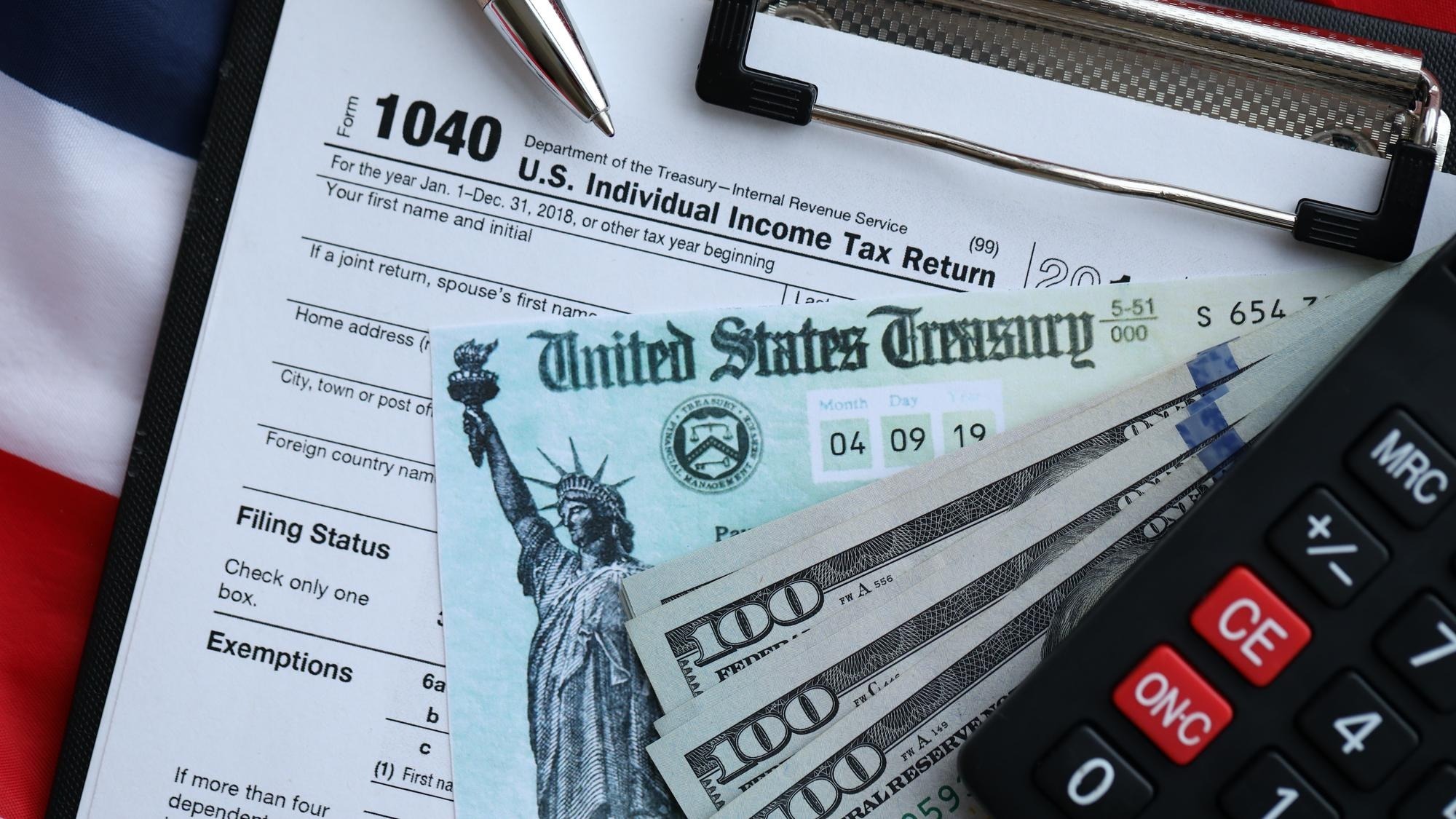
A restaurant server in Dallas who takes home $20,000 a year in tips. A warehouse worker in Columbus pulling 10 extra hours a week at time-and-a-half. A first-time car buyer in Michigan financing a new sedan off the lot. Starting with their 2025 tax returns, all three can claim a brand-new federal deduction that didn’t exist a year ago.
The IRS has released Schedule 1-A, the form filers will use to deduct qualifying tip income, overtime premium pay, and car loan interest. These breaks were created by the One Big Beautiful Bill Act, signed into law as Public Law 119-21, and they apply to income earned on or after January 1, 2025. Because Schedule 1-A feeds into Form 1040 as an above-the-line deduction, taxpayers can claim these breaks whether they itemize or take the standard deduction.
One important caveat up front: these deductions reduce federal income tax, not Social Security or Medicare payroll taxes. Tips and overtime remain subject to FICA withholding. That distinction matters, because some workers may expect their entire tip or overtime check to become tax-free. It won’t.
How the tip deduction works and who qualifies
Workers in traditionally tipped occupations can shield up to $25,000 in annual tip income from federal income tax, according to proposed regulations published in Internal Revenue Bulletin 2025-42. For someone in the 22% federal bracket, that’s worth up to $5,500 in reduced tax on a 2025 return. A worker in the 12% bracket would save up to $3,000.
Not every worker who receives gratuities qualifies. The law limits the deduction to people employed in occupations that “customarily and regularly” received tips on or before December 31, 2024. The Treasury Department and IRS published a formal list of those occupations, covering roles such as restaurant servers, bartenders, hotel housekeepers, barbers, and hairstylists. “Cash tips” includes payments settled electronically or through mobile apps like Venmo, as long as they are denominated in U.S. dollars. Workers in newer gig-economy roles or non-traditional service positions that fall outside the list cannot claim the deduction, even if customers tip them routinely.
There’s also an income ceiling. The deduction begins phasing out for single filers with adjusted gross income above $160,000 and for married couples filing jointly above $320,000. That phaseout keeps the benefit targeted at lower- and middle-income tipped workers rather than high earners who happen to receive occasional gratuities.
Overtime deduction: up to $12,500 off premium pay
The overtime provision targets the premium portion of overtime pay, not base wages. The IRS confirmed the maximum annual deduction is $12,500 for single filers and $25,000 for married couples filing jointly. Here’s how the math works: if a worker earns $30 an hour and receives $45 an hour for overtime (time-and-a-half), only the extra $15 per hour counts toward the deduction. The base $30 does not.
Eligibility is tied to the Fair Labor Standards Act. Non-exempt workers whose overtime pay is governed by the FLSA can claim the deduction. Salaried employees who are classified as exempt from FLSA overtime rules generally cannot, even if their employer voluntarily pays them extra for long weeks. For a single filer in the 22% bracket who maxes out the $12,500 deduction, the federal income tax savings come to roughly $2,750.
The same AGI phaseout thresholds that apply to tips apply here: $160,000 for single filers, $320,000 for joint filers.
Car loan interest: up to $10,000 for U.S.-assembled vehicles
Buyers who financed a vehicle purchased in 2025 for personal use may deduct up to $10,000 in qualifying loan interest, according to the Instructions for Form 1040. Proposed regulations under IRC sections 163 and 6050AA define what counts as an “applicable passenger vehicle,” set lien requirements, and establish new lender reporting obligations.
The requirement drawing the most attention: the vehicle must have been assembled in the United States. That condition narrows the pool of eligible cars and trucks significantly. Buyers can check assembly origin by looking at the first digit of the vehicle identification number (VIN). A VIN starting with 1, 4, or 5 indicates U.S. assembly, though the NHTSA’s free VIN decoder tool provides more detailed plant-of-manufacture data. Verifying before filing is essential, because some popular models are assembled at both domestic and foreign plants depending on trim level and production year.
Interest on loans for vehicles used predominantly for business falls under separate rules and is not covered by this personal deduction. Leases do not qualify either; the deduction applies only to interest on purchase loans secured by the vehicle.
Lenders will eventually be required to report interest paid to both the IRS and the taxpayer under a new reporting framework, but those rules remain in proposed form as of June 2026. Until they are finalized, buyers should hold onto loan documents, purchase agreements, and monthly statements that clearly separate interest from principal.
What’s still unresolved heading into filing season
The statutory framework for all three deductions is set under new IRC sections 224 and 225, but several operational details remain in flux as of June 2026. The proposed regulations for tips, overtime, and car loan interest have not been finalized, meaning edge cases and documentation standards could still shift before or even during the filing window. The 2025 filing season opened in January 2026, with returns due April 15, 2026, and the IRS has indicated it will accept Schedule 1-A with returns filed on that timeline.
For tipped workers, the biggest open question is whether certain newer service roles will eventually be added to the qualifying occupation list. The IRS has not published demographic data on how many workers currently fall into the listed categories, though Bureau of Labor Statistics occupational employment data suggests several million workers hold jobs in food service and personal care roles where tipping is customary.
For car loan interest, the lender reporting regime under IRC section 6050AA is not yet enforceable. If reporting forms arrive late or contain errors, filers will need to fall back on their own records. Keeping a personal paper trail isn’t optional here; it’s the only reliable backup.
The Joint Committee on Taxation has not yet released a final revenue estimate for these three provisions combined, but earlier congressional scoring of the broader One Big Beautiful Bill Act projected significant costs over the budget window. That political debate is ongoing, and future Congresses could modify or sunset these deductions.
What to do before you file your 2025 return
Tipped workers: Keep contemporaneous records that match what appears on pay stubs and employer reports, including amounts received through card payments and mobile apps. The IRS has historically scrutinized tip income closely, and claiming a new deduction on unreported or underreported tips is a fast way to trigger problems.
Overtime earners: Review pay statements now to confirm you can distinguish base wages from premium pay. Schedule 1-A requires that breakdown, and employers are not always consistent in how they label overtime on pay stubs. If your stub doesn’t separate the two, ask your payroll department for a corrected or supplemental statement.
Car buyers: Verify three things before filing: that your vehicle was assembled in the United States (check the VIN), that the loan is in your name and secured by the vehicle, and that you can document every dollar of interest paid during 2025. If a lender’s year-end statement doesn’t arrive or looks wrong, monthly statements will serve as backup.
Everyone near the income thresholds: All three deductions share the same AGI phaseouts, so taxpayers approaching $160,000 (single) or $320,000 (joint) should estimate their 2025 adjusted gross income before counting on the full benefit. Updated instructions and any final regulations will be posted on the IRS website as they become available.