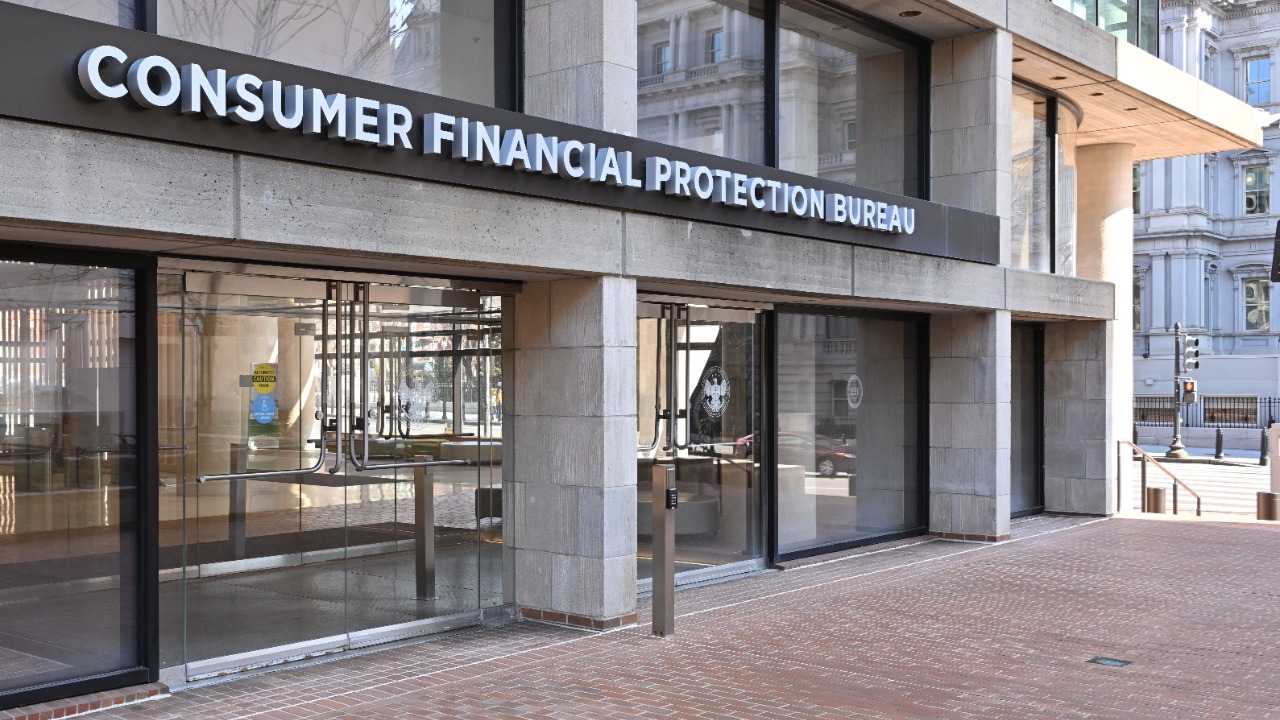
The future of the Consumer Financial Protection Bureau’s attempt to curb overdraft charges is no longer just a fight over one banking rule. It has become an early measure of how far the new administration is willing to go in pulling back consumer regulations that were finalized at the end of the Biden era.For bank customers, the immediate result is straightforward. The federal government will not impose a new cap on the overdraft fees charged by the country’s biggest banks. For regulators, the consequences are bigger. Congress did not merely delay the CFPB’s rule. It erased it through the Congressional Review Act, closing off the bureau’s easiest path to revive the same approach in the future.
What the CFPB Rule Was Designed to Do
When the CFPB finalized its overdraft rule in December 2024, the agency cast it as one of its most significant efforts against so-called junk fees in consumer banking. In the bureau’s telling, large banks had long relied on a regulatory exception that let them charge steep overdraft fees without treating those charges like other forms of short-term credit.Under the final rule, banks and credit unions with more than $10 billion in assets would have had three basic options. They could offer overdraft coverage for free, charge a small flat fee designed to recover costs, or treat overdraft more like a loan and comply with lending disclosure rules. The CFPB’s own benchmark fee was $5, a dramatic drop from the $30 to $35 charges that had long been common across the industry.In announcing the rule, the CFPB said the change could save consumers as much as $5 billion a year. The bureau also argued that overdraft revenue remained concentrated among customers least able to absorb the charges, including households whose paychecks and bill dates routinely collided. The rule had been scheduled to take effect on October 1, 2025, which gave banks months to prepare for a very different fee regime.
Why the Rule Never Took Effect
That runway turned out to be irrelevant. After the change in administration, the White House issued its regulatory freeze memorandum, directing agencies to review rules that had been published but had not yet taken effect. That did not kill the overdraft rule on its own, but it signaled that late-term consumer regulations were entering hostile political terrain.Congress then moved against the rule directly. Using the Congressional Review Act, lawmakers passed a joint resolution disapproving the CFPB measure. The Senate Banking Committee described the action as overturning the bureau’s overdraft fee rule, and the CFPB later confirmed on its own compliance page that, following the joint resolution, the rule had “no force or effect”.The Congressional Review Act matters because it is more durable than a routine policy reversal. As the Government Accountability Office explains, once a rule is disapproved under the CRA, the agency generally cannot issue another rule that is substantially the same unless Congress later authorizes it. In practical terms, that means the CFPB cannot simply wait for a friendlier political climate and reissue the same cap with minor edits.
State Attorneys General Tried to Save It
The bureau was not alone in defending the rule. In April 2025, New York Attorney General Letitia James led a coalition of 22 other attorneys general urging House lawmakers to reject the repeal effort. In a public statement and letter, the coalition argued that excessive overdraft fees hit lower-income households and consumers with volatile cash flow the hardest.The attorneys general stressed that overdraft charges often work less like a transparent credit product and more like an after-the-fact penalty. A customer who falls short by a small amount can wind up paying multiple fees in a matter of days, especially when deposits, rent payments, utilities, and automatic withdrawals arrive in the wrong sequence. The coalition warned that scrapping the federal rule would preserve a system in which overdraft remains a dependable revenue stream for some banks rather than a narrowly tailored courtesy service.Their intervention did not change the outcome, but it did reveal where the next fights may occur. If Washington is no longer likely to impose a federal standard, state officials and state legislatures may try to fill the gap, at least for institutions and practices within their reach.
What the Repeal Says About the New Administration
The headline issue is not only that one fee rule died. It is that the new administration arrived with an explicit review process for pending regulations and then watched Congress erase one of the CFPB’s highest-profile consumer measures before it ever took effect. That sequence tells banks, trade groups, and consumer advocates the same thing: rules finalized late in the previous administration face a much narrower path to survival.That does not mean every fee crackdown vanished. The Federal Trade Commission finalized a narrower junk-fee rule covering live-event tickets and short-term lodging, and the agency later said that rule took effect in May 2025. But the overdraft repeal still stands out because it involved banking, one of the most politically contested areas of consumer regulation, and because the CRA gives the reversal lasting bite.For the CFPB, the result is a narrower menu of options. The bureau still has enforcement authority. It can still challenge deceptive or unlawful overdraft practices case by case. But a clear nationwide pricing framework for the largest banks is off the table unless Congress decides to create one itself.
What Bank Customers Should Expect Now
For consumers, the immediate reality is a familiar patchwork. Some banks have already reduced or eliminated overdraft fees under public pressure and prior regulatory scrutiny. The CFPB itself has said multiple institutions began trimming those charges during the broader campaign against junk fees. But many customers still face account terms that can produce costly penalties when balances dip below zero.Without the federal rule, there will be no automatic $5 cap at the largest institutions. Instead, customers will continue to see different policies from one bank to another, shaped by competition, reputation risk, and state law rather than one national standard. That leaves households to do more of the defensive work themselves by comparing account terms, turning on low-balance alerts, linking backup accounts where possible, or choosing accounts that decline transactions instead of approving them with a fee.The broader uncertainty in the headline is real, but it now has a clearer shape. The overdraft cap does not merely face an uncertain future. Its original federal path is gone. What remains uncertain is whether consumer protection on overdraft fees will reemerge through state action, tougher case-by-case enforcement, or a political climate that eventually pushes Congress to revisit the issue from scratch.