
The S&P 500 closed at 6,118.71 on January 23, 2025, finishing above 6,100 for the first time in the index’s history. The move gave Wall Street another clean milestone in a market that had already spent months grinding to fresh highs, and it did so with a familiar cast at the center of the action: large technology names, AI-linked stocks, and investors eager to reward companies still showing they can grow at scale. The record also sharpened a bigger question hanging over the rally. Was this another sign that corporate America, led by the market’s biggest tech franchises, still has room to push valuations higher? Or was the headline number flattering a market that remains heavily dependent on a relatively small group of companies to do the lifting?
A Record Close That Matched the Market’s Mood
The new closing high came after a week in which investors had already started leaning back into growth stocks. By the close on January 23, the benchmark had added 0.5% on the day, while the Dow gained more than 400 points. It was the kind of session that suggested confidence had returned after a choppy start to the year, especially as traders weighed a steady flow of earnings reports and looked for signs that the next leg of the rally could extend beyond simple momentum chasing. That matters because round numbers can shape how a market is interpreted, even when they do not change the underlying math. A close above 6,100 gives strategists, fund managers, and retail investors a new shorthand for the market’s strength. But the significance runs deeper than the number itself. The S&P 500 is capitalization-weighted, so its biggest companies carry the most influence. When the largest technology and communication-services stocks start moving together, they can drag the index higher quickly and make the benchmark look stronger than the average stock may feel. That tension between headline strength and underlying breadth has defined much of the post-2023 bull market. The question on January 23 was not whether the S&P 500 had hit a new high. It clearly had. The more useful question was what, exactly, had earned the market that level.
Netflix Helped Set the Tone for the Breakout
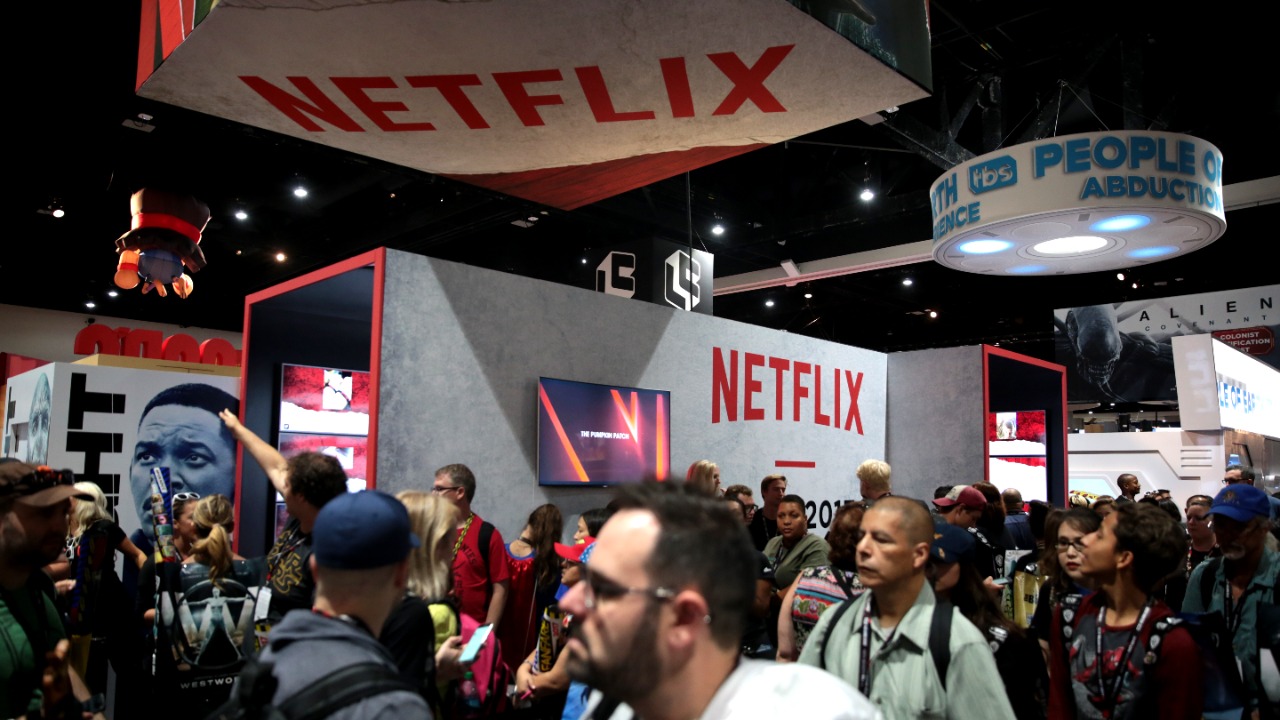
The most convincing earnings catalyst came before the January 23 close, when Netflix reported fourth-quarter results that gave investors exactly what they wanted from a market leader: strong growth, rising profitability, and evidence that scale still matters. The company said quarterly revenue rose 16% year over year, operating income jumped 52%, and paid net additions came in at 19 million, bringing total memberships to 302 million by the end of 2024. Those results mattered beyond one stock. Netflix is not one of the very largest weights in the S&P 500, but its report reinforced the broader case for premium growth names. Investors were looking for proof that large platform businesses could still produce standout numbers even after a long run higher in share prices. Netflix gave them that proof, and the reaction spread well beyond streaming. Reuters reported that technology shares rallied on January 22 after both the Netflix release and fresh enthusiasm around a large private-sector AI infrastructure initiative involving Oracle, OpenAI, and SoftBank. Oracle, Microsoft, Nvidia, Dell, and other AI-linked names all drew attention as investors treated the announcement as another reminder that the next phase of enterprise spending would likely continue flowing toward the biggest computing and software platforms. That backdrop is what makes the “tech earnings strength” framing work, but only when it is used carefully. The move above 6,100 was not caused by Apple or Meta earnings released that day, because those reports had not happened yet. It was driven by the market’s growing conviction that the biggest growth franchises were still delivering, and that the AI trade had more runway.
Thursday’s Earnings Tape Was Mixed, but Not Weak
By the time the market closed on January 23, investors were dealing with a more varied set of corporate reports. Reuters described the day as a mixed bag of earnings, which is a better characterization than a clean, market-wide beat. Even so, there were enough supportive results to keep the record intact. GE Aerospace reported strong fourth-quarter numbers, with orders up 46%, revenue up 14% on a GAAP basis, and adjusted earnings per share more than doubling from a year earlier. The report offered a reminder that the market’s strength was not coming only from software and semiconductors. High-quality industrial names tied to aerospace demand were also showing solid operating momentum. Union Pacific also posted higher quarterly earnings, helped by better pricing and lower fuel costs. That mattered because it suggested parts of the transportation economy were still holding up well enough to support profit growth. A market that can reach records with help from both technology leaders and economically sensitive industrial names usually looks healthier than one driven by a single theme. There were losers, too, and that is part of why the session felt more credible than euphoric. The gains were not based on indiscriminate buying. Investors rewarded companies that delivered and punished those that did not, which gave the record close a more fundamental feel than a purely momentum-led spike.
Rate Talk Added Another Tailwind
Earnings were only part of the story. Another support came from the market’s continuing sensitivity to interest-rate expectations. On the same day the index set its new high, traders were also digesting comments from President Donald Trump at Davos calling for lower oil prices and lower interest rates. Markets do not move on presidential demands alone, but they do respond when rate-cut talk aligns with an already friendly setup for growth stocks. That matters most for the largest technology names because so much of their valuation rests on future cash flows. When investors believe rates could move lower, those future profits look more valuable in present-dollar terms. The effect is not theoretical. It changes how richly the market is willing to value the companies that dominate cap-weighted indexes, and that helps explain why technology remains so central to every new record in the S&P 500. At the same time, rate optimism can cut both ways. If inflation were to reaccelerate or Federal Reserve messaging turned more hawkish, the exact companies that helped power the breakout could become the fastest source of downside pressure. That is the bargain embedded in a market led by expensive but highly profitable growth stocks.
The Milestone Still Carries a Warning
The record close was real, and it was deserved. Investors had fresh evidence from Netflix that a major tech platform could still put up impressive growth numbers, fresh enthusiasm that AI infrastructure spending would keep benefiting the industry’s biggest players, and enough support from other earnings reports to keep the broader market from looking hollow. But the milestone also underscored the market’s dependence on a relatively narrow leadership group. S&P Dow Jones Indices’ own January commentary later showed that the S&P 500 Equal Weight Index outperformed the standard S&P 500 during the month, even as cap-weighted sector performance still showed how heavily investors leaned on the biggest names. In other words, breadth improved, but the giants still mattered most. That is what the break above 6,100 really said. It was not just another round-number milestone. It was a vote of confidence in the earnings power, pricing power, and staying power of the market’s dominant growth franchises. As long as those companies keep delivering, the index can continue making history. If they stumble, the same concentration that helped push the benchmark to a record can quickly become the market’s main source of risk. For now, though, 6,118.71 stands as a clean marker of what investors were willing to believe at that moment: that strong tech-led results, AI spending optimism, and a friendlier rate backdrop were enough to carry the market into another new era.