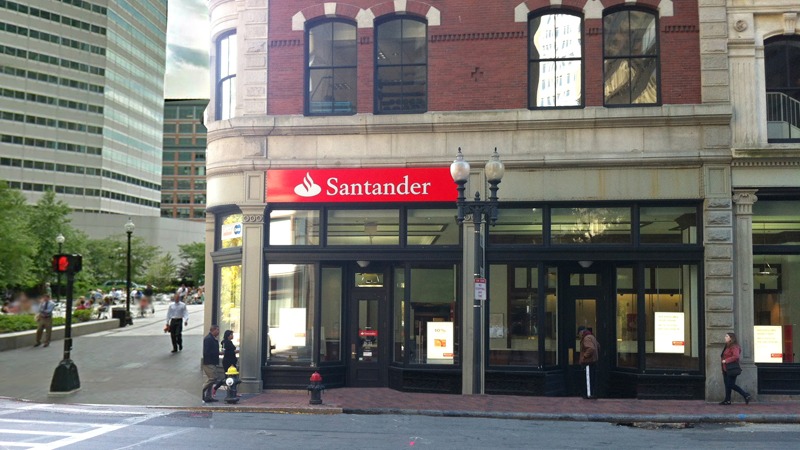
If you bought a car on finance through a dealership in the past decade, there is a real chance the interest rate you paid was quietly inflated so the dealer could pocket a larger commission. Santander has now earmarked more than £460 million to cover compensation for affected UK customers, according to The Guardian, which cited the bank’s financial results. The figure represents a jump of more than £165 million from the £295 million Santander set aside in November 2024, and it places the lender among the most heavily exposed institutions in a scandal that could ultimately cost the car finance industry billions of pounds.
The provision increase reflects a widening fallout from hidden commissions that car dealers earned by marking up borrowers’ interest rates. With the Financial Conduct Authority still working toward a final compensation framework and the Supreme Court weighing a landmark appeal on lender liability, Santander has reportedly taken the unusual step of publicly questioning the regulator’s approach, setting up a standoff that could determine how quickly affected borrowers see any money.
How the hidden commissions worked
The practice at the center of the scandal involved discretionary commission arrangements, or DCAs. Under these deals, a car dealer could increase the interest rate on a customer’s finance agreement beyond the lender’s base rate and pocket the difference as commission. The higher the rate a dealer set, the more they earned. Borrowers were almost never told that the person arranging their loan had a direct financial incentive to make it more expensive.
The FCA banned DCAs in January 2021 after concluding they created a clear conflict of interest. But the ban applied only to new agreements, leaving years of existing loans untouched. The regulator then launched a broader review to determine whether lenders should compensate borrowers who had already overpaid.
That review accelerated sharply after the Court of Appeal’s October 2024 ruling in Johnson v FirstRand, which found that lenders owed a fiduciary duty to disclose commission arrangements to borrowers. The decision dramatically expanded the legal basis for claims and sent shockwaves through the motor finance industry. Several major lenders, Santander among them, responded by increasing their provisions.
The scale of Santander’s exposure
Santander’s £460 million provision is among the largest disclosed by any single institution in the car finance scandal, though it is dwarfed by Lloyds Banking Group’s. Lloyds, which owns the Black Horse motor finance brand, has set aside roughly £3.2 billion, according to The Guardian’s reporting. Close Brothers, a specialist lender, has also flagged significant exposure. Industry-wide estimates for the total cost of the scandal have run into the billions of pounds, though final numbers depend on the compensation framework the FCA eventually adopts.
Santander has not published a breakdown of how its provision splits between direct payouts to customers, legal fees, and the operational costs of processing claims. Nor has it confirmed how many borrowers are affected. Reports describe the number as being in the thousands, but whether that means closer to 5,000 or 50,000 remains unclear.
Under international accounting standards, a provision of this size is not a speculative gesture. Banks can only book such charges when they judge that a liability is probable and the amount can be reasonably estimated. The fact that Santander’s auditors signed off on the figure signals that the bank considers large-scale redress a near-certainty, whatever its public objections to the FCA’s process.
Santander’s reported challenge to the FCA
According to The Guardian’s reporting, Santander has been willing to push back against the regulator during an active review. The bank has reportedly described the FCA’s process as unprecedented in scope and complexity. No direct quote from the bank specifying its criticism has been published, but the posture itself is notable: a major lender openly questioning its regulator mid-review is rare in UK financial services and suggests that negotiations over the shape of the redress scheme are far from settled.
The stakes in that dispute are substantial. The design of the compensation framework will determine whether payouts are automatic for eligible borrowers or require individual complaints, how redress amounts are calculated, and whether costs fall entirely on individual lenders or are spread through an industry-wide levy. Each of those decisions could shift hundreds of millions of pounds between banks, dealers, and consumers.
Legal challenges could also delay the process. The Supreme Court heard arguments in April 2025 on related questions about the scope of lender liability following the Johnson v FirstRand appeal. As of May 2026, a ruling has not yet been handed down, and its outcome could reshape the entire compensation landscape.
What borrowers still do not know
Several critical details remain unresolved. The FCA has not published a final compensation scheme, and the regulator’s timeline has already slipped past early expectations. No official per-customer average for payouts has been confirmed. Media estimates have ranged from a few hundred pounds to several thousand, depending on the size of the original loan, the length of the agreement, and the extent of any interest rate markup, but these figures rely on assumptions that neither Santander nor the FCA has validated.
The method of redress is also uncertain. Some consumer groups have pushed for an automatic compensation model, similar to the payment protection insurance (PPI) scandal, where eligible customers would receive payouts without needing to file individual claims. Lenders, facing enormous administrative costs, may prefer a complaints-based system that limits the number of payouts. The FCA has not indicated which approach it favors.
What affected customers can do now
Borrowers who took out car finance and suspect they were overcharged do not need to wait for the FCA’s final ruling to act. Filing a formal complaint with the lender triggers a legal obligation for the bank to investigate and respond, typically within eight weeks. That complaint creates a documented record that can be escalated to the Financial Ombudsman Service or folded into any future redress scheme.
Customers should also gather their original finance agreements, dealership correspondence, and any promotional material that described the cost of borrowing. These documents can help establish whether the interest rate charged was higher than initially indicated or whether information about dealer commissions was withheld. While a standardized compensation formula may eventually simplify calculations, individual evidence can still matter in borderline cases.
How Santander’s £460 million provision compares to the wider industry
Santander’s provision, while substantial, represents a fraction of the industry-wide liability. Lloyds Banking Group alone has set aside roughly £3.2 billion, according to The Guardian. The gap reflects the relative size of each bank’s motor finance book rather than a difference in culpability. For Santander, the £460 million charge is large enough to be flagged as material in its financial results, and the upward trajectory of its provisions suggests the final cost could climb further once the FCA publishes its compensation framework and the Supreme Court delivers its ruling. With those two milestones still outstanding as of May 2026, the full financial picture for Santander and the broader industry remains unfinished.