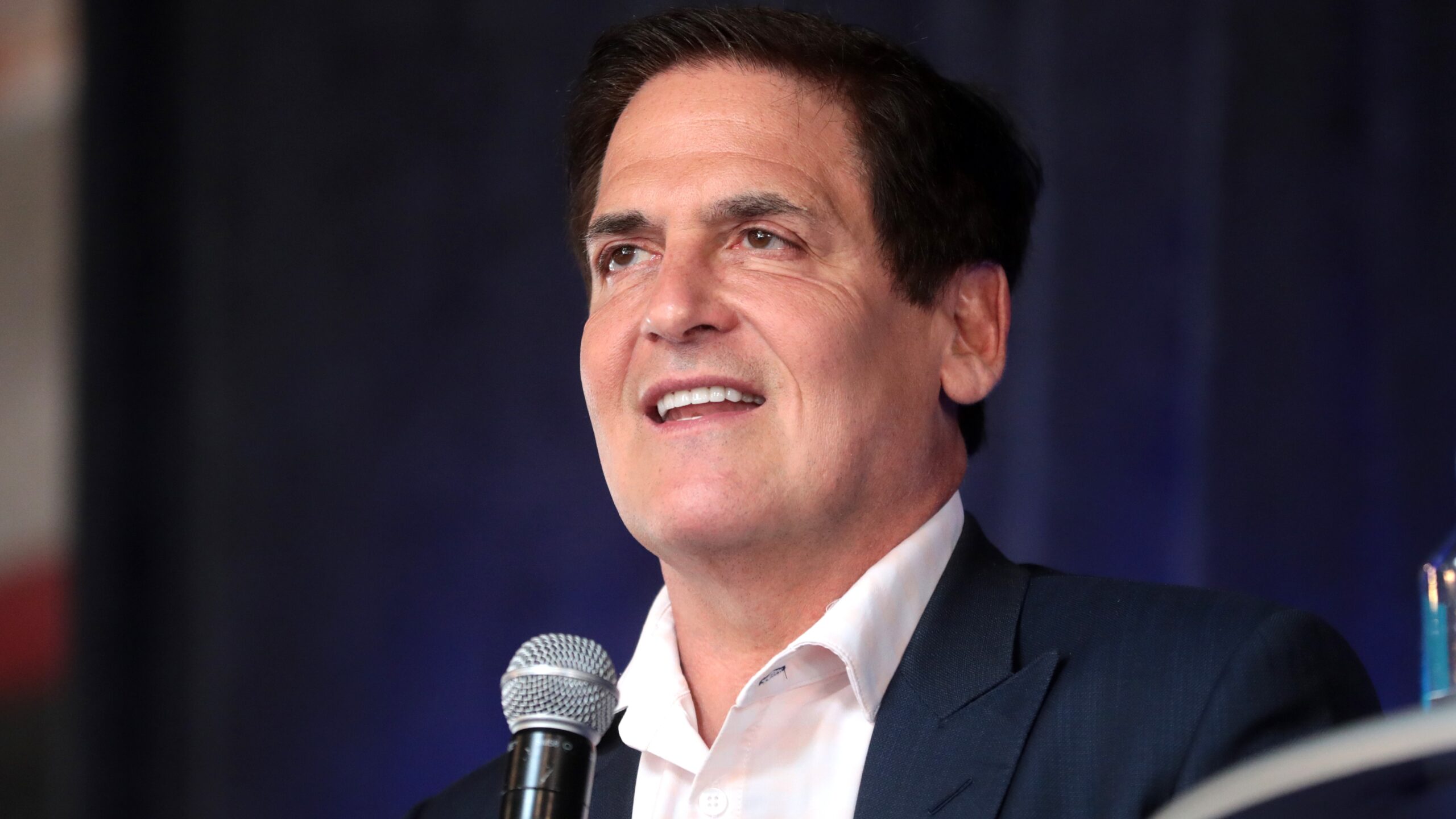
Mark Cuban has spent the last three years waging a public campaign against what he calls a rigged drug pricing system. Through interviews, social media posts, and his own pharmacy company, the billionaire entrepreneur has hammered a consistent message: Americans pay far too much for generic medications, and the middlemen who control pricing profit from keeping it that way.
That argument has gained serious traction. A peer-reviewed study, a federal regulatory investigation, and bipartisan legislative proposals have all pointed toward the same conclusion Cuban has been shouting from every available platform. As of spring 2026, the pressure on pharmacy benefit managers, the companies that negotiate drug prices on behalf of insurers, is greater than it has ever been.
A $3.6 billion gap in generic drug spending
The most striking evidence behind Cuban’s push is a 2023 study published in the Annals of Internal Medicine, one of the most respected journals in medical research. Researchers analyzed 2020 Medicare Part D spending data and found that the program could have saved up to $3.6 billion on generic drugs that year alone if it had purchased them at prices offered by Cuban’s Cost Plus Drug Company.
The methodology was straightforward. The team compared what Medicare actually paid for hundreds of generic medications against what Cost Plus charges using its transparent pricing formula: the wholesale acquisition cost, plus a flat 15% markup, plus a pharmacist dispensing fee. No hidden rebates. No spread pricing. No intermediaries extracting margin at each step.
Medicare Part D covers more than 50 million beneficiaries, and generic drugs account for roughly 90% of all prescriptions filled in the United States, according to the FDA. Even modest per-prescription savings compound into enormous sums at that scale.
But the study’s authors were careful to note limitations. The $3.6 billion figure is modeled, not observed. It does not account for the full complexity of pharmacy network contracts, formulary design, or the logistical challenges of redirecting Medicare purchasing through a different channel. No one has tested whether cost-plus pricing works at the volume Medicare requires.
Federal regulators zero in on PBMs
Pharmacy benefit managers sit at the center of this debate. These companies negotiate drug prices on behalf of insurers and employers, decide which medications appear on formularies, and determine what pharmacies get reimbursed. Three firms, CVS Caremark, Express Scripts, and OptumRx, control roughly 80% of the market, according to the FTC’s second interim staff report on prescription drug middlemen, released in January 2025.
That report raised pointed questions about whether PBMs’ financial incentives align with patients’ interests. FTC staff found that PBMs can profit from the spread between what they charge health plans and what they reimburse pharmacies, a structure that does not inherently reward lower prices at the counter.
The FTC has not issued a final enforcement action, and it has not endorsed any specific alternative pricing model, including Cost Plus. But the investigation’s direction, combined with bipartisan PBM reform legislation that advanced through congressional committees in 2024 and early 2025, signals that Washington views the status quo as unsustainable. As of May 2026, several reform proposals remain under consideration on Capitol Hill, though none have been signed into law.
How Cost Plus Drug Company works
Cuban launched the Mark Cuban Cost Plus Drug Company in January 2022 with a premise that was almost aggressively simple: show patients exactly what they are paying for. The company operates an online pharmacy and, since late 2022, its own pharmaceutical manufacturing facility in Dallas.
The model bypasses PBMs entirely. Patients pay the manufacturer’s price plus a transparent 15% markup and a flat pharmacy fee. For many common generics, the result is dramatically lower out-of-pocket costs compared to what patients encounter at traditional pharmacies. The company’s website lists prices for each medication alongside a breakdown of every component of the cost.
Cost Plus has expanded its formulary steadily since launch. However, the company has not disclosed detailed financial performance figures, and no major insurer or employer has publicly announced adopting the Cost Plus model at scale. It remains a small player relative to the pharmacy chains and PBM networks that fill the vast majority of American prescriptions. Scaling a direct-to-consumer model to serve tens of millions of Medicare beneficiaries would require regulatory agreements, distribution infrastructure, and political consensus that do not yet exist.
The PBM industry’s counterargument
PBMs and their trade group, the Pharmaceutical Care Management Association, have pushed back against the narrative that their business model simply inflates costs. Industry representatives argue that PBM negotiations deliver value that is not captured in simple price comparisons: rebates that lower insurance premiums, formulary management that steers patients toward clinically effective treatments, and administrative services that reduce costs for employers and health plans.
The PCMA has also noted that PBMs helped drive the shift toward generic drugs in the first place, a transition that has saved the U.S. healthcare system hundreds of billions of dollars over the past two decades. From the industry’s perspective, cherry-picking the generic drugs where Cost Plus offers lower prices ignores the broader ecosystem of services PBMs provide.
Whether those claimed benefits outweigh the costs the FTC has flagged is precisely what regulators and lawmakers are still trying to determine. The answer will shape not just PBM regulation but the future of how Americans pay for prescription drugs.
Public anger and the gap between evidence and policy
Cuban’s argument has staying power because it taps into something that transcends policy details: widespread public fury over drug prices. A 2024 Kaiser Family Foundation poll found that roughly 80% of U.S. adults consider prescription drug costs unreasonable, and majorities across party lines support government action to bring costs down.
But translating that anger into structural change has proven difficult. The Inflation Reduction Act of 2022 gave Medicare limited authority to negotiate prices on a small number of brand-name drugs, with the first negotiated prices taking effect in 2026. Generic drug pricing, where the Cost Plus model has demonstrated the starkest potential savings, remains largely untouched by federal policy.
Cuban has called on lawmakers to go further, arguing that even basic transparency requirements, forcing PBMs to disclose their margins and rebate arrangements, could reshape the market by exposing how much of the supply chain’s cost serves patients and how much serves intermediaries.
The peer-reviewed research quantifies a real problem. The FTC investigation validates the concern. What remains missing is the political mechanism to act on it, and that gap between evidence and action is where the fight over American drug pricing now sits as of spring 2026.