For years, Wall Street’s biggest exchanges talked about putting stocks and bonds on blockchains. Regulators listened politely and did nothing. That changed when the Securities and Exchange Commission approved a Nasdaq rule change allowing the exchange to list and trade securities in tokenized form, making Nasdaq the first major U.S. stock exchange to receive explicit regulatory clearance for blockchain-based versions of traditional financial instruments.
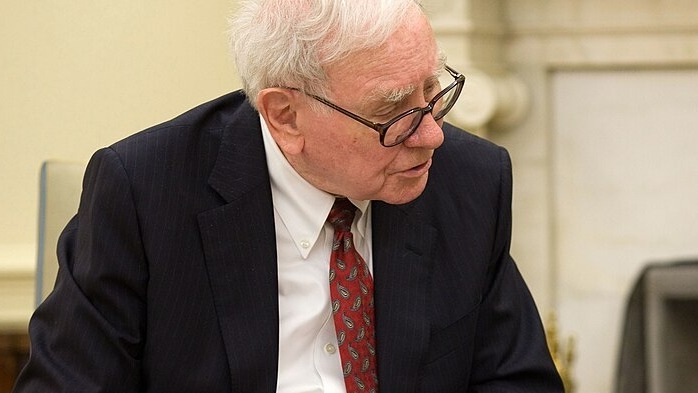
Nasdaq CEO Adena Friedman has repeatedly described tokenized trading as a force that will reshape capital markets, a position she has articulated across earnings calls, industry conferences, and strategic presentations over the past two years. With the SEC’s approval now in hand, that vision has moved from corporate strategy deck to regulatory reality.
The approval, filed as SR-NASDAQ-2025-072, amends Nasdaq’s exchange rules to permit distributed-ledger representations of securities. The SEC’s docket shows the Commission moved through every required procedural stage, from the initial notice of filing through an order instituting proceedings to a final approval order. For institutional players who have spent years building blockchain infrastructure in anticipation of this moment, the decision validates billions of dollars in investment. For ordinary investors, it raises a more basic question: what actually changes?
What the SEC actually approved
The rule change is narrow but consequential. Nasdaq can now list and trade securities recorded on blockchain technology, provided those instruments remain subject to the same federal securities laws that govern every other stock and bond on the exchange. Registration requirements, antifraud provisions, and broker-dealer obligations all still apply. In the SEC’s view, a tokenized share is the same security in a different wrapper.
SEC staff from the Divisions of Corporation Finance, Investment Management, and Trading and Markets reinforced that position in a joint statement on tokenized securities released alongside the approval process. The statement treats tokenization as a change in format and recordkeeping, not a change in legal status. It also draws a distinction between two models: issuer-sponsored tokenization, where a company itself creates the digital representation of its shares, and third-party tokenization, where an outside firm handles the conversion. Both carry specific compliance obligations, including alignment with Article 8 of the Uniform Commercial Code, which governs how ownership of investment securities is transferred and recorded through intermediaries.
For individual investors, the practical takeaway is straightforward: buying a tokenized stock on Nasdaq would come with the same disclosure rights and fraud protections as buying a conventional share. This is not a side door into unregulated crypto trading. It is regulated securities trading running on different technological rails.
Speed, cost, and the case for overhauling the plumbing
The appeal of tokenized trading comes down to three things: speed, access, and cost. Traditional stock trades in the U.S. currently settle on a T+1 basis, meaning ownership officially transfers one business day after execution. Blockchain-based settlement could compress that window to near-real-time. That matters more than it sounds. Faster settlement reduces counterparty risk, the chance that one side of a trade fails to deliver, and frees up capital that firms currently hold in reserve while waiting for trades to finalize. The Depository Trust and Clearing Corporation has estimated that the shift from T+2 to T+1 alone freed up billions in margin requirements across the industry. Moving closer to instant settlement could multiply that effect.
Nasdaq is not the only firm chasing this opportunity. BlackRock launched its BUIDL tokenized money market fund on the Ethereum blockchain in March 2024, and the fund has attracted significant institutional capital. Franklin Templeton has operated a tokenized U.S. government money fund on public blockchains since 2021. The New York Stock Exchange’s parent company, Intercontinental Exchange, has explored digital asset infrastructure. Internationally, Switzerland’s SIX Digital Exchange has been trading tokenized securities since 2021, giving European markets a head start.
What distinguishes Nasdaq’s approval is scope. This is not a fund product or a private blockchain experiment. It applies to exchange-level trading of tokenized securities under full SEC oversight, on the same platform where Apple, Microsoft, and thousands of other companies already trade. Friedman has framed this as a long-term strategic priority, and Nasdaq has invested accordingly through its Financial Framework platform and partnerships with digital asset custodians. The SEC approval converts that strategic positioning into operational permission.
The Securities Industry and Financial Markets Association, the leading trade group for broker-dealers and asset managers, has publicly supported the development of tokenized securities infrastructure, noting that regulatory clarity from the SEC removes one of the largest barriers to institutional adoption. That perspective reflects a broader industry consensus: the technology is ready, but firms needed a green light from Washington before committing operational resources at scale.
The hard parts haven’t been solved yet
Regulatory clearance is a necessary condition, not a sufficient one. Several significant questions remain open, and the answers will determine whether tokenized trading delivers on its promise or stalls in implementation.
No primary source has confirmed when Nasdaq will begin listing tokenized instruments or which securities will be eligible first. The SEC docket for SR-NASDAQ-2025-072 provides procedural chronology but does not specify a launch date or phased rollout schedule. Until Nasdaq publishes those details, broker-dealers, clearing firms, and custodial banks cannot plan the operational changes they will need to make.
Custody and beneficial ownership present particular challenges. The current system relies on a chain of intermediaries, including transfer agents, the Depository Trust Company, and custodial banks, to track who owns what. When a security’s authoritative record lives on a blockchain, those intermediaries need to reconcile their existing books-and-records systems with a fundamentally different data architecture. The SEC has not published technical specifications for how that reconciliation should work.
Interoperability is another unresolved problem. If different issuers or exchanges adopt incompatible token standards or blockchain networks, the efficiency gains that proponents expect could be undermined by fragmentation. A tokenized stock that settles on one blockchain but cannot be easily transferred to a portfolio held on another creates new friction rather than eliminating it. No single protocol has emerged as an industry consensus, and standards bodies are still in early-stage discussions.
Then there is the question of whether the market actually wants this badly enough to pay for the transition. The U.S. market’s move from T+2 to T+1 settlement in May 2024 already addressed some of the urgency around settlement speed. Institutional investors and broker-dealers will need to see compelling economic returns before overhauling infrastructure that, while imperfect, functions reliably at enormous scale.
What comes next for tokenized exchange trading
As of May 2026, the regulatory foundation is in place, but the path from approval to live trading depends on decisions Nasdaq has not yet disclosed. Market participants should watch for a formal Nasdaq announcement detailing eligible securities and a launch timeline, SEC guidance on technical standards for on-chain recordkeeping, and responses from competing exchanges that may accelerate their own tokenization efforts now that a precedent exists.
For retail investors, nothing changes immediately. Brokerage accounts will not suddenly display tokenized holdings. The protections that apply to securities purchases remain identical regardless of the underlying technology. The significance of this approval is structural: it establishes that the largest U.S. exchanges can operate tokenized markets within existing law, removing a regulatory uncertainty that kept major players from committing fully.
Whether Friedman’s expectation that tokenized trading will reshape markets proves accurate depends on execution, adoption, and a series of technical and commercial decisions that have not yet been made. But the question that hung over this space for years, whether U.S. regulators would allow it to happen on a major exchange, has been answered. They will.