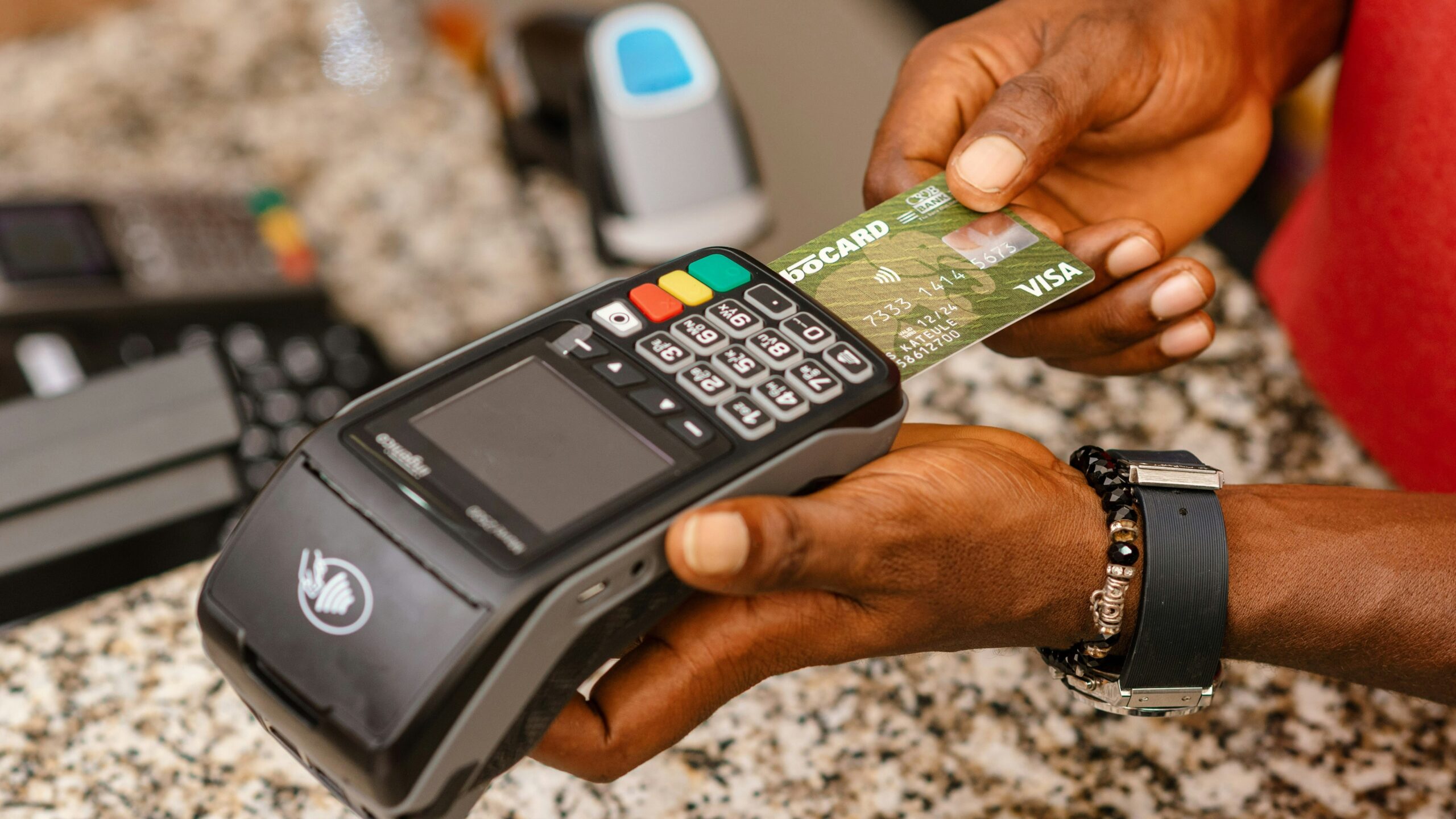
American households now owe a record $1.28 trillion on their credit cards, according to the Federal Reserve’s G.19 revolving credit report. That number alone is striking, but a second statistic may be more revealing: roughly 61% of cardholders say they have carried a balance for more than a year, per a Bankrate survey published in 2025. Credit card debt, for a clear majority of the people who hold it, is no longer a short-term bridge between paychecks. It is a persistent drag on tens of millions of family budgets.
The numbers behind the record
The Fed’s G.19 release compiles data directly from lenders rather than relying on consumer self-reporting, making it one of the most reliable gauges of how much Americans owe on revolving accounts. That figure has climbed steadily over the past several years. The New York Fed’s Quarterly Report on Household Debt and Credit confirms the trend: credit card balances have outpaced growth in auto loans, student loans, and other consumer debt categories.
What separates this surge from earlier peaks is the cost of carrying those balances. The average credit card APR now sits above 21%, according to the Fed’s own terms-of-credit data, up from roughly 17% before the pandemic. On a $6,000 balance, that four-percentage-point jump adds hundreds of dollars a year in interest charges, money that flows to lenders rather than toward paying down principal.
Meanwhile, the personal savings rate has fallen well below its pandemic-era highs, hovering in the low-to-mid single digits according to the Bureau of Economic Analysis. Households that once had a cash buffer are now leaning on plastic, and the interest charges are compounding on top of already-stretched budgets for groceries, rent, and insurance.
Why balances are sticking around
The Bankrate survey that produced the 61% figure, published in 2025, asked cardholders whether they had carried a balance continuously for at least 12 months. It is a self-reported number, and other surveys define “carrying a balance” slightly differently, so the precise share may shift by a few percentage points depending on the source. But the direction is consistent across multiple polls: a clear majority of people with credit card debt are not paying it off each month.
The reasons are layered. Pandemic-era savings cushions, built through stimulus payments and reduced spending in 2020 and 2021, have largely been spent down. Inflation pushed up the cost of essentials faster than wages grew for many workers, particularly in lower-income brackets. Credit cards filled the gap. And once a balance starts accruing interest above 20%, it becomes very difficult to reverse without a meaningful change in income or spending habits.
The Federal Reserve’s rate-hiking cycle, which pushed the federal funds rate to a two-decade high, made the problem worse. Credit card rates are closely tied to the prime rate, which moves with the Fed’s benchmark. Even as the Fed has signaled a cautious path on future cuts, card APRs have remained elevated, keeping the cost of existing debt stubbornly high for borrowers who are already underwater.
Delinquencies are climbing, especially among younger borrowers
Carrying a balance is one thing. Falling behind on payments is another, and the data there is moving in a troubling direction. The New York Fed’s household debt report shows that the share of credit card balances transitioning into serious delinquency, defined as 90 or more days past due, has risen above pre-pandemic levels and reached rates not seen since roughly 2011.
The pain is not evenly distributed. Younger borrowers and those with subprime credit scores are driving much of the increase. For borrowers under 30, serious delinquency transition rates have climbed faster than for any other age group, according to the New York Fed’s data. Many in that cohort entered the workforce during or just after the pandemic, started building credit when rates were already high, and have thinner financial cushions to absorb shocks.
Lenders have noticed. The Fed’s Senior Loan Officer Opinion Survey shows that banks have tightened approval standards for new cards and reduced credit limits for some existing customers. That tightening can create a feedback loop: consumers with less available credit may max out remaining cards faster, pushing utilization rates higher and credit scores lower, which in turn makes it harder to qualify for lower-rate alternatives.
What policymakers are and are not doing
The Federal Reserve’s broader monetary policy review acknowledges how elevated household debt interacts with tighter financial conditions, but the review focuses on broad monetary strategy and public input rather than targeting credit card balances specifically. Any relief for cardholders from the Fed is more likely to arrive through general interest rate cuts, which would gradually lower APRs, than through card-specific intervention.
On the regulatory side, the Consumer Financial Protection Bureau finalized a rule that would have capped most credit card late fees at $8, down from a typical $32. Card issuers challenged the rule in court, and as of June 2026 it remains blocked by a federal judge’s injunction. Even if the cap eventually takes effect, it would reduce penalty costs without directly lowering the interest rates that drive long-term balance growth.
That reality puts most of the burden on individual households. Financial advisors generally recommend a few concrete steps: prioritize paying down the highest-APR card first (the “avalanche” method), explore balance transfer offers that still advertise 0% introductory rates for 12 to 21 months (though qualification typically requires good credit), and contact issuers directly to ask about hardship programs that can temporarily reduce rates or waive fees. None of these are silver bullets, but each can shorten the payoff timeline meaningfully.
Why the payoff math keeps getting harder in 2026
Unless interest rates drop substantially or wage growth accelerates enough to outpace living costs, the conditions that created $1.28 trillion in revolving debt are unlikely to reverse soon. As of mid-2026, the Fed’s own projections suggest only modest rate reductions ahead, which would translate into small, gradual APR decreases for cardholders rather than dramatic relief.
For the 61% of cardholders who have been carrying a balance for more than a year, the arithmetic is unforgiving. A $6,000 balance at 21% APR, paid at the minimum, will take more than 17 years to erase and cost over $9,000 in interest, according to standard amortization calculators. Paying even $50 above the minimum each month can cut the payoff timeline roughly in half and save thousands in interest. But finding that extra $50 is precisely the problem when rent, food, and insurance have all gotten more expensive.
The $1.28 trillion figure is a macroeconomic headline. The year-plus balances are a kitchen-table reality. The space between those two numbers is where financial stress quietly compounds, one statement at a time, for tens of millions of families who are not in crisis but are not getting ahead, either.