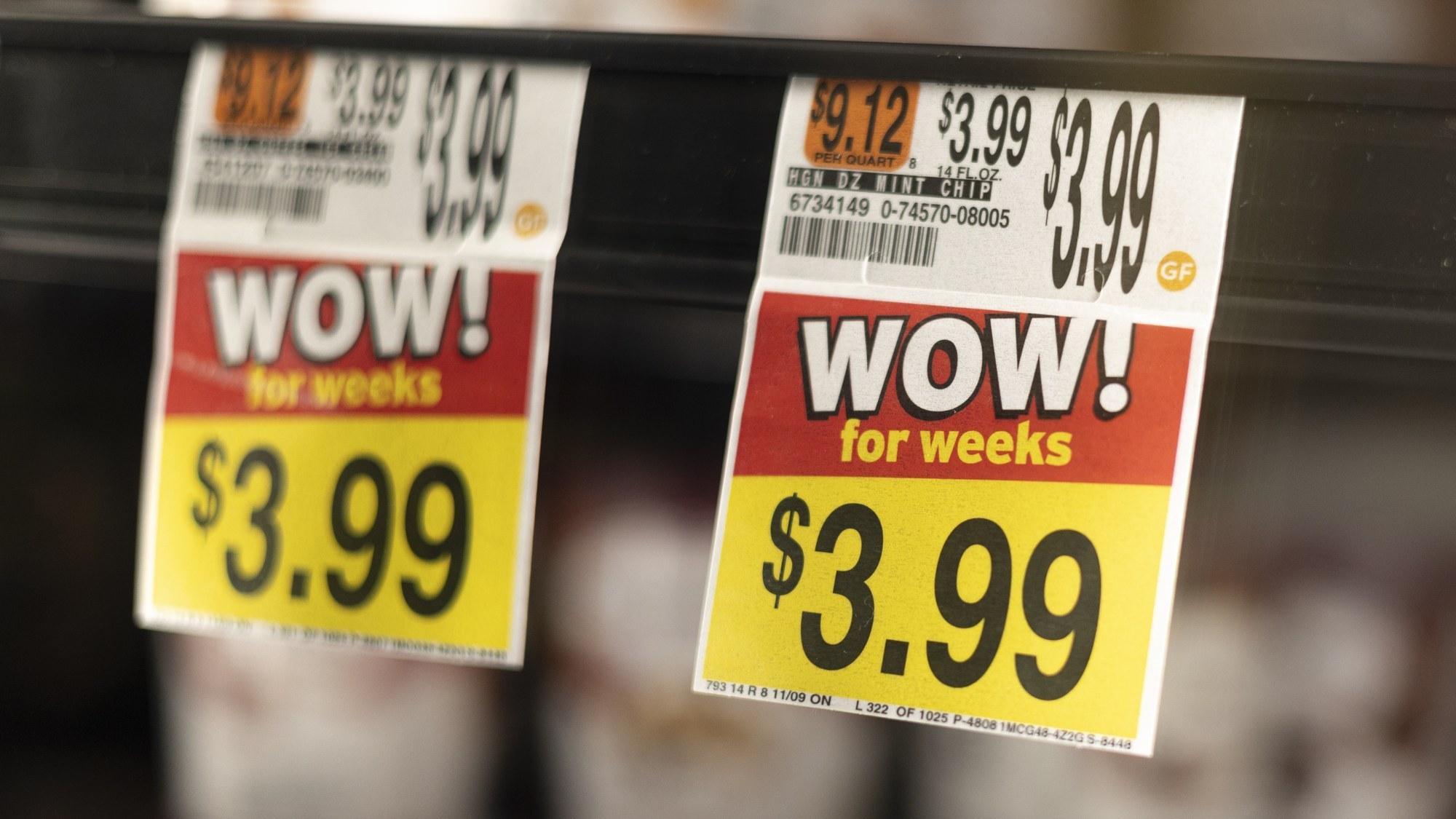
A teacher in suburban Dallas who drives 45 minutes each way to work told a local CBS affiliate in May 2026 that she now spends more on gasoline every month than on her car payment. She is not an outlier. Since the United States launched military operations against Iran in late February, American households have collectively spent an estimated $8.4 billion more on fuel than they would have in a peacetime market, according to a Democratic staff analysis from the Joint Economic Committee covering just the conflict’s first month. Spread across roughly 131 million U.S. households, that works out to about $2,244 per family so far, a figure that keeps climbing with every week the fighting continues.
The energy shock has not stayed at the pump. It has bled into consumer prices, pushed mortgage rates higher, and forced the Federal Reserve into an uncomfortable standoff between inflation and growth. And now, with Reuters and Al Jazeera both reporting that U.S. and Iranian negotiators are exchanging draft ceasefire terms through Omani and Qatari intermediaries, millions of families face a pointed question: is genuine relief close, or is the worst still ahead?
The gas price hit, by the numbers
The $8.4 billion estimate is a partisan figure, assembled by the JEC’s Democratic staff rather than a nonpartisan body such as the Congressional Budget Office or the Bureau of Labor Statistics. The Democratic staff drew on data from AAA, the Federal Highway Administration, the Energy Information Administration, and Edmunds, comparing actual fuel spending in the war’s opening weeks against pre-conflict price baselines. Among the details that landed hardest: filling a full-size pickup truck with a roughly 36-gallon tank now runs about $145, a cost that falls squarely on the rural and suburban families who depend on those vehicles for work.
The per-household figure of roughly $2,244 is this article’s own arithmetic, dividing the national total by the Census Bureau’s count of U.S. households. It comes with real caveats. A two-car suburban family logging 60 miles of daily commuting absorbs far more than a single renter in a city with a subway. Regional price gaps matter, too: EIA weekly retail data shows that while the national average for regular gasoline has climbed well above $4 a gallon, parts of the West Coast and rural Mountain West were already paying premiums before the conflict and have seen those gaps widen further. Even so, the direction is unmistakable: fuel costs are rising faster than any normal seasonal pattern would explain.
Logistics are compounding the pain. Tanker insurance premiums have spiked for vessels transiting the Strait of Hormuz, and rerouting around the conflict zone adds days and dollars to every cargo. S&P Global’s energy desk has noted that pump prices tend to overshoot crude oil moves when supply chains are under stress, because refiners and wholesalers bake uncertainty premiums into every barrel they process.
One factor conspicuously absent from the policy debate so far: the Strategic Petroleum Reserve. The administration has not announced a significant drawdown, and the reserve sits near historically low levels after large releases in 2022. OPEC+ members, meanwhile, have signaled reluctance to accelerate production increases beyond their existing schedule, leaving the global market with a thin cushion against further disruption.
Inflation: gasoline is almost the entire story
The Bureau of Labor Statistics reported that gasoline prices surged 21.2% in March 2026. This article has not independently verified whether that figure represents the single largest monthly jump ever recorded for the gasoline CPI component; the BLS has not published a ranking, and comparable spikes occurred during the Gulf War and the 2008 oil shock. What is clear is that the March 2026 reading ranks among the most severe on record. That one category accounted for nearly three-quarters of the overall monthly Consumer Price Index increase, pushing the annual inflation rate to 3.5%. The broader energy index rose 10.9% in the same period, but gasoline was the dominant force, bleeding into shipping costs, delivery surcharges, and airfares.
The International Monetary Fund reinforced the picture in its April 2026 World Economic Outlook, explicitly tying the Iran conflict to stalled disinflation, elevated risk premiums, and tighter financial conditions across advanced and emerging economies. For the Federal Reserve, the data creates a bind that Chair Jerome Powell acknowledged in his most recent press conference: cutting rates to ease household pressure risks fueling the very inflation the conflict has reignited, while holding rates steady prolongs the squeeze on borrowers.
Wage growth, running at roughly 3.8% year-over-year according to the Atlanta Fed’s wage tracker, is not keeping pace with the combined hit from fuel and food prices. That gap is where the real erosion of household purchasing power lives.
Mortgage rates and the housing squeeze
Bond markets have responded to the inflation data and geopolitical uncertainty by pushing yields higher, and mortgage rates have followed. Freddie Mac’s Primary Mortgage Market Survey showed the 30-year fixed rate near 6.09% in the weeks before the conflict began. By late May, the same survey placed the average closer to 6.37%. The shift looks modest in percentage-point terms, but on a $400,000 loan it adds roughly $70 to a monthly payment, or about $840 a year, stacked on top of the gasoline burden.
For prospective buyers already stretched by elevated home prices, the rate increase narrows purchasing power at the worst possible moment. A buyer who qualified for a $420,000 mortgage in January may now qualify for closer to $405,000, shrinking the pool of affordable listings without any change in income. For existing homeowners carrying adjustable-rate mortgages or home equity lines of credit, the upward drift raises monthly obligations with no corresponding raise. Credit card rates, which track the federal funds rate and the broader yield environment, have also edged higher, compounding the cost of carrying balances.
Who is absorbing the most damage
Lower- and middle-income families are taking a disproportionate hit. Transportation is the second-largest household expense category after housing for most Americans, and gasoline represents a bigger slice of spending for families earning under $50,000 a year. Those same households tend to hold less savings, carry more variable-rate debt, and have fewer options for switching to public transit or remote work.
Geography sharpens the divide. Communities served by constrained pipelines, isolated refineries, or limited station competition can see prices that diverge sharply from national averages. In dense urban centers with robust transit, the impact may surface less at the pump and more in grocery delivery fees, rideshare surge pricing, and airline tickets. But the net effect is the same: money that would have gone to discretionary spending, savings, or debt paydown is being redirected to energy costs, and lower-income households have the least room to absorb the shift.
How real is the peace deal talk?
Reuters reported in mid-May 2026 that U.S. and Iranian negotiators, working through Omani and Qatari intermediaries, have exchanged draft ceasefire frameworks that include a mutual de-escalation timeline and the reopening of insured shipping lanes through the Strait of Hormuz. Al Jazeera’s diplomatic correspondent described the outlines as “the most detailed exchange since hostilities began.” Administration officials have acknowledged that talks are “active and serious” without confirming a specific timeline.
But no signed framework, no official State Department announcement, and no United Nations resolution currently exists in the public record. The distance between shuttle diplomacy and an enforceable ceasefire is historically wide, and energy markets have been burned before by premature optimism. Crude futures dipped briefly on peace-talk headlines in late April, only to rebound when negotiators failed to meet a reported deadline.
Even a genuine agreement would not deliver instant relief at the pump. Rebuilding depleted fuel inventories, restoring normal tanker routing, and unwinding insurance surcharges takes weeks to months. Analysts at the EIA and the International Energy Agency have cautioned that supply-chain normalization after a major geopolitical disruption typically lags the diplomatic milestone by 60 to 90 days. Households hoping for a quick snapback should plan for a slower glide.
Stretching the budget until the shooting stops
Financial advisers and consumer advocates have converged on a handful of practical steps during the price spike. Locking in a fixed mortgage rate, if refinancing makes sense at current levels, removes exposure to further upward drift. Consolidating high-interest credit card debt into a fixed-rate personal loan can cap borrowing costs before they climb again. On the fuel side, apps like GasBuddy and AAA’s TripTik planner help drivers find the cheapest nearby stations, and adjusting driving habits (combining errands, maintaining tire pressure, avoiding aggressive acceleration) can trim consumption by 10% to 15%, according to the Department of Energy’s fueleconomy.gov.
None of those steps erase the underlying cost. They buy time. The real variable is whether diplomacy delivers a durable ceasefire that reopens shipping lanes, calms crude markets, and gives the Federal Reserve room to hold or eventually cut rates. Until that happens, the $2,244 figure is not a final tally. It is a running tab, and it grows with every week the conflict continues.