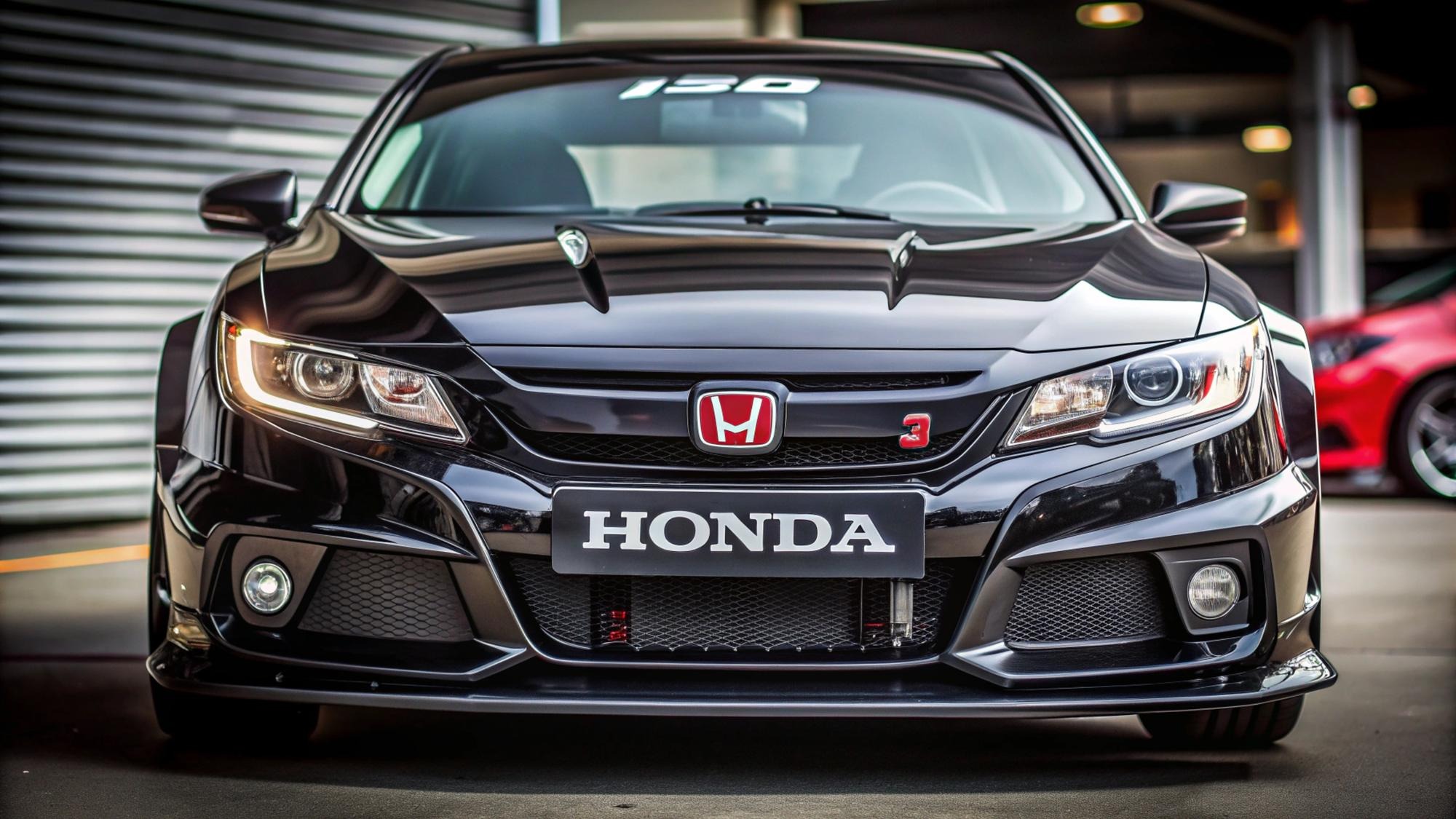
Honda is pulling 98,892 Accords, Civics, and CR-Vs off the road for repairs after identifying a sensor defect that could prevent front airbags from deploying during a crash. The recall targets vehicles already in daily use across the United States, and owners will be able to confirm whether their car is affected by searching its VIN through the federal government’s recall database. For drivers of these three popular models, the defect creates a straightforward but serious risk: in a frontal collision, the airbags may simply not fire.
Why a faulty sensor in 98,892 Hondas demands attention now
The core problem is mechanical and specific. A sensor responsible for detecting crash forces may malfunction, leaving the vehicle unable to trigger its front airbags at the moment they are needed most. Airbags remain one of the most effective injury-reduction systems in any passenger vehicle, and a failure to deploy during a frontal impact sharply increases the chance of serious head and chest injuries for both the driver and front-seat passenger.
What makes this recall urgent rather than routine is the size and composition of the affected fleet. The Accord, Civic, and CR-V are three of Honda’s highest-volume nameplates in the U.S. market. Tens of thousands of these vehicles are driven daily on commuter routes, school runs, and highway trips. Every day the sensor defect goes unrepaired, those drivers face elevated risk without knowing it.
Honda has committed to notifying owners directly and repairing the sensor at no cost. That process, however, depends on parts availability and dealer capacity. Until the fix is complete, the only protection for owners is awareness, which is why the federal recall listing matters. Once the campaign is fully searchable, any owner can enter a 17-character VIN and get a clear answer within seconds.
A testable question sits behind the recall filing. If complaint data from the National Highway Traffic Safety Administration is filtered by VIN after the listing goes live, it should show whether non-deployment reports cluster around specific build months within the recalled population. That pattern would help clarify whether the sensor defect is tied to a narrow production window or spread more broadly across the affected models. For now, the public record does not include that level of detail.
What the federal filing and Honda’s action confirm
The recall covers about 98,892 vehicles in the United States, spanning the Accord, Civic, and CR-V lines. The campaign was filed with the National Highway Traffic Safety Administration and posted to the agency’s SaferCar database, the federal government’s primary public tool for tracking vehicle safety actions.
Owners can verify whether their specific vehicle is included by visiting the NHTSA recalls site and entering their VIN. The database is designed to return results for any active recall campaign, giving drivers a definitive yes-or-no answer without needing to wait for a mailed notice from Honda.
The recall follows a pattern familiar to anyone who has tracked Honda’s safety record over the past decade. The automaker has issued multiple airbag-related campaigns in recent years, though those earlier actions involved different components and suppliers. This latest filing is distinct because it centers on the crash-detection sensor rather than the airbag inflator or module itself. The sensor sits upstream in the deployment chain: if it fails to register an impact, the rest of the system never receives the signal to fire.
Honda has not publicly identified the supplier responsible for the faulty sensor, and the federal filing as currently available does not include a detailed root-cause analysis. The agency’s database lists the recall count, the affected models, and the nature of the defect, but exact model years and production-date ranges have not been confirmed in the public record. That gap leaves owners of recent Accords, Civics, and CR-Vs in a position where a VIN check is the only reliable way to know if their car is part of the campaign.
Open questions about build dates, complaints, and repair timing
Several pieces of information that would normally accompany a recall of this scale are not yet visible in the public record. The specific model years covered by the campaign have not been confirmed in the available filings. Without that detail, owners cannot narrow the field by simply checking whether their car falls within a certain production range. The VIN lookup remains the single definitive tool.
Equally absent is any public tally of consumer complaints or injury reports linked to the defect. The NHTSA database does not currently show complaint records tied to the recalled VINs, which could mean the defect was caught through internal testing or warranty data rather than through crash investigations. If complaints do surface after the listing goes live, their distribution across build months and geographic regions will offer the clearest picture of how widespread the sensor failure actually is in real-world driving conditions.
Honda has not released a direct statement naming the root cause or the component supplier. That silence is not unusual at the early stage of a recall campaign, but it limits the ability of independent analysts and consumer advocates to assess whether the same sensor appears in other Honda models or in vehicles from other automakers that share suppliers.
Repair timing is the most immediate concern for affected owners. Honda has said the fix will be performed at no cost, but the company has not published a timeline for parts availability or dealer scheduling. Large recalls often face bottlenecks when replacement components are not yet in the supply chain, and owners can experience weeks or months of delay before their local dealer can perform the work.
In the meantime, there is no practical workaround for the defect. Unlike a software bug that can sometimes be addressed with an over-the-air update, a faulty crash sensor requires physical replacement. Drivers cannot reliably test whether their airbags will deploy in a crash, and warning lights on the dashboard may not always illuminate if the failure mode is intermittent or limited to specific impact angles. That uncertainty is precisely why regulators push manufacturers to initiate recalls even when the number of confirmed incidents is low.
What owners of Accords, Civics, and CR-Vs should do next
For owners, the first step is to locate the VIN, which is typically visible at the base of the windshield on the driver’s side and printed on the vehicle registration and insurance documents. Entering that number into the federal recall site will indicate whether the car is included in this campaign or in any other open safety action. If the lookup confirms an open recall, the next move is to contact a local Honda dealer and schedule an appointment as soon as parts become available.
Owners should also watch for mailed notices from Honda, which will provide official confirmation and instructions. However, relying solely on the mail can introduce delays if addresses are outdated or if the vehicle has changed hands. The online VIN tool offers a faster path to clarity, particularly for used-car buyers who may not be on the automaker’s original contact list.
Until the repair is completed, affected drivers can reduce risk by maintaining greater following distances, moderating speed, and ensuring that all occupants wear seat belts properly on every trip. Seat belts remain the primary restraint system in any collision, and their effectiveness does not depend on the airbag sensor. Nonetheless, the presence of an unresolved airbag defect is a strong reason to prioritize scheduling the repair at the earliest opportunity.
For now, the recall underscores a broader reality of modern vehicle safety: complex electronic components can introduce new failure points even as they enable more sophisticated protection systems. The airbag sensor issue in nearly 100,000 Hondas is a reminder that vigilance from manufacturers, regulators, and drivers alike remains essential. Until more detail emerges on the root cause, build dates, and any related complaints, the most effective response for individual owners is simple-check the VIN, confirm the recall status, and get the repair done as soon as it is offered.