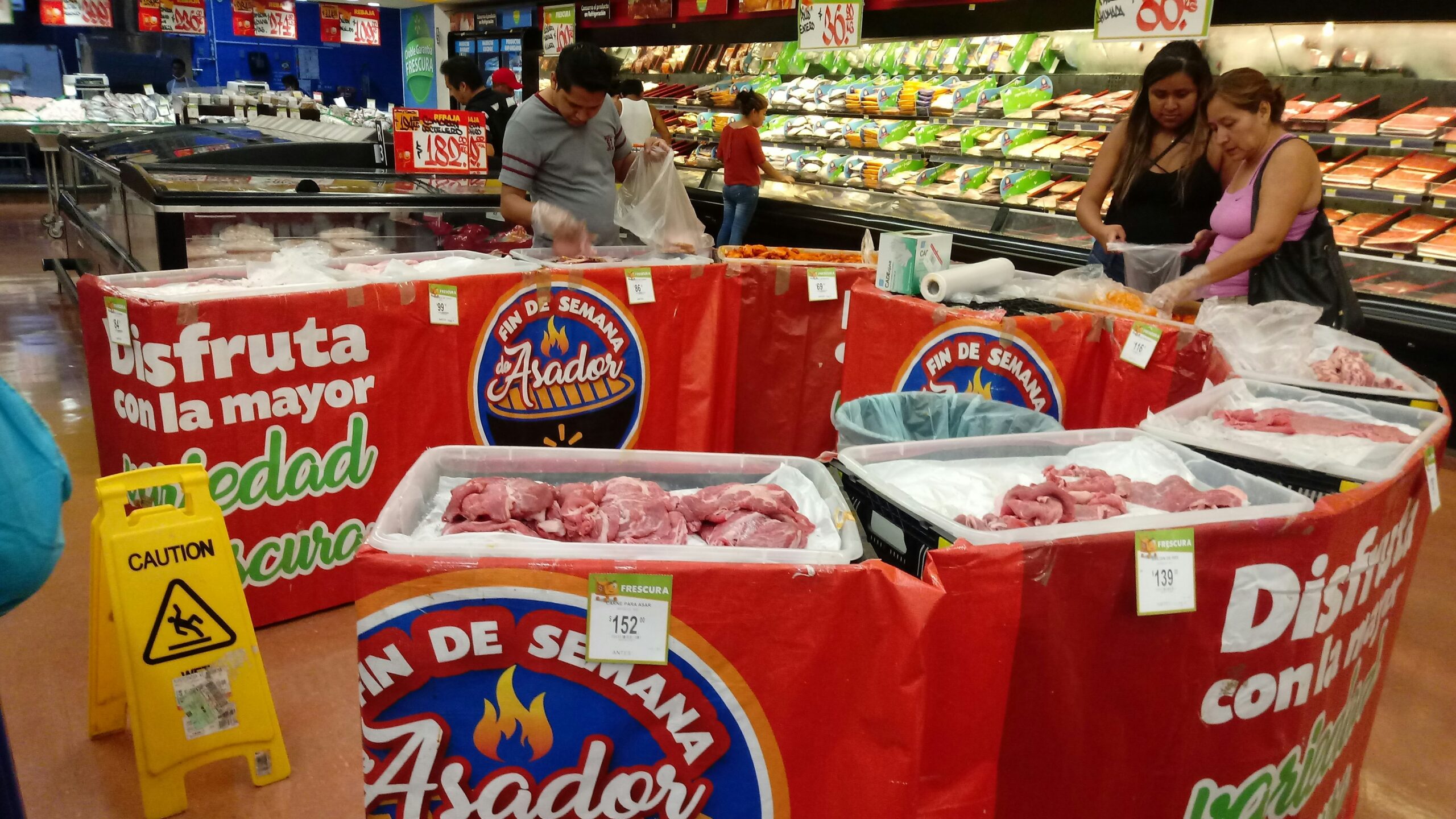
American grocery shoppers face another year of rising prices at the checkout counter. The USDA Economic Research Service projects food-at-home prices will climb 3.2% in 2026, with beef expected to jump 5.5% and nonalcoholic beverages forecast to rise 5.2%, driven largely by surging global coffee costs. Those increases land on top of already elevated food costs from recent years, compressing household budgets on items that appear on nearly every weekly shopping list.
Tight cattle herds and expensive coffee beans are squeezing shoppers
The beef forecast carries the heaviest weight for families buying protein at the meat case. The ERS attributes the projected 5.5% increase to constrained cattle supplies, a condition that has been building for several years as ranchers reduced herd sizes during drought and high feed costs. The agency’s cattle outlook describes supplies as tight and expects prices to remain elevated because production constraints continue to limit the number of animals moving through feedlots and packing plants. Rebuilding a cattle herd is a slow biological process. A cow bred today will not produce a market-ready steer for roughly two years, which means the supply squeeze has staying power even if pasture conditions and feed prices improve in the near term.
Coffee tells a parallel story on the beverage aisle. The ERS price outlook specifically flags higher global coffee prices as a driver behind the 5.2% nonalcoholic beverage forecast. Bureau of Labor Statistics data from the April 2026 Consumer Price Index release tracks the coffee and tea subcomponent, and the May 2026 CPI update published on June 11 refreshes those readings. Both releases show beverage materials, including coffee, continuing to register price pressure that feeds directly into what consumers pay for ground coffee, K-cups, and bottled cold brew on store shelves.
Federal data anchoring the 3.2% grocery forecast
The 3.2% headline number comes from the ERS Food Price Outlook, which the agency updated in April 2026. That forecast draws on the most recent Consumer Price Index and Producer Price Index data available at the time of each release. The ERS methodology, documented in its Technical Bulletin 1957, uses time-series models that produce both a midpoint estimate and a 95% prediction interval. The midpoint is the figure that reaches consumers through news coverage, but the prediction interval means actual grocery inflation could land meaningfully above or below 3.2% depending on how supply shocks, trade policy, and weather events play out over the remaining months of the year.
Upstream commodity forecasts from the USDA’s World Agricultural Supply and Demand Estimates feed into the broader picture at the farm level. WASDE tracks supply, demand, and price expectations for major commodities including cattle, which helps explain why the ERS retail-level projections for beef remain elevated. The CPI release provides the price-index readings that the ERS uses as inputs, creating a data chain that runs from feedlot to supermarket shelf. When cattle prices rise at the farm level, packers and retailers typically pass at least part of that increase along to consumers, and the CPI data confirm how quickly those changes show up in the meat case.
Where the beef forecast could still shift higher
The 5.5% beef projection is not a ceiling. Because the ERS forecast is expressed as a midpoint surrounded by a prediction interval, realized inflation for beef could exceed that figure if additional supply shocks emerge. Prolonged drought in key grazing regions, higher-than-expected feed costs, or renewed export demand could all tighten cattle markets further. In that scenario, feedlots would bid more aggressively for a limited pool of calves, pushing wholesale beef prices higher and ultimately lifting retail prices beyond the current forecast band.
On the other hand, a faster-than-anticipated herd rebuilding cycle or weaker consumer demand could ease some of the pressure. If high prices prompt households to substitute toward poultry or pork, retailers may find resistance to further beef increases, tempering how much of any upstream cost spike they can pass through. The ERS models incorporate these kinds of behavioral responses, but they are difficult to pin down in advance, which is why the agency emphasizes the forecast range as much as the single-point estimate.
For shoppers, the uncertainty means planning for continued volatility rather than banking on a quick return to pre-inflation norms. Households that rely heavily on beef and coffee may feel the squeeze most acutely, especially if wage growth fails to keep pace with grocery inflation. Retailers, meanwhile, face the delicate task of balancing cost recovery with customer loyalty in an environment where every additional price hike risks pushing budget-conscious consumers toward cheaper cuts, private labels, or discount chains.
As 2026 unfolds, the interaction between tight cattle supplies, expensive coffee beans, and broader macroeconomic conditions will determine whether the 3.2% grocery forecast proves optimistic, pessimistic, or roughly on target. What is clear from the federal data is that food inflation, while cooler than the steep run-ups of recent years, remains very much a live issue for American kitchens.