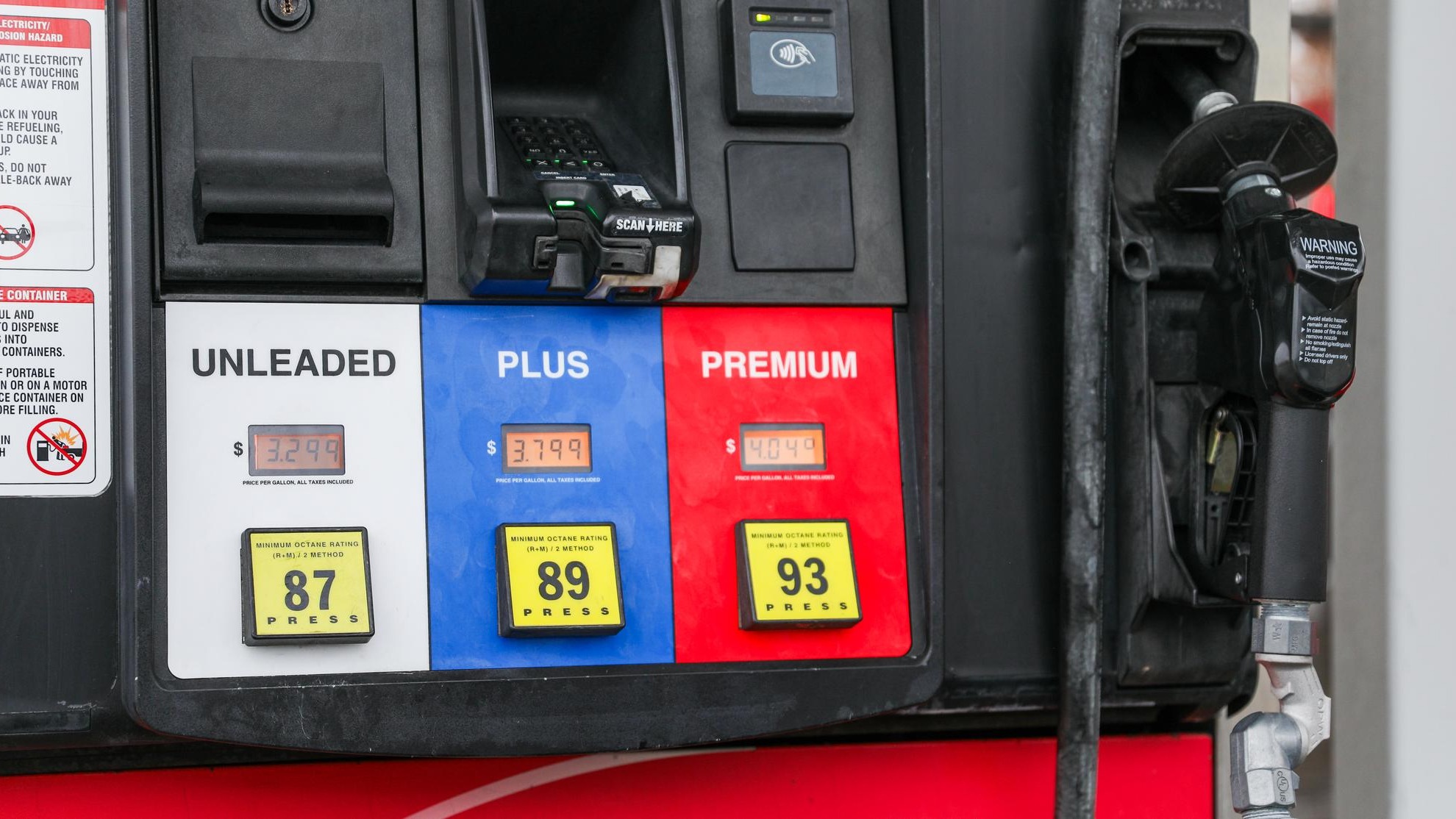
American drivers paying more than $4 a gallon at the pump got a break when U.S. crude futures dropped below $100 a barrel after Washington and Tehran agreed to a two-week ceasefire that includes reopening the Strait of Hormuz. The deal sent oil prices sharply lower, lifted U.S. stock futures and Asian equity markets, and raised the prospect that gasoline costs could ease within weeks if the truce holds.
How the U.S.-Iran ceasefire pulled crude below $100
The immediate trigger was diplomatic, not geological. When the United States and Iran reached a two-week ceasefire framework, traders repriced the risk of supply disruptions through the Strait of Hormuz, the chokepoint for roughly a fifth of the world’s seaborne oil. As the agreement became public, crude futures plunged below $100 on the news, with Brent crude also sliding as markets recalculated the odds of a prolonged blockade.
The speed of the sell-off reflected how much geopolitical tension had been baked into barrel prices. For weeks before the deal, the threat of Hormuz closures had kept crude elevated, squeezing refiners and, by extension, drivers. With the ceasefire in place, that premium began to deflate. Asian equity markets jumped alongside U.S. stock futures, signaling broad confidence that the agreement would hold at least through the initial window and that tankers would keep moving through the strait.
Lower crude prices do not translate to cheaper gasoline overnight. Refiners buy oil weeks before it becomes fuel at the pump, and regional taxes and distribution costs add layers of delay. Still, a sustained drop in crude below $100 historically narrows the gap between wholesale and retail fuel prices within two to three weeks. The federal government tracks that transmission in near-real time through its weekly gasoline data, which reports prices in dollars per gallon and updates on a fixed schedule.
Testing whether pump prices will fall 8 cents in 21 days
A reasonable hypothesis holds that if the ceasefire extends past its initial two weeks, the next three weekly gasoline-price releases from the U.S. Energy Information Administration will show a measurable decline of at least 8 cents per gallon within 21 days of the extension announcement. That threshold is not arbitrary. Past episodes where crude dropped by a comparable margin and stayed lower for more than a fortnight often produced retail gasoline declines in that range, according to the historical data embedded in the EIA series.
Several conditions would have to hold for that outcome. First, the Strait of Hormuz would need to remain open to commercial tanker traffic, keeping global supply chains intact and reassuring insurers that voyages are safe. Second, U.S. refiners would need to pass wholesale savings forward rather than widening their margins, a pattern that varies by region, brand, and local competition. Third, no new supply shock, whether from OPEC production cuts, unplanned outages, or a hurricane disrupting Gulf Coast refining, can offset the crude decline and push prices higher again.
The hypothesis is testable in real time. Each Monday, the EIA publishes updated national and regional gasoline prices. Readers can compare the week before the ceasefire announcement with subsequent releases to see whether the 8-cent threshold is met. If the national average falls by at least that amount within 21 days of a ceasefire extension, it would support the view that markets are transmitting lower crude costs efficiently. If not, it would suggest that bottlenecks, refinery behavior, or new geopolitical risks are blunting the impact.
Regional patterns will matter as well. West Coast drivers, who typically face higher baseline prices due to stricter fuel standards and limited refinery capacity, may see slower or smaller declines than motorists in the Gulf Coast or Midwest. Conversely, areas closer to major refining hubs and pipeline networks could register sharper drops if competition among retailers is strong. Comparing regional EIA readings will help separate national trends from local anomalies.
Beyond the headline numbers, analysts will watch how quickly futures markets for gasoline and diesel adjust relative to crude. A rapid fall in wholesale fuel contracts without a matching decline at the pump would indicate margin expansion by refiners or retailers. Policymakers, already under pressure from households squeezed by energy costs, are likely to scrutinize that gap if crude remains subdued while station signs barely budge.
For consumers, the mechanics may be less important than the outcome. A drop of 8 cents a gallon translates to about $1.20 in savings on a 15-gallon fill-up, modest on a single trip but meaningful over months of commuting. If the ceasefire holds and evolves into a broader de-escalation, the cumulative effect of lower energy prices could ease inflationary pressures and free up household budgets for other spending.
The next three weeks of data will reveal whether the ceasefire’s promise at the pump becomes reality. If gasoline prices respond as history suggests, the episode will underscore how quickly geopolitical risk premiums can unwind. If they do not, it will raise tougher questions about market structure, corporate behavior, and how much relief diplomacy can really deliver to drivers facing another expensive summer on the road.