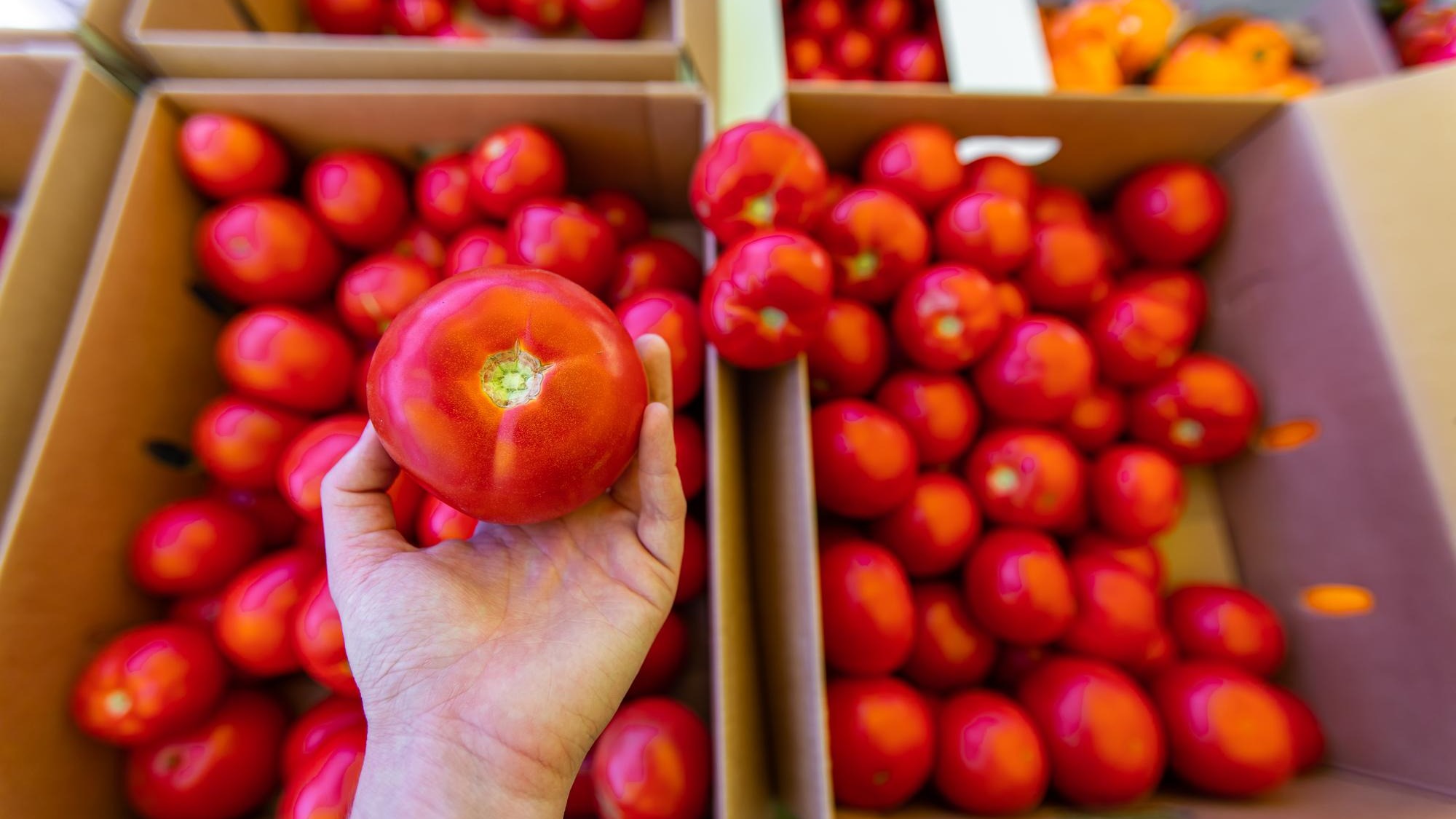
American grocery shoppers are paying nearly 40 percent more for tomatoes than they did a year ago, the steepest price increase of any food item tracked by the federal government. The spike followed a major trade policy shift: the U.S. Department of Commerce ended a longstanding agreement that had governed fresh tomato imports from Mexico, triggering a 17.09 percent antidumping duty on most shipments. The result is a supply squeeze that has hit household budgets harder than rising costs for coffee, beef, or seafood.
A 39.7 percent jump and the trade decision behind it
The Bureau of Labor Statistics Consumer Price Index for April 2026 recorded an unadjusted 39.7 percent year-over-year increase for tomatoes, the largest among all food-at-home categories in the detailed item tables. That figure dwarfs the broader grocery inflation rate and singles out tomatoes as the most volatile staple on store shelves right now.
The price acceleration traces directly to a policy decision by the Commerce Department, which withdrew from a 2019 trade agreement on fresh tomatoes from Mexico and issued an antidumping duty order. The 17.09 percent duty replaced a framework that had, through five successive suspension agreements, kept Mexican tomatoes flowing into U.S. markets at negotiated floor prices rather than facing punitive tariffs. With the agreement gone, importers now face a cost increase that gets passed along the supply chain to wholesalers, foodservice buyers, retailers, and, ultimately, to shoppers.
The hypothesis that this duty will push at least 8 percent of tomato import volume toward domestic greenhouse production in Florida and California within 24 months is plausible but unproven. No state-level acreage data from the USDA yet captures a measurable production response to the duty order, and growers are cautious about investing in additional capacity until they see whether the new trade regime persists. Future editions of the agency’s Vegetables and Pulses Outlook will be the first place to look for evidence of that shift in planted area, yield, and marketing patterns.
Federal data and USDA analysis confirm the price shock
Three federal data streams converge on the same story. The CPI item tables provide the headline inflation number for consumers. The BLS average price series for field-grown tomatoes, tracked through FRED as APU0000712311, reports the national average cost per pound and is not seasonally adjusted, meaning the raw price movements reflect both trade-driven costs and normal growing-season swings. Taken together, these indicators show that the current spike is unusually large even after accounting for typical winter-to-summer volatility.
The USDA Economic Research Service, in its April 2026 tomato market outlook, highlighted the sector’s sensitivity to import disruptions and noted the country’s heavy reliance on Mexican supply. That reliance is the core vulnerability. Mexico has long been the dominant source of fresh tomatoes consumed in the United States, particularly during the winter and early spring months when domestic field production is limited. The antidumping duty effectively raised the floor price on that supply, narrowing the options for buyers who had come to depend on relatively low-cost imports.
Domestic growers in Florida and California could, in theory, absorb some of the displaced volume, but greenhouse expansion requires capital investment, specialized infrastructure, and lead time that cannot match the speed of a tariff taking effect. Field-grown acreage is also constrained by land availability, water access, and competing crops that might offer better margins. As a result, the immediate adjustment has come less from new domestic production and more from higher prices, thinner margins for intermediaries, and some product substitution by restaurants and institutional buyers.
Gaps in the data and what shoppers should watch next
Several pieces of the puzzle are still missing. No primary monthly average price series yet isolates Mexican versus domestic tomatoes at the retail level, making it difficult to quantify exactly how much of the 39.7 percent increase stems from the antidumping duty versus seasonal factors and broader input cost pressures. Customs data can show shifts in import volumes and declared values at the border, but those figures do not translate cleanly into what consumers see in the produce aisle.
There is also a lag in production statistics. USDA surveys that capture planted acreage, harvested volumes, and yields are typically released with a delay of months, meaning analysts will not have a full picture of how U.S. growers responded to the policy change until well after the fact. In the meantime, market participants are relying on anecdotal reports from grower associations, importers, and supermarket chains to gauge how supply chains are adjusting.
For shoppers, a few indicators will be worth watching over the next year. First, the tomato line in the monthly CPI releases will show whether the current surge is peaking or becoming embedded. A sustained double-digit increase would suggest that the trade shock is not being offset by new supply or alternative sourcing. Second, store-level promotions and private-label offerings can hint at how aggressively retailers are trying to manage sticker shock, either by absorbing some costs or by nudging consumers toward smaller package sizes and different varieties.
Finally, consumers may see a gradual shift in how tomatoes are used in prepared foods, restaurant menus, and meal kits, especially during off-peak domestic growing seasons. If higher import costs persist, operators could lean more on canned or processed tomato products, which draw from a different supply chain and are less exposed to fresh-market tariffs. For now, though, the clearest takeaway from federal data is that a targeted trade decision has translated into one of the sharpest price jumps in the grocery store, and households that rely on tomatoes as a staple ingredient are bearing the brunt.