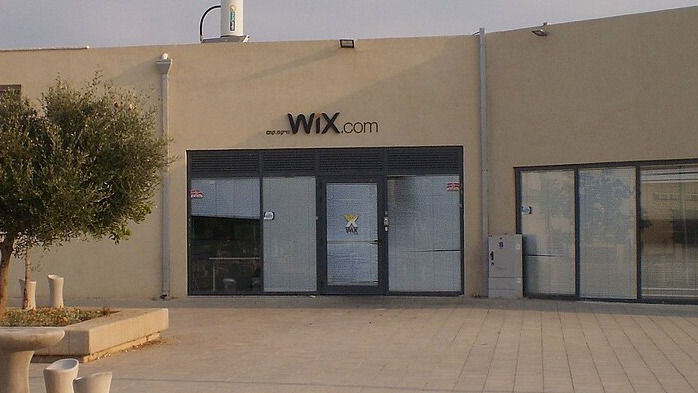
Wix.com Ltd. is preparing to eliminate roughly 1,000 positions, a cut that would shrink its workforce by about one-fifth. The company closed the first quarter of 2026 with 5,277 employees, posted $541.2 million in revenue, and recorded a GAAP net loss of $57.5 million. Those numbers land against a backdrop of a massive $1.6 billion tender offer share repurchase, raising a pointed question: is Wix prioritizing returning capital to shareholders over investing in the people who build its products?
Post-buyback math and the logic of 1,000 layoffs
The timing of these cuts is hard to separate from the company’s recent capital allocation choices. Wix completed a tender offer repurchase totaling approximately $1.6 billion, a move documented in its quarterly results and one that consumed a significant share of available cash. With bookings of $585 million in Q1 2026 and top-line revenue holding above $540 million, the business is not collapsing. But the $57.5 million GAAP net loss signals that profitability pressure is real, and the company appears to have chosen headcount reduction as the fastest lever to close the gap.
A workforce cut of this scale, from 5,277 to roughly 4,300 employees, would represent one of the largest single reductions in Wix’s history. The hypothesis that the post-tender-offer balance sheet is driving a one-time restructuring rather than an investment pivot holds up when the numbers are placed side by side. Revenue growth has not stalled, but the company spent heavily on buybacks and now faces the arithmetic of sustaining margins with less cash on hand. Reducing payroll by a fifth is a direct way to protect free cash flow without reversing the capital return program.
There is also a signaling dimension. By following a substantial buyback with deep cuts, Wix risks sending a message that financial engineering is taking precedence over long-term capability building. Investors focused on near-term margins may welcome the cost savings, but customers and employees may interpret the move as a sign that product investment and support capacity could come under strain.
What Wix’s SEC filing reveals and what it leaves out
The financial baseline for these cuts comes from Wix’s official first-quarter results, filed with the Securities and Exchange Commission as Exhibit 99.1 to Form 6-K covering the period ended March 31, 2026. That filing establishes the 5,277 employee count, the $541.2 million revenue figure, the $57.5 million net loss, and the $585 million in bookings. Each of these data points is authenticated through the SEC’s EDGAR system, making them the most reliable anchor for understanding the company’s financial position at the moment it decided to shrink.
What the filing does not contain is equally telling. There is no executive statement explaining the rationale for the reductions. No breakdown of which departments or geographies will absorb the cuts. No disclosure of severance terms, restructuring charges, or a timeline for completing the layoffs. The absence of these details in the official record means that the scope and human cost of the reductions are, for now, defined only by the headline number.
Investors looking for a broader context must turn to the EDGAR index for Wix’s recent submissions. There, the pattern is one of solid top-line expansion paired with persistent GAAP losses and aggressive capital returns. That mix helps explain why management might feel compelled to demonstrate cost discipline, even if it means disrupting teams and projects in the near term.
Open questions for Wix employees and investors
Several gaps in the public record matter for people directly affected by these cuts and for investors trying to model what comes next.
- The first uncertainty is scope: will the 1,000 positions be concentrated in specific functions such as R&D, customer support, or sales, or spread proportionally across the organization? Concentrated cuts could impair particular product lines or service levels, while broad-based reductions might dilute institutional knowledge more evenly but still slow execution.
- Second is geography. Wix operates across multiple regions, and the impact on any given office or country will shape both the operational risk and the social response. Without clarity, employees in every location are left to assume they may be affected, amplifying anxiety and potentially driving voluntary departures beyond the announced figure.
- Third, the financial mechanics of the restructuring remain opaque. Typical layoffs of this magnitude involve meaningful one-time charges for severance, benefits, and related costs. Those outlays could temporarily widen GAAP losses even as management argues that the actions will improve margins over the medium term.
- Finally, there is the strategic question of what Wix plans to do with a leaner workforce. If the company articulates a focused roadmap-prioritizing core products, automation, or specific customer segments-employees and investors can at least evaluate the trade-offs. In the absence of such a plan, the cuts risk being interpreted as reactive cost trimming rather than a deliberate reset.
For now, the juxtaposition is stark: a company confident enough in its future cash generation to repurchase $1.6 billion of its own shares, yet sufficiently pressured on profitability to remove about one in five jobs. How Wix explains and executes this transition will determine whether the move is remembered as a painful but coherent restructuring-or as a signal that financial priorities came first and people a distant second.