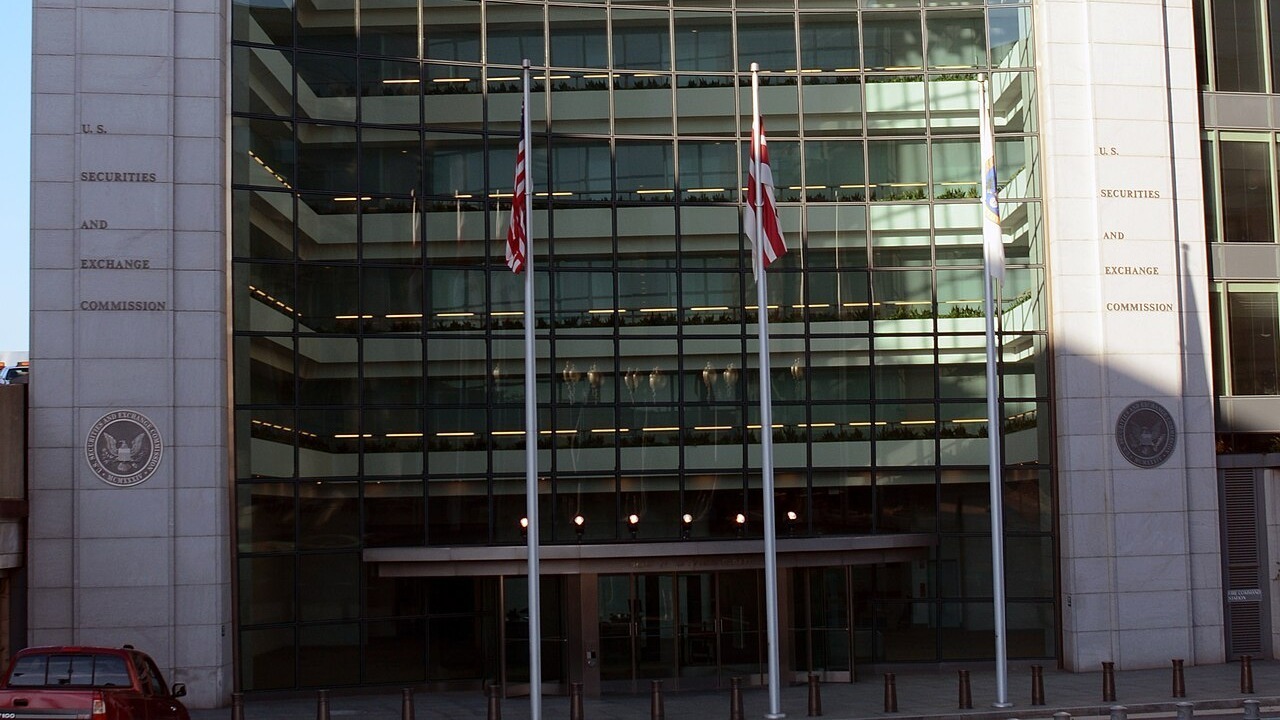
Seven people who reported securities fraud to the SEC collectively received more than $28 million in awards, drawn entirely from penalties paid by the companies and individuals they helped expose. The payouts fall within a fixed statutory band of 10% to 30% of monetary sanctions collected, a range written into federal law since the Dodd-Frank Act took effect in 2010. That spread between the floor and ceiling of an award can mean millions of dollars for a single whistleblower, and the factors that push the percentage higher or lower remain one of the least transparent parts of the program.
Why the 10-to-30-percent band carries real financial weight
When the SEC brings an enforcement action that results in a final judgment or order exceeding $1 million in monetary sanctions, it posts a Notice of Covered Action. That posting starts a 90-day clock for anyone who submitted a tip to file Form WB-APP and claim an award. The percentage the SEC ultimately grants within the 10% to 30% range depends on criteria spelled out in the implementing regulation, 17 CFR 240.21F-5, including the significance of the information, the degree of assistance the whistleblower provided, and the SEC’s programmatic interest in deterrence.
Those criteria are intentionally flexible. A whistleblower who supplies detailed documents, helps interpret complex records, or sits for multiple interviews is more likely to receive an award closer to the 30% ceiling than someone who submits a barebones tip that merely confirms what investigators already suspect. Timeliness also matters: information that allows the SEC to stop an ongoing scheme and prevent additional investor losses can increase the percentage, while unreasonable delays in reporting can push it down.
A reasonable hypothesis is that cases involving complex accounting fraud tend to produce higher award percentages because the information is harder to obtain and more difficult for regulators to develop independently. Simpler disclosure violations, by contrast, often involve publicly available filings that SEC staff can review without insider help. The statutory framework supports this logic: the regulation explicitly rewards the quality and originality of a tip, which tracks with the difficulty of detecting hidden schemes. No public dataset, however, breaks down average award percentages by fraud type, so the hypothesis remains untested against hard numbers.
The SEC’s own whistleblower overview underscores that awards are not automatic. Even if a tip leads to sanctions above the $1 million threshold, the Commission can deny a claim for reasons such as false statements, interference with internal compliance systems, or a leadership role in the underlying misconduct. That discretionary layer adds another variable to the final percentage calculation and helps explain why similarly sized enforcement actions can yield very different payouts.
How the Investor Protection Fund keeps awards separate from victim recoveries
One structural detail separates the SEC whistleblower program from a simple bounty system. Awards come from the Investor Protection Fund, which is financed by sanctions paid by violators, not from money returned to harmed investors. That distinction matters because it means a whistleblower’s payout does not reduce the amount available for disgorgement or restitution. The program is self-funded by wrongdoers, creating a closed loop: violations generate penalties, penalties fill the fund, and the fund pays the people whose tips made enforcement possible.
The statutory authority for the entire structure sits in 15 U.S.C. 78u-6, enacted as Section 21F of the Securities Exchange Act through Dodd-Frank. Eligible submissions must have been filed after July 21, 2010, and the information must be “original,” meaning it was not already known to the SEC from another source. The SEC’s guidance explains that original information can come from a whistleblower’s independent knowledge or independent analysis, but it must lead to a successful enforcement action to qualify for an award.
Critically, the Investor Protection Fund is designed to be large enough to cover awards without competing with other SEC priorities. According to agency statements, the fund is replenished automatically as new civil penalties and certain other monetary sanctions are collected. If the balance were ever to fall below a statutory minimum, additional penalties would be directed into it until the threshold is restored. This mechanism reduces the risk that a surge of large awards could deplete the pool and destabilize the program.
The SEC’s whistleblower FAQs also stress that anonymity is preserved throughout the process when a tipster is represented by counsel. That assurance, combined with the separation of award money from investor recoveries, is meant to encourage insiders to come forward without fear that they are taking funds away from victims or exposing themselves unnecessarily.
Taken together, the seven recent awards totaling more than $28 million illustrate how powerful the 10% to 30% band can be in practice. The same statutory framework that allows for eight-figure payouts also gives the SEC levers to reward early, high-quality cooperation while protecting investor compensation. For potential whistleblowers weighing the personal and professional risks of reporting securities fraud, understanding how that band operates-and how the Investor Protection Fund insulates victims’ recoveries-has become a central part of the calculus.