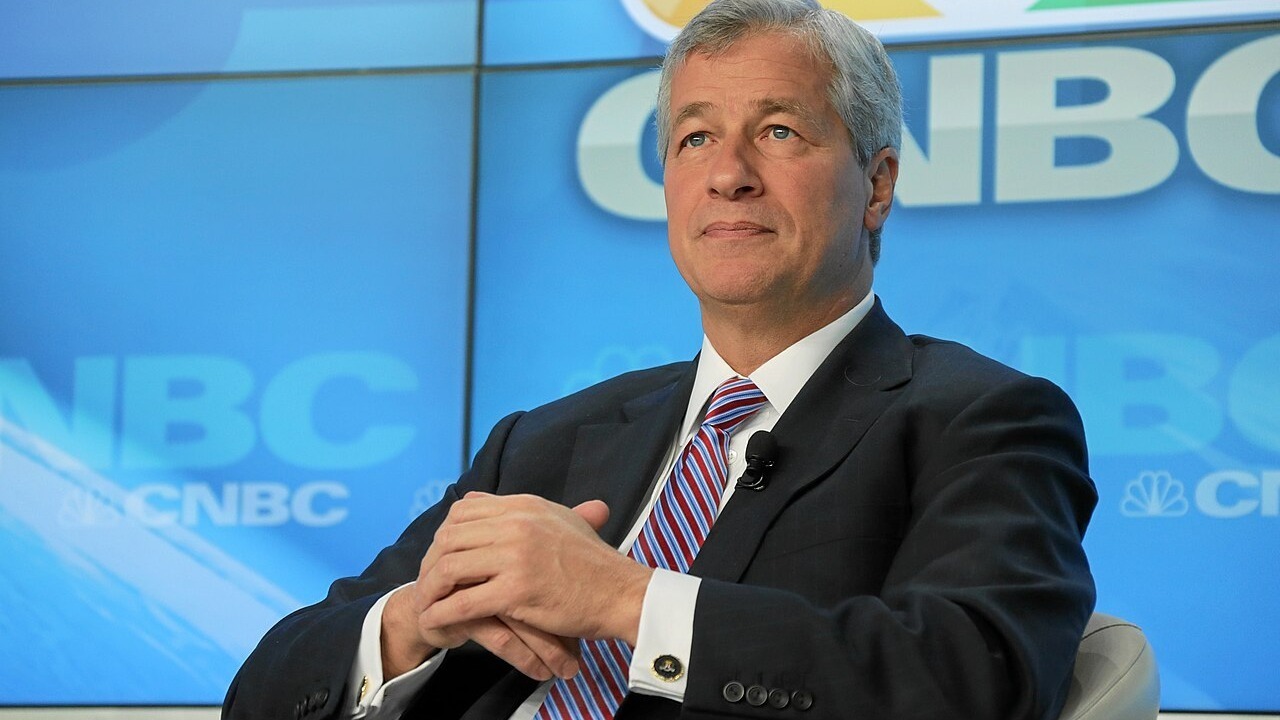
JPMorgan Chase CEO Jamie Dimon told a Bloomberg Television audience in Miami on March 2, 2026, that stock markets carry “too much exuberance” and that the buoyant mood among investors does not match what he called a “fine” but unremarkable economy. The warning landed while the S&P 500 traded near its all-time high and while JPMorgan itself posted record first-quarter Markets revenue of $11.6 billion. For anyone holding equities or making allocation decisions in mid-2026, the tension between Wall Street’s biggest bank profiting from frothy trading and its leader publicly questioning that froth is hard to ignore.
Why Dimon’s exuberance warning carries weight in mid-2026
Dimon made the remarks at JPMorgan’s own leveraged-finance conference in Miami, a venue packed with institutional credit investors. In the televised interview, he described inflation risk as the “skunk at the party,” a phrase that condensed his concern into a single image: the economy may look stable on the surface, but price pressures could spoil the celebration without much notice. The comments were not off-the-cuff asides during an earnings call. They were delivered on camera, at a company-sponsored event, to an audience whose capital-deployment decisions move bond and loan markets.
The timing sharpens the message. By early July 2026, the S&P 500 was hovering near records, with the Nasdaq and Dow also showing strength. A testable question follows from Dimon’s stance: will equity multiples pull back within roughly 60 days of his March interview, regardless of how JPMorgan’s own trading desks perform? Four months after the Miami remarks, major indexes have not delivered a sustained correction, which either means Dimon was early or that the disconnect he flagged is still building pressure.
Dimon’s choice of language matters. Calling the economy “fine” is praise by faint damnation in a market that has priced in something closer to exceptional. A fine backdrop implies modest GDP growth, contained unemployment, and steady but unspectacular corporate earnings. By contrast, record equity valuations typically rest on expectations of accelerating profits, productivity breakthroughs, or a durable decline in interest rates. When those expectations are not clearly visible in the data, the gap between narrative and reality becomes a source of fragility.
The inflation metaphor also lands differently in 2026 than it might have a decade earlier. After several years in which price pressures surprised to the upside, investors have become conditioned to watch every data release for hints about the Federal Reserve’s next move. Dimon’s “skunk at the party” line acknowledges that inflation has moderated from its peaks but argues that it still has the power to disrupt. If inflation proves sticky, the central bank may have to keep policy tighter for longer, undermining the assumption that rate cuts will soon offer relief to equity valuations.
Record trading revenue versus a skeptical CEO
The most striking feature of Dimon’s caution is the contrast with his own firm’s results. JPMorgan’s first-quarter 2026 filing showed Markets revenue of $11.6 billion, with both Fixed Income Markets and Equity Markets posting strong year-over-year gains. A bank that earns more when clients trade heavily has every commercial incentive to encourage activity, not dampen it. Dimon chose the opposite posture.
His argument, stripped to its core, is that valuations have outrun fundamentals. A “fine” economy, in his framing, supports steady corporate earnings but not the premium multiples investors are currently willing to pay. Inflation, still present enough to be the “skunk” in the room, could force the Federal Reserve to keep rates higher for longer than markets expect. That scenario would compress equity valuations by raising the discount rate applied to future earnings, a mechanical relationship that every portfolio manager understands but that bull-market psychology tends to push aside.
For JPMorgan, the current environment is lucrative. Elevated trading volumes, brisk issuance in credit markets, and strong client hedging demand all feed directly into Markets revenue. Yet those same conditions can be symptomatic of late-cycle behavior: investors reaching for yield, companies locking in financing before borrowing costs rise, and funds chasing performance into crowded trades. Dimon’s willingness to voice unease while his firm benefits from the very exuberance he critiques suggests he sees more long-term risk than near-term upside.
Dimon did not specify a timeline for a correction, nor did he recommend particular trades. His comments function more as a risk flag than a market call. Still, when the head of the largest U.S. bank by assets publicly questions the mood, institutional investors tend to revisit their own assumptions, even if they do not act immediately. Some may trim exposure at the margin, shift toward higher-quality balance sheets, or extend hedges rather than closing them.
For individual investors, the message is less about predicting the next 5% move in the index and more about recognizing how quickly sentiment can change when valuations are rich and policy is uncertain. A market priced for perfection leaves little room for disappointment, whether from an inflation surprise, a weaker earnings season, or an external shock. Dimon’s remarks, set against record index levels and JPMorgan’s own banner quarter, underscore that tension. The party is still going, but one of Wall Street’s most seasoned hosts is reminding guests to note where the exits are.


