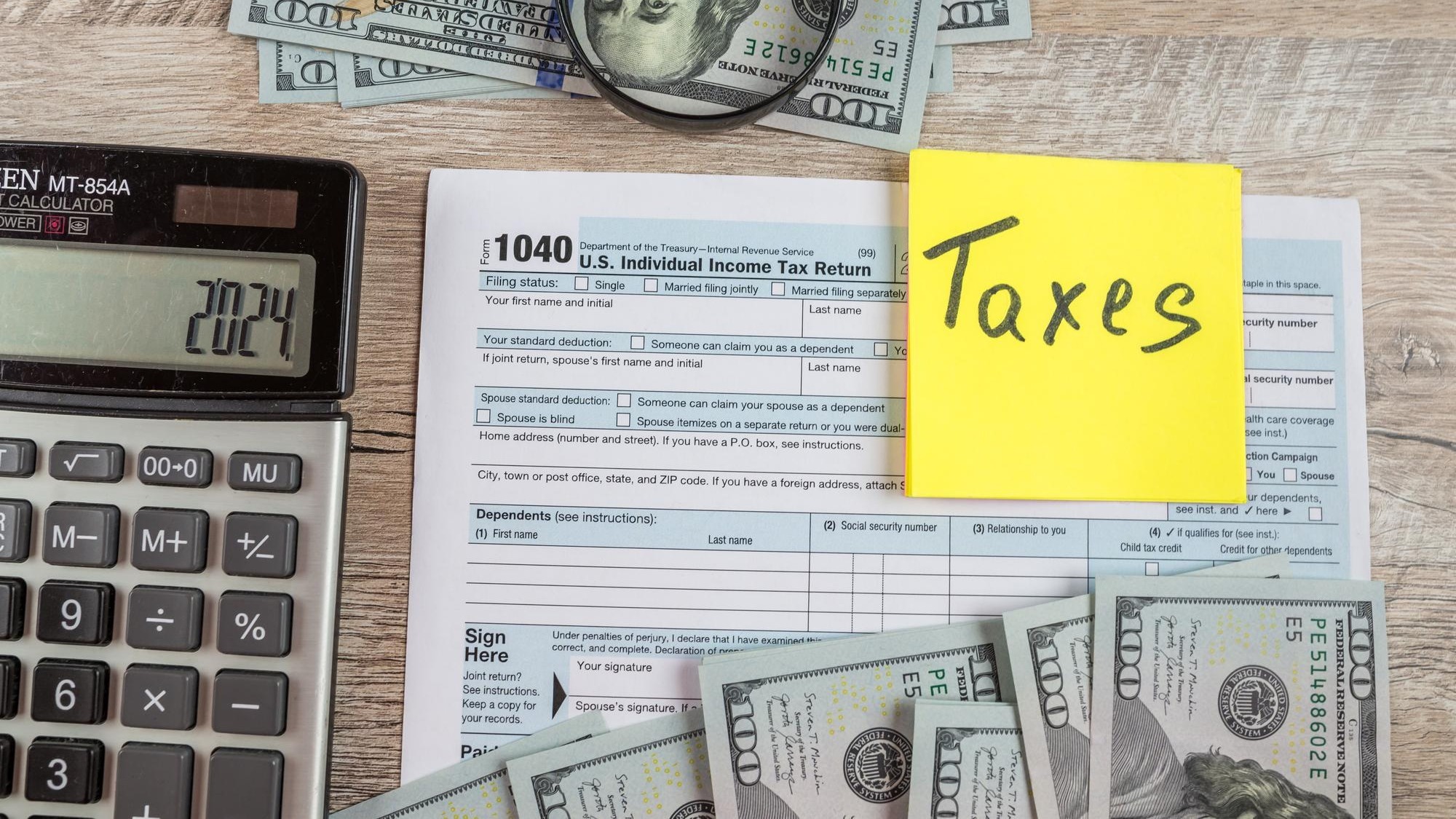
Taxpayers who earned more than $150,000 in adjusted gross income last year face a penalty trap that catches more filers each year: they must prepay at least 110% of their prior-year federal tax liability through withholding or estimated payments, not the standard 100%. The rule, set by federal statute and enforced through quarterly interest charges, hits a growing share of upper-middle-income households whose wages have risen with inflation while the $150,000 threshold has stayed frozen for decades.
A frozen income threshold pulls more filers into the 110% rule
Two safe harbors protect taxpayers from IRS underpayment penalties. They can pay at least 90% of the current year’s tax bill, or they can pay 100% of what they owed the year before. But IRS guidance on estimated tax penalties specifies that filers with prior-year AGI above $150,000, or $75,000 for married filing separately, must substitute 110% for the usual 100% prior-year safe harbor.
That $150,000 line was written into 26 U.S.C. Section 6654 and has never been indexed to inflation. A dual-income household that cleared $150,000 in the mid-1990s occupied a distinctly high-earning tier. The same nominal income in 2026 represents far less purchasing power, yet it still triggers the stricter prepayment math. The result is a compliance cliff: a filer earning $149,000 needs to cover only 100% of last year’s tax, while someone at $151,000 must cover 110%, a gap that can translate into thousands of extra dollars owed in advance.
Taxpayers who owe less than $1,000 after subtracting withholding and credits avoid the penalty entirely, according to IRS Topic No. 306. That escape valve works for many W-2 employees whose employers withhold close to their full liability. It offers little relief, however, to self-employed professionals, business owners, and investors whose income arrives without withholding and whose earnings can swing sharply from year to year.
Because the 110% safe harbor is based on last year’s tax, it can be particularly punishing after a one-time windfall. A taxpayer who exercised stock options or realized a large capital gain in 2025 may owe a much lower tax bill in 2026, yet still has to prepay 110% of the inflated 2025 liability to avoid penalties. For households whose cash flow has normalized, coming up with those extra prepayments can be difficult even though their current-year tax will ultimately be smaller.
How the penalty calculation compounds the cost
The financial bite of falling short is not a flat fee. Section 6654 directs the IRS to apply the underpayment interest rate established under IRC Section 6621. Those rates are reset every quarter and published in the Internal Revenue Bulletin. When short-term federal rates are elevated, the penalty rate climbs in step, making each missed quarterly installment more expensive to carry.
The IRS divides the required annual payment into four installments, generally due in April, June, September, and January. Missing even one deadline by a small margin can generate a penalty that accrues daily until the shortfall is covered. Internal IRS procedural guidance in IRM 20.1.3 details how staff calculate the “preceding taxable year’s tax” and apply the 110% figure, including adjustments when a taxpayer files an amended return that changes the prior-year baseline.
The penalty is computed separately for each installment period. That means a taxpayer who underpays in the first quarter but catches up later in the year still owes a charge for the time the government considers the funds late. Conversely, overpaying in a later quarter does not retroactively erase earlier underpayments; it only stops additional accruals going forward. This timing nuance often surprises filers who assume that being “square” by April 15 of the following year shields them from all penalties.
Planning ahead to avoid the 110% surprise
For wage earners near or above the $150,000 AGI line, the safest approach is often to adjust paycheck withholding early in the year rather than scrambling with large estimated payments at each deadline. Increasing Form W-4 withholding can help ensure the 110% target is met gradually, reducing the risk of cash-flow strain and miscalculation. Taxpayers with volatile income may need to revisit their projections several times during the year, especially after bonuses, option exercises, or major investment sales.
Self-employed individuals and owners of pass-through businesses should coordinate their quarterly estimated payments with their bookkeepers or tax professionals, using year-to-date income data rather than rough annual guesses. When income is trending well above the prior year, aiming for 90% of the current-year liability can be safer than relying on the 110% prior-year formula, particularly if the earlier year’s tax was unusually low.
Anyone who receives an unexpected bill or notice about underpayment charges can use the IRS’s online account tools to review payments credited to their record and confirm how penalties were applied. In limited circumstances-such as casualty events, disasters, or other reasonable cause situations-the IRS may waive or reduce the penalty, but taxpayers typically must request that relief and provide supporting information.
With the $150,000 threshold still frozen while incomes climb, more upper-middle-income households will find themselves subject to the 110% rule each year. Understanding how the safe harbors work, monitoring income as it fluctuates, and proactively adjusting withholding or estimates are now essential steps for anyone whose earnings are approaching that line.