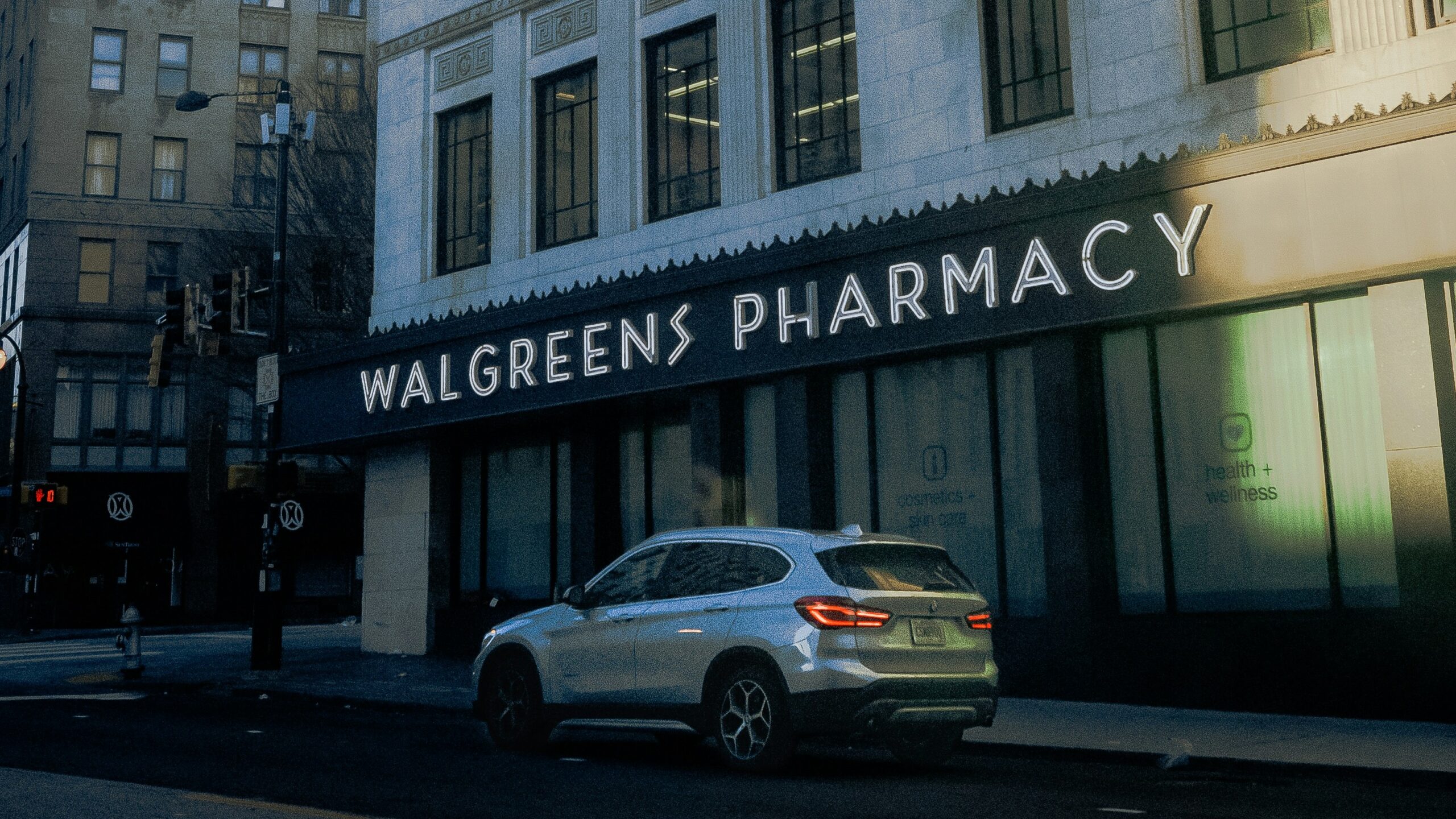
Walgreens’ current guidance points to fewer than 100 store closures in 2026, a far slower pace than the sweeping reduction the pharmacy chain announced two years earlier. The gap between that original plan and this year’s actual count matters most to shoppers who depend on a nearby Walgreens for prescriptions, particularly Medicare beneficiaries who refill maintenance medications there every month. The company has not abandoned trimming its store count; the pace for this year is simply running far below what the 2024 announcement implied it would be by now.
The 1,200-Store Plan Announced in 2024
Walgreens said on October 15, 2024, that it would close roughly 1,200 underperforming stores over three years, with about 500 of those closures expected within the following twelve months, according to NBC News’ reporting on the announcement. Then-CEO Tim Wentworth said the company estimated roughly a quarter of its 8,700 U.S. stores were unprofitable, and framed the closures as part of a broader turnaround built around low drug reimbursement rates and slower consumer spending, per CBS News’ coverage of the same announcement.
The math behind that plan implied a steady multi-year pace of closures. Roughly 500 stores did close in the first year. But the second phase of the plan overlapped with a change in ownership: Sycamore Partners completed its roughly $10 billion take-private acquisition of Walgreens Boots Alliance on August 28, 2025, and the new owners have since pursued a narrower approach that targets specific underperforming locations rather than a broad, scheduled reduction.
Free retirement updates: Plain-English updates on the changes, deadlines, and costly mistakes retirees miss, so more of a Social Security check and savings stays put. Subscribe free.
Why This Year’s Pace Fell So Far Below the Original Plan
Under the original schedule, the closures Walgreens completed in year one plus a comparable pace in year two would have put roughly 700 additional stores on the list for calendar 2026. Instead, multiple outlets report a Walgreens spokesperson has confirmed the company now expects fewer than 100 closures this year, a figure repeated in coverage dated August 2026. That is a slower pace, not a reversal of the underlying strategy; stores already identified as chronically unprofitable can still close, but Sycamore’s ownership has so far favored a store-by-store optimization review over the large, scheduled waves the 2024 announcement described.
The distinction matters for anyone trying to gauge risk to a specific store. A location that was profitable in 2024 was never a strong candidate for the original list, and the slower current pace does not change that calculus. What has changed is the size and speed of the closures still working through the pipeline this year.
What a Closure Means Under Medicare Part D
For Medicare beneficiaries, a pharmacy closing mid-year is not just an inconvenience; it can affect what a prescription costs. Most Part D drug plans use a network of preferred and standard pharmacies, and filling a prescription outside that network, or outside a preferred tier within it, can mean a higher copay. Federal transition rules require Part D plans to allow enrollees a one-time bridge fill, generally up to a 30-day supply, when a pharmacy they used leaves the plan’s network, giving time to transfer prescriptions before a gap in coverage, according to the Centers for Medicare & Medicaid Services’ guidance on Part D coverage.
A closing Walgreens does not automatically drop out of a plan’s network; the store itself disappears, but the chain typically remains a network pharmacy elsewhere. The practical step is transferring the prescription record to another nearby location, whether a different Walgreens or a different pharmacy entirely, and confirming with the Part D plan that the new pharmacy sits in the same cost-sharing tier as the old one. Skipping that confirmation is how a beneficiary ends up paying a standard-tier price for a maintenance drug that used to cost a preferred-tier copay.
Checking Whether a Specific Store Is on This Year’s List
Because the current closures are announced on a rolling basis rather than as one master list, the surest way to know whether a specific Walgreens is affected is a direct call to that store or a check of the notice posted at the pharmacy counter, which stores are required to display before closing. Pharmacists at a closing location typically have several weeks of lead time and can transfer prescription history to a chosen new pharmacy electronically, so recurring prescriptions, refill dates and any prior authorizations on file carry over without needing to start over with a new provider.
For someone managing several medications, keeping a personal list of prescriptions, dosages and refill dates on hand makes that transfer conversation faster, and it gives a plan member something concrete to check against once a new pharmacy is confirmed in the Part D network.
This article was produced with the assistance of AI and reviewed by The Financial Wire editorial team.
More Financial Reading
- The ideal retirement withdrawal rate so your savings actually last
- Adding someone to your bank account: tax traps and smart moves



