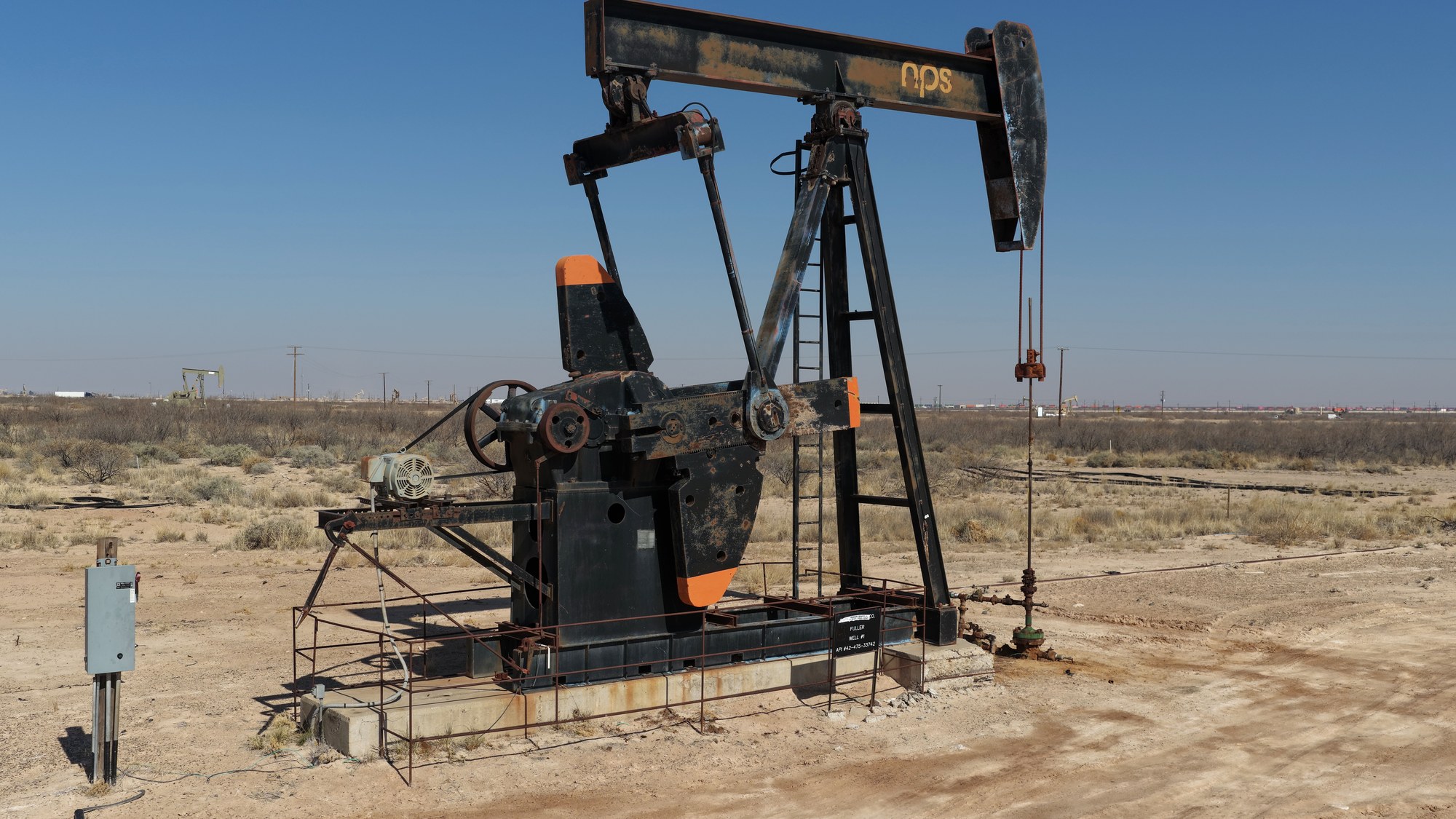
Oil prices retreated on Friday on the first real diplomatic movement in months over one of the world’s most important shipping chokepoints. West Texas Intermediate crude fell 1.8% to $92.89 a barrel after Iran’s foreign minister floated a plan to reopen the Strait of Hormuz, the waterway through which roughly a fifth of the world’s oil supply passes. The drop reflects a market betting on the possibility of eased supply risk, not a resolved conflict, and for a household paying at the pump, the number is still elevated by any pre-conflict standard.
The Friday Price Move
WTI crude fell 1.8% to close at $92.89 a barrel on Friday, while Brent crude, the international benchmark, dropped 1.09% to $105.40, according to TheStreet’s market wrap for Sept. 25, 2026. Both benchmarks moved lower on the same catalyst: a proposal, not yet an agreement, to end the disruption threatening tanker traffic through the Strait of Hormuz. A market retreat driven by a proposal rather than a signed deal is inherently provisional; the price can just as easily reverse if the plan stalls.
Inside the planner: A gasoline price a dollar-plus above last year’s, riding on a barrel price that can reverse on the next Hormuz headline, is the kind of swinging household cost that makes a fixed annual withdrawal plan hard to hold to. The Retirement Tax & Withdrawal Planner works through the provisional-income and RMD-schedule calculators built for absorbing a swing like that.
What Iran Actually Proposed
Iran’s Foreign Minister Abbas Araghchi presented a seven-day plan to the United States through intermediaries at the United Nations General Assembly, under which fighting would stop on all fronts, including Lebanon, the U.S. would lift its naval blockade and oil sanctions and release frozen Iranian assets, and the Strait of Hormuz would reopen at the end of the seventh day, followed by a resumption of nuclear-program negotiations, according to Al Jazeera’s report on the plan. Araghchi is quoted directly saying “if certain conditions are met, the Strait of Hormuz would be open on the end of the seventh day,” language that makes clear the reopening is conditional on the U.S. accepting the rest of the sequence first, not something Iran has committed to unconditionally.
Why The Market Reaction Was Modest
A 1.8% pullback is a meaningful daily move for crude oil, but it is not the kind of drop that would signal traders expect the Strait of Hormuz’s disruption to end imminently. That restraint tracks with the underlying reality: the conflict between the U.S. and Iran is approaching its seventh month with no ceasefire in place, and the two sides remain far apart, with Washington wanting nuclear talks to start immediately while Tehran insists the naval blockade and sanctions be addressed first, per the same Al Jazeera account. Both sides are said to be maintaining indirect contact through Qatar, but analysts cited in the report describe a firm peace deal as unlikely in the near term.
Why The Strait Of Hormuz Moves Every Barrel’s Price
The Strait of Hormuz is the narrow passage between Iran and Oman through which a large share of the world’s seaborne crude and liquefied natural gas moves toward global buyers. Any credible threat to that route, or any credible step toward removing the threat, shows up almost immediately in the price of crude worldwide, which is why a proposal relayed through intermediaries at a UN meeting was enough to move Friday’s WTI and Brent prices even without a finalized agreement. That sensitivity cuts both ways: renewed fighting or a collapsed negotiation could send the price back up just as quickly as Friday’s proposal pushed it down.
Brent crude, the international benchmark more directly tied to how much a shipping disruption through the strait would matter globally, fell a smaller 1.09% to $105.40 on the same news, according to the same TheStreet report. Brent’s smaller percentage move relative to WTI’s 1.82% drop reflects that Brent already carries a larger built-in risk premium tied to Middle East supply routes, so a single conditional proposal moves it proportionally less than it moves the more domestically driven WTI benchmark.
The Money Angle: Gas Pump And Heating Costs
Crude prices flow into a household budget most directly through gasoline and, heading into the winter heating season, home heating oil and natural gas. The national average price for a gallon of regular gasoline stood at $4.4918 on Sept. 25, 2026, up about 2.3 cents from a week earlier and $1.3339 higher than the same date a year ago, when the average was $3.1579, according to AAA’s daily fuel-price tracker. Friday’s 1.8% pullback in crude is a modest relief compared with a scenario in which the strait’s disruption worsens, but against a national gas price already more than a dollar above where it stood a year ago, it barely dents what a household is actually paying at the pump, and it remains fully reversible if Friday’s proposal fails to advance.
Why This Winter’s Heating Costs Ride On The Same Barrel Price
Home heating oil and natural gas prices are priced off the same global crude and gas benchmarks that move on Strait of Hormuz headlines, which means a household budgeting for winter heat is exposed to the same volatility as a driver watching the pump. A retiree on a fixed monthly budget typically cannot shift a heating bill the way a driver can delay a fill-up, so a swing in crude prices tied to an unresolved Middle East negotiation translates into a less predictable winter heating cost than in a year without an active regional conflict over a major oil shipping route.
A Falling Barrel Price Still Leaves A Winter Heating Bill Unsettled
Oil’s 1.8% drop on a still-unresolved Strait of Hormuz proposal is a market signal, not a household budget plan, and it says nothing about which retirement account should absorb a higher heating or gas bill this winter if prices swing back up once the diplomatic proposal stalls. Neither the market wrap nor the diplomatic reporting is built to answer that household-level question.
The Retirement Tax & Withdrawal Planner includes an RMD schedule calculator and a provisional-income calculator, tools built for weighing an unplanned seasonal expense against which retirement account to draw from next.
See the RMD schedule calculator in The Retirement Tax & Withdrawal Planner.
This article was produced with AI assistance and checked against the primary sources linked above.