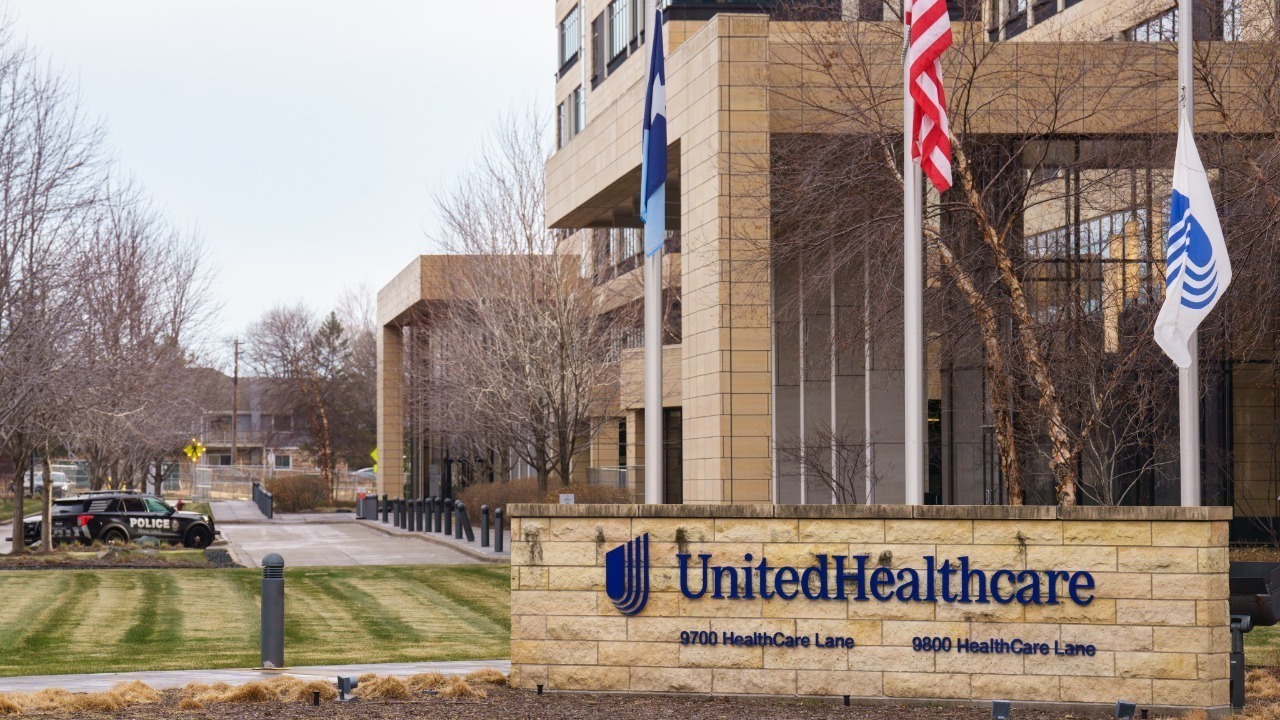
The HHS Office of Inspector General estimates that UnitedHealthcare Benefits of Texas, Inc., a Medicare Advantage contract known as H0609, received at least $24.4 million in overpayments for 2020 and 2021. In the sample OIG reviewed, medical records did not support the diagnosis codes for 172 of 230 enrollee-years. United disagreed with some of the findings and asked OIG to withdraw all of its recommendations, so the figure is an audit estimate that remains contested.
An extrapolated estimate, not a collected refund
The OIG report page for audit A-07-24-01215 shows an issue date of Sept. 23, 2026 and a posting date of Sept. 28. It states that in 172 of the 230 sampled enrollee-years, medical records did not support the diagnosis codes, that this produced $622,927 in overpayments within the sample, and that OIG estimated United received at least $24.4 million in overpayments across the two years. The full report gives the exact estimate as $24,465,369.
The gap between $622,927 and $24.4 million is the extrapolation. OIG reviewed a sample and projected the result to a population of 15,340 enrollee-years across high-risk diagnosis groups, which carried $302,156,630 in payments. CMS paid United a total of $8,755,476,067 for the contract over 2020 and 2021, so the estimated overpayment is a small share of total payments, and the report describes an estimate rather than a determination that the money has been repaid.
How a diagnosis code turns into a payment
Medicare Advantage plans are paid partly on the basis of the diagnoses they submit to CMS for risk adjustment. CMS says on its risk adjustment data validation page, last modified March 4, 2026, that audits confirm submitted diagnoses are supported in enrollees’ medical records and that, if they are not, CMS may collect overpayments. The OIG audit focuses on diagnosis codes at high risk of being miscoded, including conditions such as stroke and cancer.
The scale of the program is the backdrop. KFF’s 2026 enrollment analysis, by Meredith Freed and colleagues, found 35.2 million people, 55% of eligible beneficiaries, in Medicare Advantage, and UnitedHealth Group at 26% of that enrollment. It cites MedPAC’s estimate that payments to private plans run 14% above traditional Medicare per person.
The 230 enrollee-years and the conditions behind them
The 230 units were drawn in two ways, according to the report. OIG took a stratified random sample of 200 enrollee-years from ten high-risk groups, 20 each, covering acute stroke, acute myocardial infarction, embolism, lung cancer, breast cancer, colon cancer, prostate cancer, ovarian cancer, sepsis and pressure ulcer. It added 30 enrollee-years from a non-statistical sample of potentially mis-keyed diagnosis codes. The audit ran from November 2023 to March 2026, using diagnoses submitted for 2019 and 2020 service years that drove 2020 and 2021 payments.
The count matters for reading the headline ratio. “172 of 230” combines both parts of the sample, and it reflects a change OIG made after United’s response: United disagreed with findings for 25 enrollee-years, and for 9 of them OIG’s contractor found support for the audited diagnosis and reversed its earlier decision, lowering the error count from 181 to 172.
United’s five objections and OIG’s replies
United argued that OIG cannot determine overpayment without applying a fee-for-service adjuster, that the sampling formula is not recommended for very small samples such as the 20 enrollees per condition, that the audit ignored possible underpayments, that OIG failed to follow CMS’s risk adjustment audit rules without notice-and-comment rulemaking, and that OIG reviewed clinical criteria rather than doing a true coding review.
OIG answered each point in the report. It said CMS has not issued any requirement that compels it to reduce its calculations for a fee-for-service adjuster, that federal courts “have consistently upheld statistical sampling and extrapolation,” and that samples smaller than 100 “have routinely been upheld” by appeals boards. It said a valid estimate “does not need to take into consideration” underpayments, and that its method was “generally consistent” with CMS’s audit approach, though it “did not mirror CMS’s approach in all aspects, nor did it have to.”
Four recommendations and what happens to the estimate next
OIG made four recommendations. United should refund the $24,465,369 of estimated overpayments to the federal government. It should review the 26 enrollee-years in the mis-keyed group that OIG did not examine and refund any overpayments found. It should look for similar noncompliance after the audit period on the same high-risk diagnoses and refund those overpayments. And it should keep examining its compliance procedures for high-risk codes. The report notes that CMS keeps authority to apply adjustments when the findings are resolved, so the final amount, if any, is not settled by OIG’s estimate alone.
The audit concerns money moving between the federal government and a plan, and its recommendations are addressed to United, not to enrollees. The report page, dated Sept. 23 and posted Sept. 28, is the controlling record, and the OIG reports index lists it under the same report number.
Prior-authorization denials and state cost help in Medicare
Medicare beneficiaries sometimes receive a coverage or prior-authorization denial and are left to work out the appeal steps and deadlines on their own. State-run programs that help with premiums and drug costs add a second layer, since limits and applications differ from state to state.
The Medicare Cost & Coverage Protection Kit includes the prior-authorization appeal steps, 51 state Medicare cost-help packs, and a medication and cost tracker for organizing denial letters and drug expenses in one record.
Grab The Medicare Cost & Coverage Protection Kit and its appeal steps →
This article was produced with AI assistance and checked against the primary sources linked above.