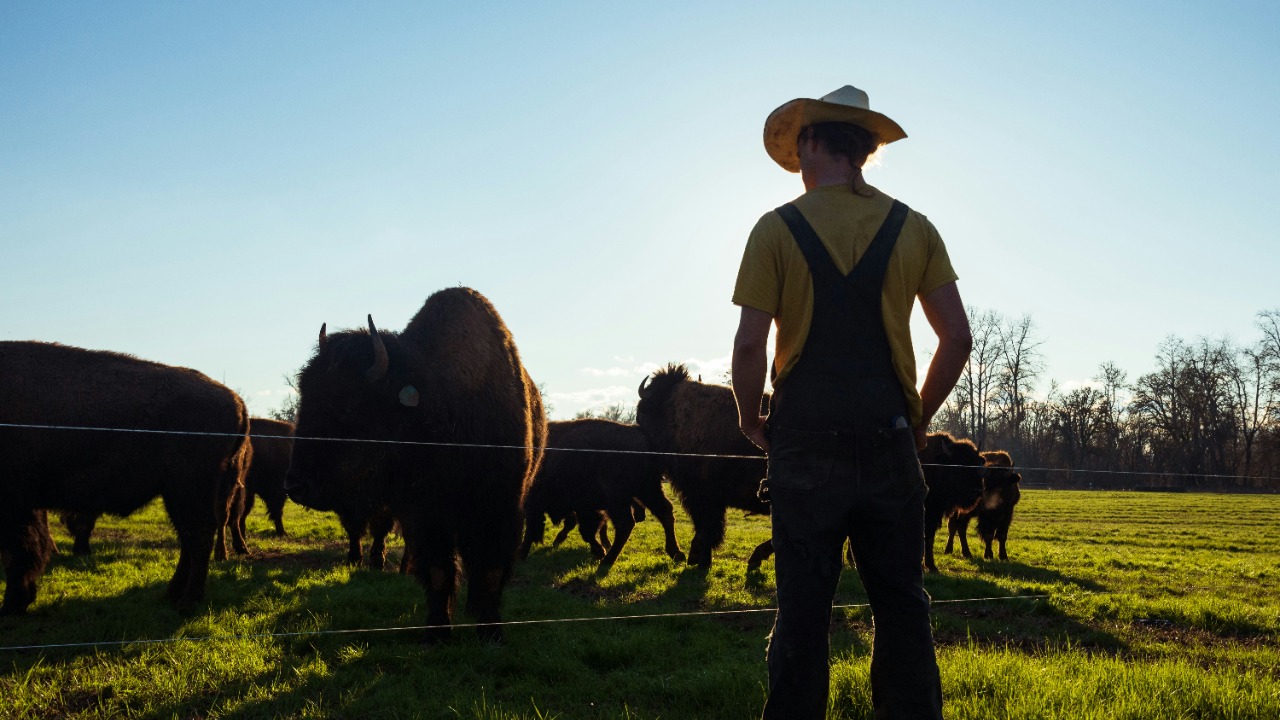
The Internal Revenue Service has stretched the window for livestock producers to replace animals they sold because of drought, from the usual two years to four. The relief, issued as Notice 2026-54, covers farmers and ranchers across 49 states, and it comes with a second extension for producers whose replacement period would otherwise run out at the end of 2026.
The IRS announced the extension on September 15, 2026. Frank J. Bisignano, the agency’s chief executive officer, framed the decision around conditions on the ground, saying that “large swaths of the United States continue to experience drought conditions, distressing hard-working American farmers and ranchers.”
Two years becomes four for drought-forced sales
The mechanics sit in the rules for livestock sold or exchanged because of drought. A producer who sells more animals than planned in a drought year, because pasture and feed have failed, normally has a limited time to buy replacement animals and keep the tax result from landing in a single year. The IRS release says the replacement period under this notice runs four years rather than the standard two.
Doubling the window changes the practical planning horizon. Herds built over many seasons take time to rebuild, and a producer who has just been through a drought has reason to wait for pasture to recover before restocking. Four years gives that producer room to rebuild at a measured pace, without the tax deadline forcing a purchase before the operation is ready. A shorter clock pushes a rancher toward buying animals at the first opportunity; a longer one lets the replacement decision follow the land.
The further extension for periods ending at year-end 2026
The notice contains a second layer for producers closest to the deadline. According to the IRS, farmers and ranchers whose replacement periods were set to expire at the end of 2026 receive an additional extension, running through the end of their next tax year, to complete the replacements.
That detail matters most for producers who sold animals in an earlier drought and have watched the two-year period shrink. For them, the four-year rule alone could still leave a gap, and the added time through the following tax year is the provision that closes it. The notice is aimed at a specific cohort, those whose period ends on December 31, 2026, rather than every seller.
Only draft, dairy and breeding animals qualify
The relief is narrower by animal than the headline suggests, and the exclusion is part of the IRS announcement, not an inference from it. The IRS states that draft, dairy and breeding livestock qualify. Poultry and livestock raised for slaughter are excluded, so a producer who sold market-bound animals does not receive the longer replacement period under this notice.
The split follows the kind of animal held. Breeding stock, dairy cows and draft animals are productive assets that stay on the operation, and they are the animals a producer rebuilds after a forced sell-down. Animals raised for slaughter are sold in the ordinary course, and poultry falls on the same side of the line. A rancher with a mixed operation, for example a cow-calf herd alongside feeder cattle, would need to separate the two groups when looking at what the notice covers.
49 states, the District of Columbia and Puerto Rico
Geography is broad. The IRS says the relief reaches 49 states plus the District of Columbia and Puerto Rico, along with other areas that carried federal drought designations during the 12-month period ending August 31, 2026. The release does not frame the figure as a list of eligible counties, and the designations are the trigger, not the state line itself.
The wording also reaches past the 50-state frame. Puerto Rico and the District of Columbia are named outright, and the phrase “other areas” signals that any additional place carrying a federal drought designation in the window falls inside the notice. Only one state sits outside the 49 the IRS counts, and the release as read does not single it out.
Because the coverage is tied to federal drought designations over a fixed 12-month window, a producer’s location during that stretch is the starting point. The announcement came on September 15, so the August 31 end date closed the observation period only weeks before the IRS acted, which keeps the designations behind the relief close to current conditions.
Where the guidance lives
The IRS release points taxpayers to the notice itself, to Notice 2006-82, listed alongside it as related guidance, and to Publication 225, the Farmer’s Tax Guide, for the underlying rules on livestock sales and replacement. Producers who sold animals because of drought, and who hold breeding, dairy or draft stock, are the audience those documents serve.
Every provision described above traces to the same document: the four-year replacement period, the further extension for periods ending at year-end 2026, the draft-dairy-breeding limit and the poultry and slaughter exclusion all appear in the IRS announcement of Notice 2026-54, dated September 15, 2026.
When a federal refund goes missing in the mail
The kit is written for individual taxpayers whose refund was held, reduced, offset or never showed up, and who cannot tell which IRS letter explains it or what to file next. It lays out the response in an order a reader can follow, so the question stops being a guess.
The IRS Refund Recovery Kit includes a notice decoder for reading the letter that arrived and the refund-trace steps (Form 3911) for a check that never came.
Walk through the Form 3911 refund-trace steps for a check that never arrived →
This article was produced with AI assistance and checked against the IRS announcement it cites.