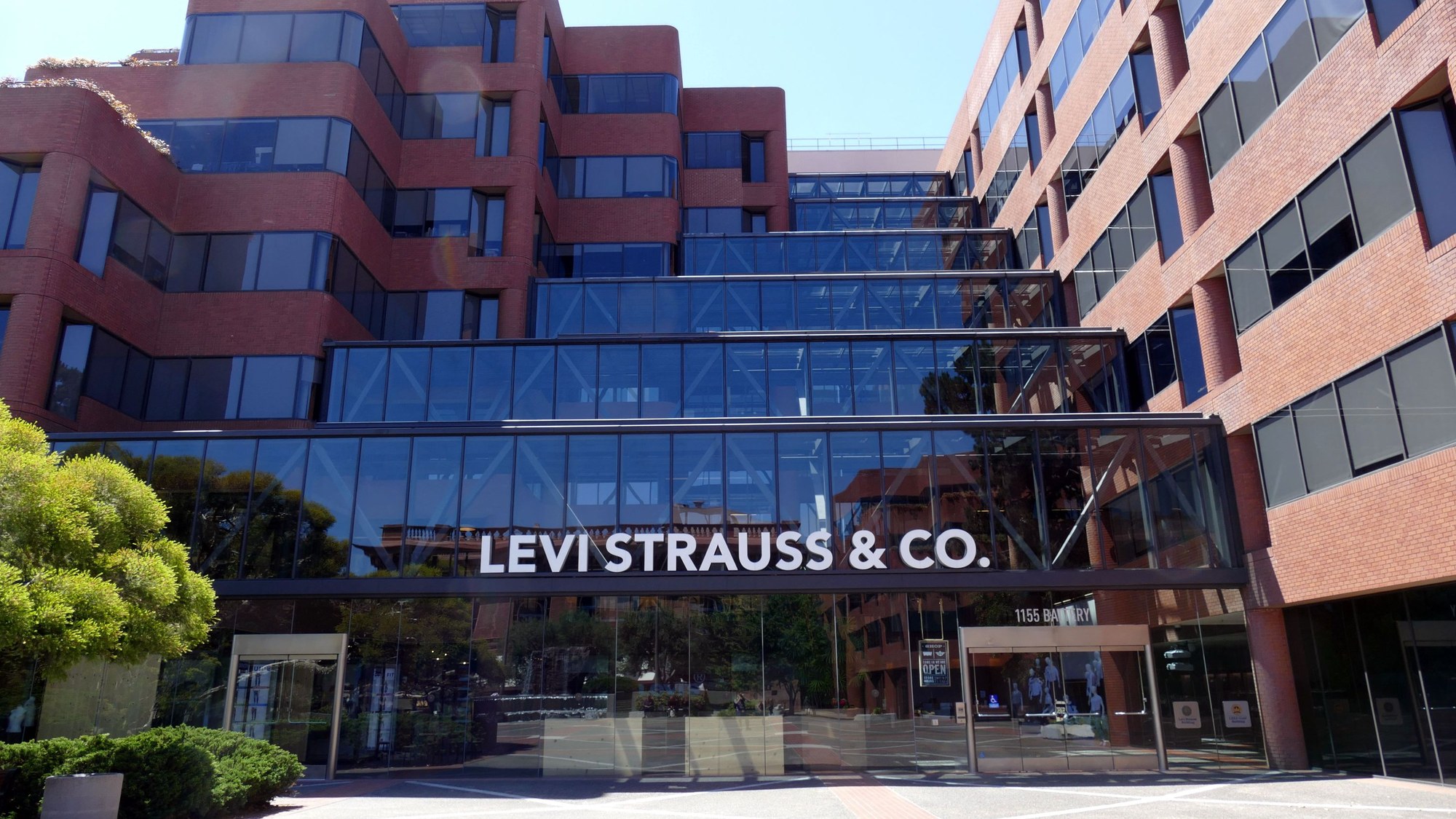
Levi Strauss & Co. recorded $79 million in refunds of the tariffs the Supreme Court struck down this year, and it plans to put about $60 million of that benefit back into the business over the full year, including extra promotion and marketing. The denim maker disclosed the figures Wednesday in its third-quarter earnings release, which covers the quarter that ended August 30. The refunds also came with $5 million of interest income.
For shoppers, the question is whether a company that just collected tariff money back passes it on at the register. Levi’s described its plan as redeploying the refunds into the business, with additional promotion and marketing spending in the third quarter, and it did not frame the money as lower prices.
Levi’s says about $35 million of the refund money goes back into the business in the fourth quarter, the next step in how the $60 million is spent.
Get the next update the morning it lands →
Where the $79 million landed in the quarter
The refunds ran through cost of goods sold, the line where Levi’s records what it pays to produce the clothing it sells. The company reported $79 million there, along with $5 million of interest income recorded in other income. The refunds carried a $20 million tax expense.
The effect showed up in margins. Reported gross margin rose 450 basis points to 66.2%, up from 61.7% a year earlier. The refunds added 490 basis points to gross margin, and about 120 basis points were spent back, leaving a net lift of 370 basis points. At the operating level, the refunds added 490 basis points and about 160 basis points were redeployed, a net benefit of 330 basis points.
What the $60 million is meant to do
Chief Financial Officer Harmit Singh said in the release that the company decided to “redeploy a majority of our tariff refund benefit back into the business during Q3 and Q4.” The release puts the full-year redeployment at about $60 million, including about $35 million in the fourth quarter, which means roughly $25 million was spent in the third.
Put against the $79 million booked, the $60 million works out to about 76% of the refunds, and the $35 million still to come is about 58% of the full-year redeployment. On the company’s earnings call, according to a Benzinga transcript, Levi’s put the total refunds at about $80 million and said that was substantially all of what it expects to receive, so the third-quarter figure is close to the whole sum rather than a first installment.
That $25 million hit two places: $19 million reduced gross margin and $6 million landed in selling, general and administrative expenses. The company said the spending paid for additional promotion and marketing. Levi’s fiscal year ends November 29, so the fourth-quarter portion is still ahead.
How much the refunds moved earnings
On a per-share basis, the tariff refunds added $0.16 to adjusted diluted earnings, and about $0.05 of that was redeployed, for a net benefit of $0.11. Adjusted diluted earnings per share came in at $0.48, compared with $0.34 a year earlier. Net revenues were $1.6 billion, or $1,609.7 million, up 4% as reported and 5% on an organic basis. Diluted earnings per share on a reported basis were $0.43, five cents below the adjusted figure. With the refunds counted at their net $0.11, adjusted earnings would have been $0.37 without them, still ahead of the $0.34 of a year earlier.
Levi’s raised its full-year adjusted earnings guidance to $1.54 to $1.56 a share from $1.46 to $1.52. The guidance includes the refunds and the $60 million redeployment. Full-year gross margin is now expected to rise 130 basis points, compared with a prior forecast of a 10 basis point gain, and adjusted operating margin is guided to about 12.1%, up from 12%. It also assumes current tariff rates stay in effect for the rest of the year, and the company’s forward-looking statements point to continuing uncertainty around tariffs and potential refunds.
The court ruling behind the refunds
The refunds trace to a February 20 decision. In Learning Resources v. Trump, listed on the Supreme Court’s slip-opinion page, the justices held that the International Emergency Economic Powers Act “does not authorize the President to impose tariffs.” Refunds to companies that paid the duties have followed. FedEx says on its tariff-impact page that it has begun issuing refunds, including interest received from U.S. Customs and Border Protection.
Reading a retailer’s tariff refund before the fourth quarter
Levi’s filed the results with the Securities and Exchange Commission as a current report on Form 8-K, dated October 7, and the press release is Exhibit 99.1. The full filing index is public, which makes it the place to check the dollar amounts for refunds, interest and redeployment directly.
Three things are worth separating when a company reports a refund. One is the amount booked, here $79 million plus $5 million of interest. Another is the amount the company says it will spend back, about $60 million for the year. The third is where that spending goes. In Levi’s case the stated destination is promotion and marketing, and the release gives no price changes.
The fourth-quarter number to watch is the roughly $35 million still to be redeployed, which the company will report when its fiscal year closes on November 29.
More Financial Reading
- 24 Ways to Stretch a $2,087 Social Security Check
- 17 Places to Find Your Share of the $4.25 Billion States Give Back
- 17 Ways Retirees Are Tapping a Record $14.9 Trillion in Home Equity
This article was produced with AI assistance and reviewed by The Financial Wire’s editorial team.