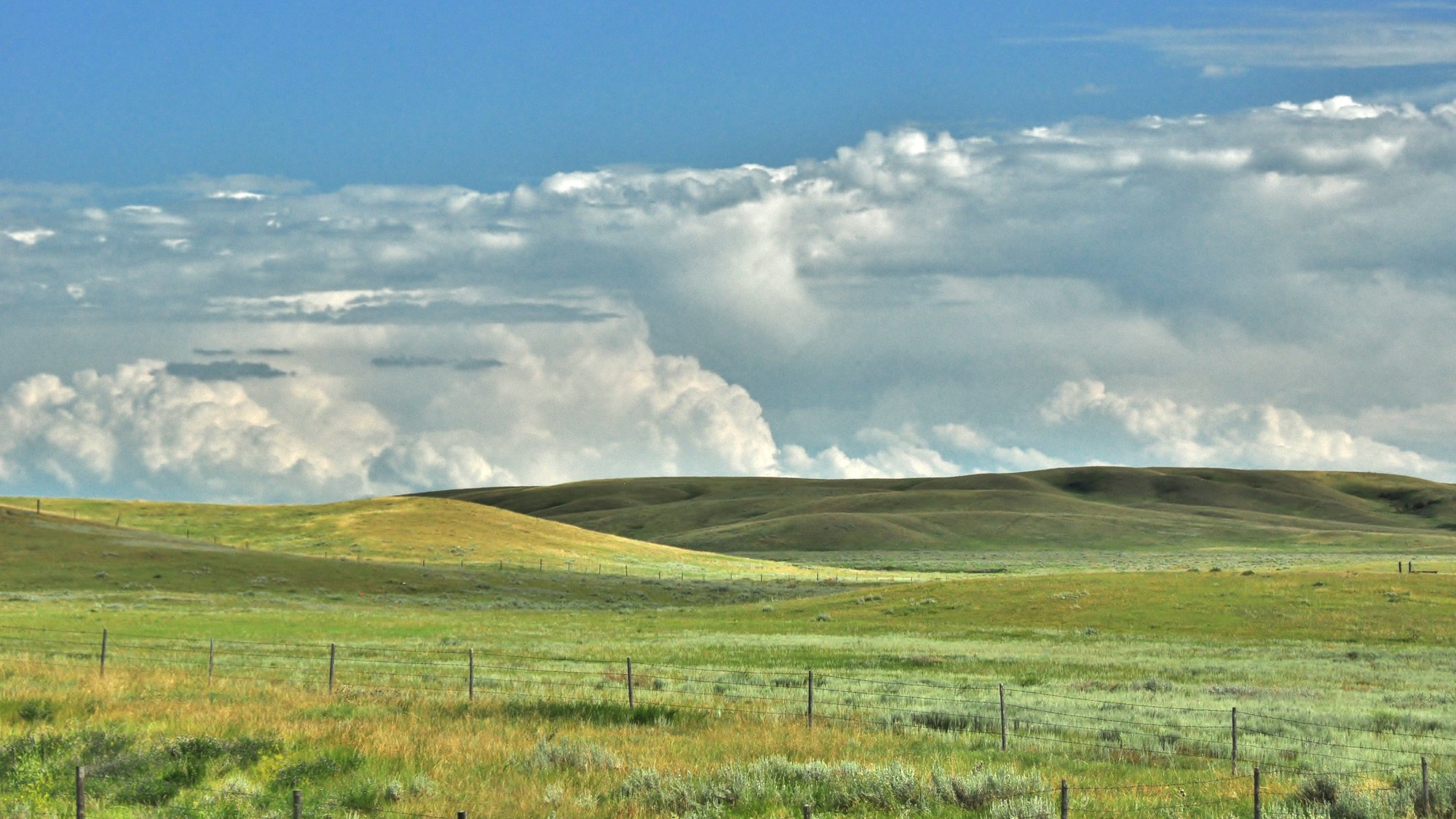
Iowa, Illinois, Minnesota, South Dakota and Missouri lead the country in Conservation Reserve Program payments this year, according to the U.S. Department of Agriculture. The agency said on Oct. 8 that it is issuing about $1.8 billion in CRP rental payments for 2026 participation, a total that includes Grassland CRP. The money goes to producers and private landowners who keep environmentally sensitive land under grass, trees or other protective cover instead of crops.
For anyone who owns or leases land under a CRP contract, the practical question is what that national total means for one set of acres. USDA’s announcement gives no payment dates and no program-by-program split, so a landowner’s own check depends on the contract, the county and the soil, not on the headline figure.
The 26.8 million acres USDA says will be enrolled in CRP for fiscal year 2027 is the number that moves as contracts expire and new offers are accepted.
Get each new number in one short weekday email →
What the $1.8 billion consists of
USDA describes the $1.8 billion as annual rental payments made through CRP and Grassland CRP. Rental payments are the core of the program: the government pays landowners each year to keep land out of production, and the payments give farmers and ranchers what the department calls a steady income stream that helps stabilize farm income.
Richard Fordyce, USDA’s under secretary for farm production and conservation, said in the announcement that “these conservation payments play a key role in helping landowners preserve and protect natural resources.” The department says CRP reduces soil erosion, improves water quality and increases wildlife habitat.
Iowa, Illinois, Minnesota, South Dakota and Missouri
USDA lists the top five states for 2026 CRP payments as Iowa, Illinois, Minnesota, South Dakota and Missouri, in that order. The announcement does not print a dollar figure for any state, and USDA has not said how much of the $1.8 billion lands in each one. The order of the list is the department’s own, with Iowa first and Missouri fifth.
Beyond the top five, the department did not break the total down by state or by program. Continuous CRP subprograms such as the Conservation Reserve Enhancement Program and CLEAR30 are part of the program’s menu on the FSA site, but the announcement does not report what they paid.
Grassland CRP and the cattle herd
Grassland CRP is the part of the program that lets participants keep grazing and haying most of their land while still collecting rent. FSA accepted offers on nearly 1 million new acres of Grassland CRP this year, and USDA expects the grassland track to exceed 40 percent of all CRP enrolled acres after the 2026 enrollment is counted. Participants get rental payments and cost-share assistance to keep rangeland and pastureland as grazing areas.
Agriculture Secretary Brooke Rollins tied the announcement to cattle. She said the payments will help rebuild the cattle herd by protecting nearly one million acres of grazing land, and the department links them to its Ranchers First Initiative. In her words, “Under the Trump Administration we have committed to putting American farmers and ranchers first.”
How the rent is set and how long it lasts
The Farm Service Agency, which runs CRP, says on its program page that participants receive annual rental payments based on soil productivity and the average cash rental rates in the county. Two neighbors with the same acreage can therefore see different rates if their soils or county rents differ.
Contracts are typically 10 to 15 years long. Separate from the rent, cost-share assistance covers up to 50 percent of the cost of establishing approved conservation practices, such as planting native grasses or trees. The program is voluntary, and applicants must show the land can deliver significant environmental benefits.
Acres accepted and how competitive entry is
FSA accepted offers on 2.2 million acres across the 2026 Grassland, General and Continuous CRP signups. For fiscal year 2027, a total of 26.8 million acres will be enrolled in CRP, and USDA calls enrollment highly competitive.
The signup windows for this year have already closed. General CRP closed April 17, Continuous CRP closed May 1, and Grassland CRP ran May 4 to May 29. General signups rank offers by environmental benefit, while continuous signups take eligible land without competitive ranking. FSA says it cannot guarantee that any offer will be accepted, because acceptance depends on acreage availability and USDA priorities.
Finding the payment attached to a CRP contract
Landowners who want the details of their own payment can start with the Farm Service Agency’s county office, which holds the contract and the rental rate. USDA’s announcement points readers to its local FSA office locator for that purpose, and the agency’s program page lists the fact sheets for each signup type. The page also describes the Transition Incentives Program, which helps move expiring CRP land to beginning or veteran farmers and ranchers.
People weighing an offer for next year can compare the three tracks side by side: general signups rank offers, continuous signups run first come, first served for priority practices, and Grassland CRP keeps grazing on the land. Anyone whose contract is about to expire can also ask the county office about re-enrollment offers, which FSA accepts first-come, first-served for expiring continuous acreage.
The national figures come from USDA release 0131.26, dated Oct. 8, 2026, which counts both CRP and Grassland CRP in the $1.8 billion and names the five leading states.
More Financial Reading
- 24 Ways to Stretch a $2,087 Social Security Check
- 17 Places to Find Your Share of the $4.25 Billion States Give Back
- 22 Ways Retirees Can Raise $1,000 Fast Without a Job
This article was produced with AI assistance and reviewed by The Financial Wire’s editorial team.