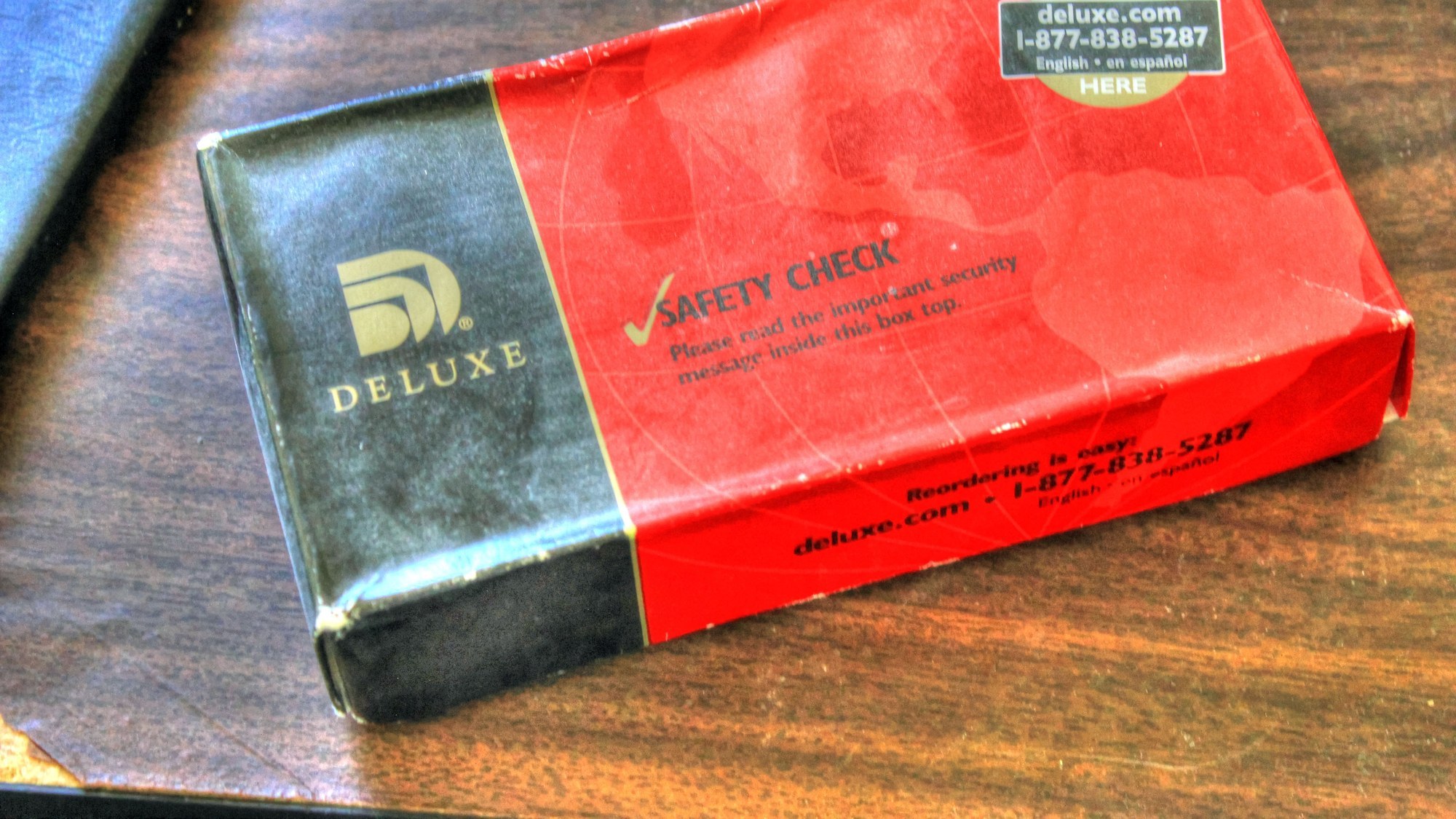
Emily Roberts admitted in federal court that she deposited 636 checks worth $1,893,750 that were not hers. Roberts, 55, of Monessen, Pennsylvania, worked as a house cleaner in the home of the people she stole from. She pleaded guilty on October 2 to one count of bank fraud, and sentencing is set for February 10, 2027.
The average check works out to about $2,980. Prosecutors say it started in January 2014 and did not end until March 2026.
636 checks made out to cash
Roberts cleaned the victims’ home, the U.S. Attorney’s Office for the Western District of Pennsylvania says, and while she was there she repeatedly took checks from their checkbook. She made each one out to cash, forged a signature and put the money into her own bank account, according to the office.
The release does not name the victims or say how old they are. It does not name the banks that cashed the checks, and it says nothing about restitution. U.S. Attorney Troy Rivetti announced the plea, and U.S. District Judge W. Scott Hardy took it.
That leaves a stark figure. The checks were deposited across a little more than twelve years, so by simple division Roberts was depositing roughly four a month. The release does not say how the thefts were found.
What a forged check looks like on paper
The question this case leaves behind is the practical one: how would anyone know if someone in their own home were forging their checks? The signs sit in the statements, not in the checkbook. A run of checks written to cash, in amounts the account holder does not remember, is the pattern the plea describes.
The Office of the Comptroller of the Currency lists the warning signs as unfamiliar transactions on statements, bank alerts about unauthorized activity, and calls about checks the account holder did not write. Its advice is to set up alerts on every transaction, review statements often, use black gel ink, which resists check washing, and mail checks from a post office slot, the regulator says.
Retirement deadlines, in your inbox: Miss an enrollment or claim deadline and the money can be gone. Join the Retirement Money Brief and we’ll send you our Scam & Identity-Theft Action Card as a welcome gift.
Get the Brief + the scam action card →
We may earn a commission from links on this page.
If a forged check does turn up, the Consumer Financial Protection Bureau says to contact the bank or credit union as quickly as possible. What happens next depends on how the check was processed. If it went through as an electronic transfer, federal law adds protections. If it did not, protections may come from state law, the bureau says. The page gives no deadline, which is a reason not to wait.
The comptroller’s page lists the next steps for a victim:
- Notify the bank, dispute the charges and consider closing the account.
- Report to the FBI’s Internet Crime Complaint Center at ic3.gov if the crime involved the internet.
- Report to the Federal Trade Commission at IdentityTheft.gov or 1-877-438-4338.
- File a police report and keep a copy for the banks and credit bureaus.
Forgery from inside the house is one form of check fraud. The comptroller’s page describes two others. Check washing is when fraudsters use chemicals to erase the ink and rewrite the amount or the payee. Mail fraud is when fraudulent checks are sent or received through the post to deceive people.
It also lists offers that should raise suspicion: unsolicited requests to deposit a check, especially with a time limit, and checks tied to mystery-shopper, personal-assistant or prize-winner offers. None of those describe the Monessen case, where the checks were real and the signatures were not.
A guilty plea means the defendant admits the charge. It is not the same as a sentence, and Roberts has not been sentenced.
Thirty years and a $1 million fine on the table
Bank fraud carries up to 30 years in prison and a fine of the greater of $1 million or twice the gain from the offense, or both. The release adds that the actual sentence depends on the seriousness of the offense and any criminal history under the federal sentencing guidelines.
Assistant U.S. Attorney William B. Guappone is prosecuting. The FBI and the North Strabane Township Police Department investigated.
The plea is not a sentence. Judge Hardy will decide that on February 10, and the release gives no prediction of how long it will be.
Whose hand was on the checkbook?
A checkbook is easy to forget. It sits in a drawer, the checks are numbered, and nobody counts them. In this case, prosecutors say, the person who took them had access because she cleaned the home.
The open question for anyone who keeps paper checks at home is how long it would take to notice a few missing ones. The Monessen case says the answer, for one household, was more than twelve years. The comptroller’s advice to set up alerts on every transaction and to review statements often is aimed at that gap, because a check written to cash shows up on a statement even when the paper checkbook looks untouched. Anyone who finds one has a first call to make, and it is to the bank.
Whose hand has been on your checkbook?
Nobody counts checks, and in the Monessen case prosecutors date the first theft to January 2014. A forged check that finally gets noticed can be one of many.
The Senior Fraud Defense & First-Hour Recovery Kit gives the first-hour recovery plan and a fraud evidence and report log, so each forged check, its date and its amount are written down in one place before the bank call. The printables in Part 8 cover the contacts and calendar for follow-up.
Get the first-hour plan and evidence log for a forged check in the Senior Fraud Defense kit →
More Financial Reading
- 15 Places to Find Your Share of the $4.25 Billion States Give Back
- 21 Ways to Stretch a $2,087 Social Security Check
- 15 Ways Out of 22% Credit Card Interest
This article was produced with the assistance of AI and reviewed by the editorial team.