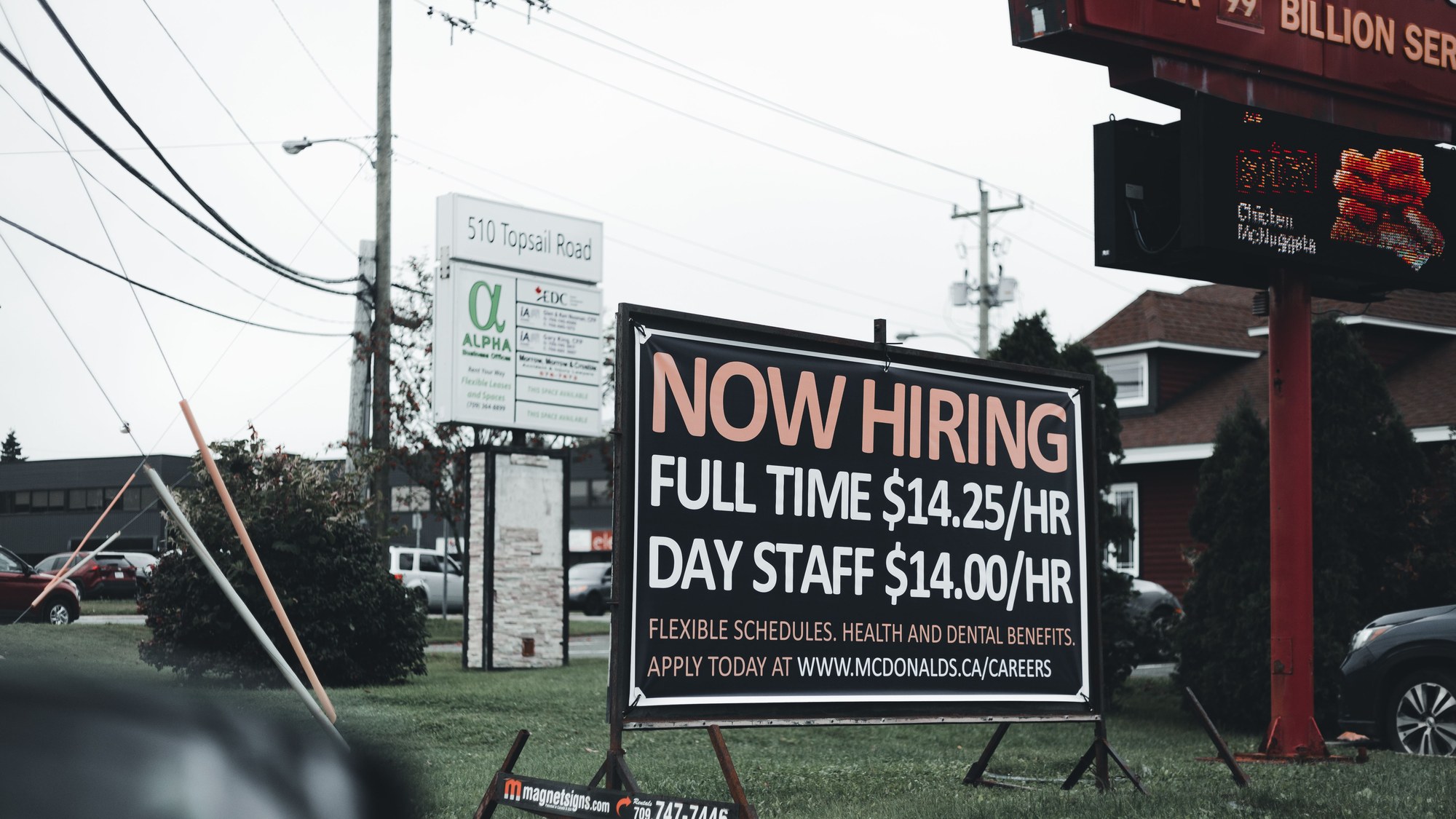
U.S. employers announced 43,994 job cuts in October, the fewest for the month since 2023, Challenger, Gray & Christmas said Thursday. The total was up 2% from September’s 43,281 and down 71% from the 153,074 cuts announced in October 2025. Employers also announced 444,692 planned hires, up 57% from a year earlier.
Andy Challenger, the firm’s chief revenue officer, called it “a low-fire environment.” The report counts announcements by employers, which is different from the government’s count of people who lose jobs, and it is one of the earliest monthly reads on layoffs.
Retirement deadlines, in your inbox: Miss an enrollment or claim deadline and the money can be gone. Join the Retirement Money Brief and we’ll send you our 2026 Government Check Reality Tracker as a welcome gift.
Get the Brief + the check tracker →
We may earn a commission from links on this page.
How does October compare with the rest of the decade?
Only one October in recent years came in lower. The 2023 total was 36,836, and the average for October from 2015 through 2025 is 56,348, so this year’s figure sits about 22% below that mark. In 2025 the same month brought more than three times as many announced cuts.
Measured against 2023, October’s total is about 19% higher, so the month is low but not the lowest on record. Measured against September, the pace barely moved: 43,994 versus 43,281 is a gain of 713 announced cuts. The large drop is the year-over-year one, because October 2025 was an unusually heavy month.
The year-to-date picture is just as lopsided. Through October, employers announced 617,189 cuts, down 44% from 1,099,500 over the same ten months of 2025. Challenger says that is the lowest January-through-October total since 2022, when it counted 243,338.
Which industries still cut the most?
Food companies led October with 9,677 announced cuts, their highest monthly total of the year, and 39,370 so far in 2026, up 43%. Technology followed with 5,576 in October, its lowest month of the year, though the sector leads the year at 171,501 cuts, or 28% of all announced cuts.
Services announced 5,458 cuts in October, FinTech 4,173, retail 3,692 and consumer products 3,672. FinTech’s year-to-date total of 11,979 is up 543%, while retail’s 18,126 is down 80%. Transportation has announced 44,838 cuts this year, up 188%.
The five biggest sectors so far this year are technology (171,501), transportation (44,838), food (39,370), health care and products (37,737) and services (35,542). Media has announced 5,559 cuts in 2026, down 67%, and its news segment accounted for 118 of the October total.
California led the states with 10,032 October cuts, followed by Washington at 7,233, New York at 4,671, Ohio at 4,592 and Michigan at 2,937.
Why are employers cutting?
Market and economic conditions were the top reason in October at 16,407 cuts, or 37%, and have overtaken artificial intelligence as the leading reason for the year. Store and plant closings accounted for 10,250 cuts. Demand downturns followed at 6,118, and restructuring at 5,499.
Year to date, market and economic conditions account for 130,531 cuts, closings for 109,342 and restructuring for 85,391. Demand downturns, at 21,347 for the year, are up 145%.
AI was cited for 1,265 cuts in October, its lowest monthly total of 2026. For the year, 121,401 cuts, about 20% of the total, carry that reason. Challenger’s report notes that voluntary exit offers are left out of the count, including Microsoft’s offers to 60,000 workers.
Are employers still hiring?
Planned hires totaled 444,692 in October, up from 283,138 a year earlier, and 655,304 for the year, up 34% from 488,077. Technology led October’s hiring plans at 300,252, followed by transportation at 100,000 and retail at 13,300. Challenger said “companies want the flexibility to meet holiday demand without adding permanent headcount.”
Seasonal plans reached 470,400 for the year, up 26% from 372,520. Amazon announced 300,000 seasonal hires, 50,000 more than the 250,000 it announced in each of the previous three years, and UPS announced 100,000. September was the soft month: hiring plans of 90,787 were the lowest for any September since 2011.
What does the government’s own data show?
The Labor Department’s weekly unemployment claims report counted 189,000 initial claims for the week ended Oct. 31, down 6,000 from a revised 195,000 the week before. A year earlier the figure was 228,000. Claims count people who apply for state unemployment benefits, so they track actual layoffs, not announcements.
The same report put continuing claims at 1,718,000 for the week ended Oct. 24, up 23,000, an insured unemployment rate of 1.1%. Federal workers filed 552 initial claims that week, against 9,436 a year ago. Among states, New York (up 2,609), Texas (up 1,564) and California (up 1,043) had the largest increases in unadjusted initial claims, and Michigan (down 1,813) the largest decrease.
The Bureau of Labor Statistics’ September report showed payrolls up 29,000 and an unemployment rate of 4.2%, a rate that has stayed between 4.1% and 4.3% since March. The bureau also lowered July and August payroll gains by a combined 60,000. Of the 7.1 million people unemployed, 1.9 million, or 27.1%, had been out of work for a long time. The bureau scheduled its October employment report for Nov. 6.
Average hourly earnings were $37.81 in September, up 3.0% over 12 months.
Is your cash cushion earning anything while hiring stays cautious?
Announced cuts are low, but 617,189 have still been announced this year, and September’s hiring plans were the lowest for that month since 2011. A cash cushion is what keeps a household steady when work or hours change, and a near-zero bank balance does little for it.
The Keep-It Starter Bundle is a 95-page download of nine guides, and one is built around how to make savings pay you without risk you don’t understand. Its Step 5, Make Your Savings Pay You, comes with guides on scams, Medicare costs and house costs, plus a Keep-It Gameplan.
Get the savings guide for putting a job-loss cushion to work without market risk →
This article was produced with AI assistance and edited for accuracy against the sources linked above.