Warren Cohen

Warren Cohen is a finance writer based in Phoenix, Arizona, covering personal finance topics including credit, banking, and beginner investing. He earned his degree in business administration from Arizona State University and began his career working in consumer finance, where he gained direct experience with lending and credit systems. He now writes for personal finance websites and fintech platforms, focusing on clear, practical content that helps readers make informed financial decisions.

Paying by credit card , buying and selling products using a credit card swipe machine

13% of credit-card balances are now 90 days late, the most since 2011

American households carrying credit-card debt face a sharp warning sign: 13 percent of credit-card balances are now at least 90 days past due, the highest share recorded since 2011. The milestone arrives as the Federal Deposit Insurance Corporation publishes its latest system-wide data on bank asset quality, and it raises direct questions about whether lenders…


Read More
Young bearded man working on a laptop and looking concentrated

Owe more than $1,000 beyond withholding and the IRS expects quarterly payments

Freelancers, gig workers, and anyone with income that escapes regular paycheck withholding face a clear federal threshold: if the gap between what they owe and what has already been withheld reaches $1,000, the IRS expects them to send quarterly estimated payments throughout the year. Missing that obligation triggers an automatic penalty calculated on each late…

Read More
US Bank Tower, formerly Library Tower and First Interstate Bank World Center, is a 1,018-foot (310 m) skyscraper at 633 West Fifth Street in downtown Los Angeles, California. It is the tallest building in California, the tenth tallest in the United States, the tallest west of the Mississippi River, and the 63rd tallest building in the world. Because local building codes require all high-rise buildings to have a helipad, it was known as the tallest building in the world with a roof-top heliport from its completion in 1989 to 2004 when Taipei 101 opened. It is also the second tallest building in a major active seismic region; its structure was designed to resist an earthquake of 8.3 on the Richter scale. It consists of 73 stories above ground and two parking levels below ground. Construction began in 1987 with completion in 1989. The building was designed by Henry N. Cobb of the architectural firm Pei Cobb Freed & Partners and cost $350 million to build. It is one of the most recognizable buildings in Los Angeles, often used in establishing shots for the city in films and television programs. en.wikipedia.org/wiki/U.S._Bank_Tower_(Los_Angeles) en.wikipedia.org/wiki/Wikipedia:Text_of_Creative_Commons_...

Two U.S. banks have already failed in 2026, the latest a Georgia lender shut by regulators in May

Two U.S. banks have shut their doors in 2026, and the second closure came just weeks ago. On May 1, Georgia regulators seized Community Bank and Trust, a small lender based in LaGrange, Georgia, after determining the institution was insolvent. That followed the January 30 failure of Metropolitan Capital Bank and Trust in Chicago, which…

Read More
Old senior european man wearing protective facial mask pushing shopping cart and talking on the phone in the supermarket. Shopping during COVID-19 concept.

The Fed’s preferred inflation gauge hit 4.1% in May, a three-year high

American consumers saw prices climb at the fastest pace in three years, with the Personal Consumption Expenditures price index rising 4.1% from May 2025 to May 2026. That annual increase, the largest since April 2023, landed just days after Federal Reserve officials wrapped their June 16–17 policy meeting without signaling any near-term rate cuts. For…

Read More
Couple managing budget together in kitchen

Married couples can exclude up to $500,000 of profit from tax when they sell a primary home

Homeowners who bought in fast-appreciating markets a decade ago now face a tax question that can swing their after-sale proceeds by tens of thousands of dollars. Under federal law, married couples filing jointly can exclude up to $500,000 of gain from the sale of a primary residence, while single filers can exclude up to $250,000….

Read More
Close-up of money with graph

Core inflation rose to 3.4% in May, and Fed officials now expect it to stay above 3% all year

American households already stretched by high prices got more bad news this week: the Federal Reserve’s preferred inflation gauge accelerated in May, and the central bank’s own officials now project that core price growth will stay above 3 percent through the end of 2026. The core personal consumption expenditures price index, which strips out volatile…

Read More
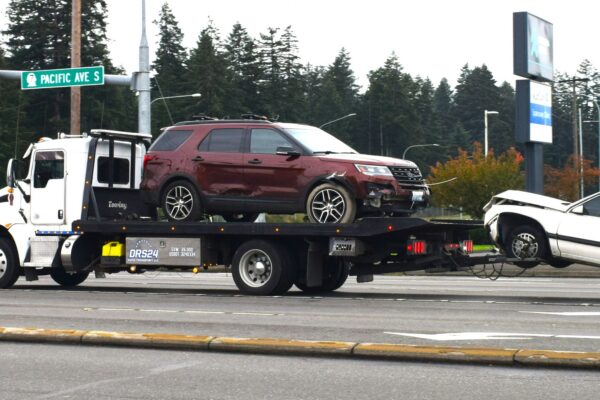
A tow truck towing a car on a flatbed

Lenders seized 1.73 million vehicles last year, the most since 2009, as Americans fall behind on car payments

American borrowers lost roughly 1.73 million vehicles to repossession in 2024, the highest annual total since 2009 and a 16 percent jump from the prior year. The estimate, produced by Cox Automotive, signals that the financial strain from pandemic-era vehicle purchases is now hitting households hard enough to cost them their cars. Behind the numbers…

Read More
Couple paying with credit card on the couch

The Saver’s Credit hands lower-income workers up to $1,000, or $2,000 per couple, just for saving for retirement

Lower-income workers who put money into a retirement account can claim a federal tax credit worth up to $1,000 per person, or $2,000 for married couples filing jointly. The Retirement Savings Contributions Credit, commonly called the Saver’s Credit, applies a percentage of 50%, 20%, or 10% to qualified contributions capped at $2,000 per eligible individual….

Read More