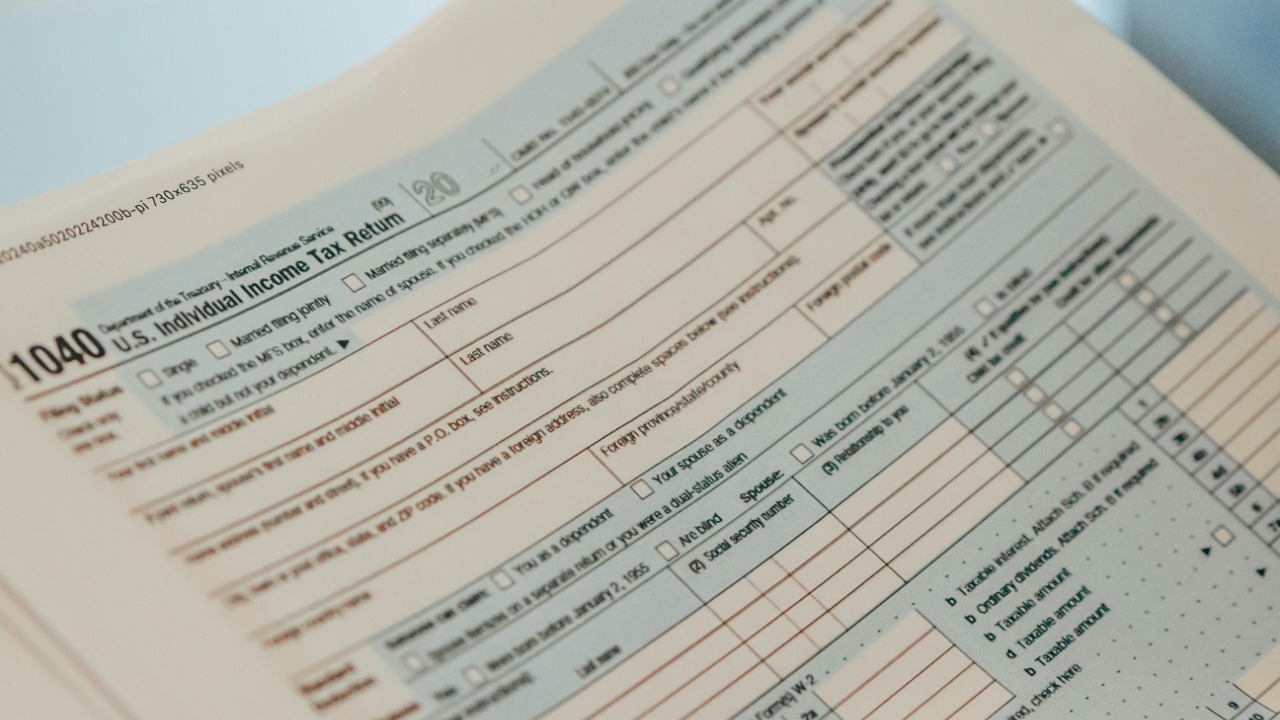
The Internal Revenue Service has released its annual inflation adjustments for tax year 2026. The 2026 tax bracket adjustments release updated federal income tax brackets, the standard deduction, and dozens of other tax provisions. Apparently, this will shape returns filed in 2027. For most households, the practical takeaway is straightforward: more income will stay in lower tax brackets before the next rate applies, and the standard deduction is rising again. That matters across a broad swath of the tax base.
Even modest annual shifts can ripple through tens of millions of households because most taxpayers claim the standard deduction rather than itemizing. This year’s update also carries extra weight because the IRS said the 2026 figures incorporate amendments from the One, Big, Beautiful Bill Act, blending routine inflation indexing with recent tax law changes.
| 2026 provision | Single filers | Married filing jointly | Head of household |
|---|---|---|---|
| Standard deduction | $16,100 | $32,200 | $24,150 |
| Top 37% bracket begins at | $640,600 | $768,700 | Separate head-of-household brackets apply |
| 35% bracket begins above | $256,225 | $512,450 | See IRS rate tables |
| 24% bracket begins above | $105,700 | $211,400 | See IRS rate tables |
What the IRS changed
In its Oct. 9, 2025 release, the IRS said the 2026 inflation update covers more than 60 tax provisions. The detailed figures appear in Revenue Procedure 2025-32, which sets out the exact bracket thresholds, deduction amounts, and indexed limits for credits and exclusions. These yearly revisions are designed to reduce bracket creep, the effect that occurs when wages rise with inflation but tax thresholds lag behind. In plain terms, a worker can get a cost-of-living raise without as much of that income being pushed into a higher marginal bracket purely because the dollar cutoffs stayed frozen.
The rates did not change, but the thresholds did
The seven federal income tax rates remain 10%, 12%, 22%, 24%, 32%, 35%, and 37% for 2026. What changed are the income bands attached to those rates. According to the IRS announcement, the top 37% rate starts at $640,600 for single filers. It starts at $768,700 for married couples filing jointly. The lower brackets moved up too.
For single filers, the 35% bracket starts above $256,225, the 32% bracket above $201,775, the 24% bracket above $105,700, the 22% bracket above $50,400, and the 12% bracket above $12,400. For married couples filing jointly, those thresholds rise to $512,450, $403,550, $211,400, $100,800, and $24,800, respectively. The IRS bracket guide makes clear that taxpayers do not pay one flat rate on all income. Higher rates apply only to the slices of taxable income that fall within each bracket.
That distinction is important because tax bracket stories often create more anxiety than they should. Moving into a higher bracket does not suddenly make every dollar subject to that higher rate. It simply changes the rate applied to the portion of income above the threshold.
The standard deduction may matter more than the brackets for many households

The standard deduction rises to $16,100 for single filers and married people filing separately. It sits at $32,200 for married couples filing jointly, and $24,150 for heads of household. For many readers, that change will have more practical effect than the bracket shifts because the deduction directly lowers taxable income before rates are applied.
That is especially relevant because most taxpayers do not itemize. The IRS’s preliminary statistics for tax year 2022 reported 160.7 million individual returns, and 88.6% of them claimed the standard deduction. That helps explain why annual changes that look modest on paper can still affect an enormous share of filers in the real world.
Why the One, Big, Beautiful Bill is part of the story
This year’s inflation update is not just a routine indexing exercise. The IRS said the 2026 figures include amendments from the One, Big, Beautiful Bill Act, which the agency notes was signed into law on July 4, 2025. Meanwhile the revenue procedure reflects the tax code as it stood on Oct. 9, 2025. That means some 2026 tax numbers reflect both ordinary inflation adjustments and recent statutory changes.
That context matters because it affects how readers interpret the new amounts. A year-to-year increase is not always just a mechanical inflation bump. In some cases, it is layered on top of changes that Congress already made to the underlying tax rules.
Other provisions moved as well
The headline bracket changes are the most visible part of the release, but they are not the only figures that moved. The IRS said the maximum earned income tax credit for taxpayers with three or more qualifying children rises to $8,231 for 2026, up from $8,046 for 2025. The foreign earned income exclusion increases to $132,900.
The monthly limit for qualified transportation fringe benefits and qualified parking rises to $340. Those provisions affect smaller slices of the filing population than the standard deduction does, but they still carry real financial consequences for eligible households. A working family claiming the earned income tax credit, an American living abroad, or an employee using pre-tax commuting benefits can feel those changes more directly than a shift in the upper brackets.
What filers should take away

For most taxpayers, the IRS 2026 tax bracket adjustments update is best understood as a recalibration rather than a tax overhaul. The same seven rates remain in place, but the income thresholds and deduction amounts are moving higher. That should help prevent inflation alone from pulling more income into higher tax bands, even if it does not guarantee a lower bill for every household.
Taxpayers with side income, self-employment earnings, multiple jobs, or major changes in filing status will still need to look more closely at withholding and estimated payments. But for ordinary wage earners, the broader message is that the 2026 tables are meant to keep the tax code from falling out of step with higher nominal incomes. That is why the IRS 2026 tax bracket adjustments release matters.
It does not rewrite the tax system, but it quietly resets the numbers millions of households will rely on when they estimate taxes, adjust withholding, and eventually file their returns. In a year when inflation indexing is intersecting with a new tax law, those updated numbers carry more weight than usual.