Image Credit: Joe Ravi - CC BY-SA 3.0/Wiki Commons
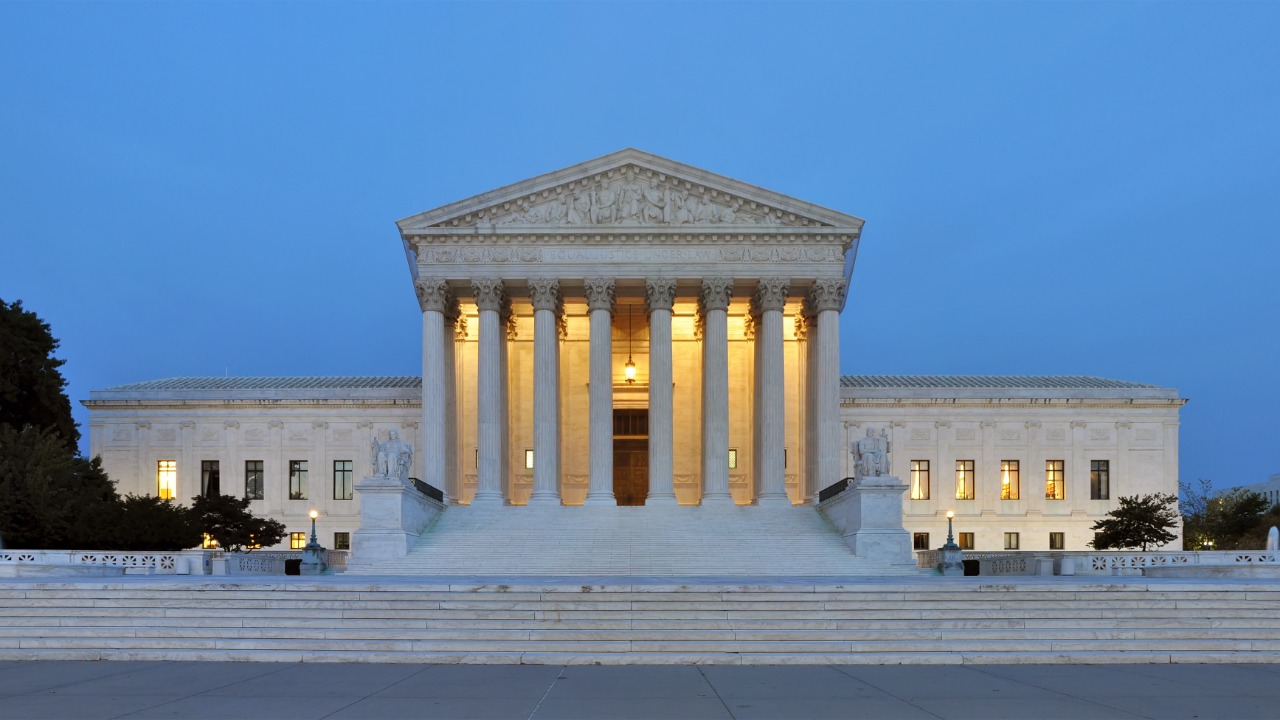
The Supreme Court on Wednesday appeared deeply skeptical of giving the White House broad power to remove Federal Reserve board members, a signal that could preserve one of the central bank’s most important institutional protections.
Over roughly two hours of argument in Trump v. Cook, justices across the bench pressed the administration on a basic question: if Congress said a Fed governor can be removed only “for cause,” how can that standard mean little more than disagreement with the president? The exchange suggested that even some justices generally sympathetic to presidential power were uneasy about extending that principle to the institution at the center of U.S. monetary policy.
The case arose after President Donald Trump sought to remove Federal Reserve Governor Lisa Cook before the end of her term, setting up a direct test of how much independence Congress can still give officials inside agencies that are expected to make consequential decisions without day-to-day political pressure. At stake is not just one governor’s seat, but whether a president can gain more leverage over interest-rate policy and, potentially, over other independent agencies built on similar legal protections.
What the fight is really about
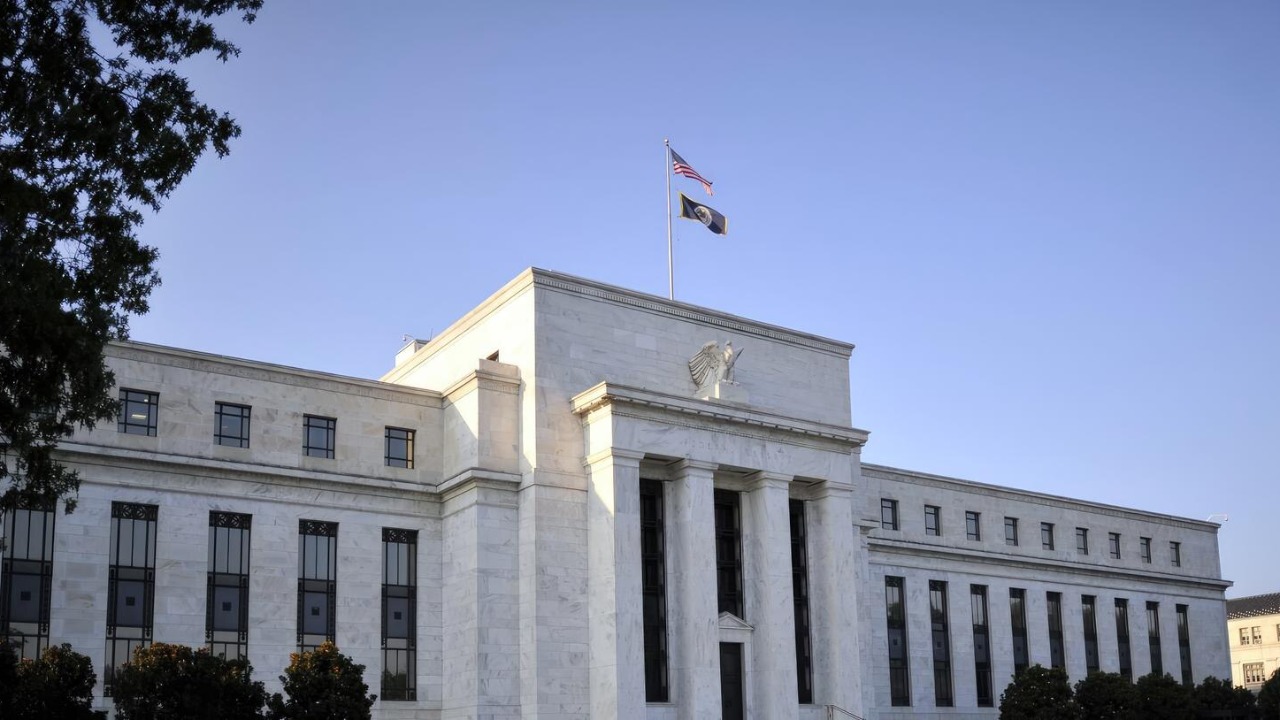
The legal dispute turns on a short phrase in the Federal Reserve Act. Under 12 U.S.C. § 242, members of the Board of Governors serve fixed terms unless they are “sooner removed for cause by the President.” The Federal Reserve’s own description of the board notes that governors serve staggered 14-year terms, a structure designed to keep any one administration from quickly remaking the institution.
That language has long been understood as meaningful protection, not window dressing. In practice, it has helped sustain the idea that Fed governors are supposed to make decisions based on inflation, employment, financial stability, and banking conditions, not on whether the White House likes a particular vote. If the Court were to read “for cause” so broadly that it allows removal whenever a president loses confidence in a governor, that safeguard would become far less substantial.
That is why the case matters far beyond Lisa Cook. The same basic model appears across the modern administrative state, where Congress has often tried to place at least some technical or quasi-judicial decision-making at arm’s length from immediate political demands.
How the case got to the Supreme Court
The Supreme Court did not treat this as a routine personnel dispute. After the administration sought emergency relief in the fall, the justices declined to immediately oust Cook and instead set the matter for full argument, an unusual move that underscored the institutional stakes. The docket, No. 25A312, shows the administration’s stay application was filed in September 2025 and later held for a January argument rather than resolved in a quick emergency order.
That procedural choice mattered. It kept Cook on the board while the litigation continued and avoided a sudden change at the Fed while the Court considered the broader constitutional and statutory questions. Associated Press reporting from the fall described the Court’s interim action as a refusal to immediately grant the administration what would have been a significant victory over the central bank.
By the time the case was argued on January 21, the dispute had clearly become a test of how far the Court is willing to carry its recent presidential-power cases into the world of independent financial regulation.
Justices seemed wary of the administration’s theory
The administration argued that the president had sufficient grounds to remove Cook and that the Constitution gives the White House broad authority over executive officers. But multiple justices appeared concerned that the government’s approach would effectively drain the phrase “for cause” of any real limiting force.
Reuters’ account of the hearing said the justices seemed hesitant to let Trump fire Cook immediately, while AP’s live coverage similarly described a Court that appeared inclined to keep her on the board. That matters because the hesitation did not seem confined to one ideological camp.
The Federal Reserve occupies a special place in the constitutional and economic landscape. It sets short-term interest rates, plays a central role in supervising large banks, and can act as a stabilizing force in crises. The concern running through the argument was easy to understand: if a president can threaten governors with removal over policy disagreements, then decisions about inflation and rates could become more directly entangled with election-year politics.
The Court’s oral argument audio reflects that concern. Several questions focused on the logical endpoint of the administration’s position. Could a president remove a governor for backing a rate increase that hurts politically? Could “cause” include views on regulation, supervision, or inflation strategy that clash with the White House? Those hypotheticals cut to the heart of the case because they tested whether any meaningful independence would remain.
Why earlier Supreme Court cases do not fully settle it
Image Credit: Federalreserve – Public domain/Wiki Commons
The administration’s position inevitably drew attention to Seila Law v. CFPB, the 2020 decision in which the Court struck down removal protection for the head of the Consumer Financial Protection Bureau. But there is an important structural difference. The CFPB was led by a single director. The Fed’s Board of Governors is a seven-member body with staggered terms, a design that disperses power rather than concentrating it in one insulated official.
That distinction appeared to matter. A multi-member board making long-horizon monetary and supervisory decisions is not an obvious match for the model the Court rejected in Seila Law. The justices seemed to recognize that a sweeping rule here could destabilize far more than this one dispute.
What a ruling could mean
If the Court ultimately rejects the administration’s push, the decision would reinforce the long-standing assumption that the Fed cannot be remade simply because a president wants tighter control over policy. That would not make governors immune from removal in every circumstance. It would, however, preserve the idea that “for cause” sets a real legal boundary.
If the administration prevails, the effects could extend well beyond Cook. A ruling that weakens removal protections at the Fed could invite fresh challenges to other independent boards and commissions, especially where Congress used similar language to limit direct presidential control.
That is why the argument drew such close attention. On paper, the case is about one governor and one phrase in one statute. In practical terms, it is about whether the country’s central bank will remain meaningfully insulated from short-term political pressure. After Wednesday’s hearing, the administration still has a path to victory. But the tone of the argument suggested the Court is not eager to be the one that turns “for cause” into an empty promise.
David M. Keller is a finance writer based in Columbus, Ohio, covering personal finance and consumer-focused economic topics. He earned his degree in journalism from Ohio University and began his career reporting on local business and economic trends for a regional media outlet. Since then, he has contributed to a variety of online publications, focusing on clear, practical coverage of topics such as cost of living, debt, and everyday financial decision-making.