The federal government owes importers roughly $166 billion. Consumers who spent the past year paying inflated prices on electronics, clothing, shoes, and auto parts will almost certainly never see a dime of it.
That is the practical fallout of a landmark ruling by the U.S. Court of International Trade, which found that President Trump’s “Liberation Day” tariffs, the sweeping reciprocal duties he imposed on April 2, 2025, under the International Emergency Economic Powers Act, exceeded the scope of presidential authority. The court has ordered U.S. Customs and Border Protection to begin returning the money. But the refund checks will go to the companies that wrote them, not to the households that absorbed the costs at checkout.
The numbers behind the refund operation
CBP official Brandon Lord laid out the scale in a court filing dated March 4, 2026. Since Liberation Day, more than 330,000 importers have filed over 53 million customs entries and collectively paid about $166 billion in duties now deemed unlawful. At the program’s peak collection period, CBP was collecting over $200 million per day in additional tariff revenue while simultaneously administering multiple presidential trade directives. That peak daily intake helps explain how the total climbed so fast and why unwinding it has become one of the largest tariff-refund operations in American history.
Lord told the court that a new automated refund process could be operational within 45 days, sparing the agency an estimated 4.4 million labor-hours that would be required under its legacy manual system. The Court of International Trade has issued a formal order directing CBP to proceed, putting judicial weight behind the obligation to return the funds.
What the tariffs covered and what they cost
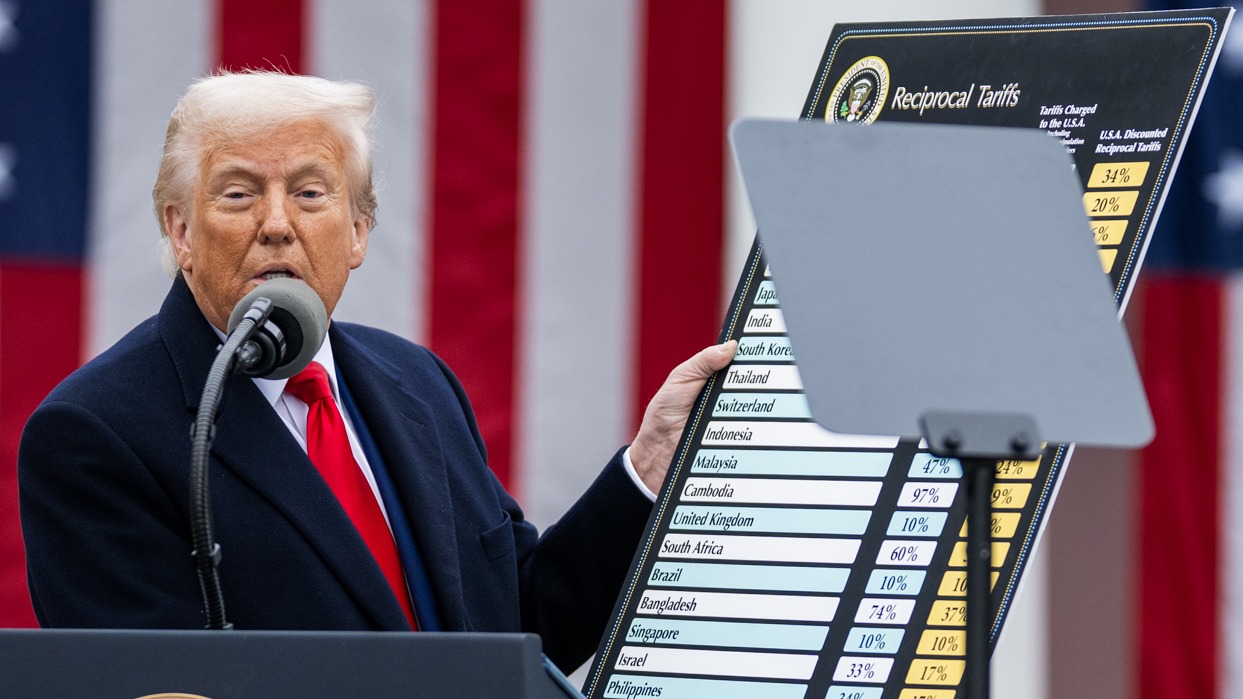
The Liberation Day tariffs imposed reciprocal duty rates that varied by country, with some trading partners facing rates above 30 percent on top of existing duties. The levies applied broadly to imported consumer goods, industrial components, and raw materials. Categories hit hardest included consumer electronics, apparel and footwear, automotive parts, and household goods. For shoppers, the effect showed up as price increases on items ranging from smartphones and laptops to sneakers, jackets, and kitchen appliances. The breadth of the tariff schedule meant that few categories of imported goods were untouched, which is why the total collected reached $166 billion in under a year.
What could slow things down
The 45-day window is a planning estimate from a single agency official, not a court-imposed deadline with enforcement teeth. No publicly available guidance addresses what happens if the automated system hits technical failures, data mismatches across 53 million entries, or disputes over individual filings. Even a fractional error rate at that volume could strand thousands of importers in a corrections queue for months.
Then there is the question of appeal. The court concluded that the Liberation Day tariffs went beyond what IEEPA authorizes a president to do, but the full legal reasoning has not yet been released in a widely accessible format. The Court of International Trade, which has exclusive jurisdiction over customs and trade disputes, has historically seen a significant share of its rulings appealed to the U.S. Court of Appeals for the Federal Circuit. As of May 2026, the Trump administration has not publicly confirmed whether it will appeal, but trade attorneys quoted in secondary reporting have widely described an appeal as likely given the scale of the financial stakes and the constitutional questions involved. If the administration does challenge the ruling, refund disbursements could be frozen or delayed while the appeal plays out. Importers are, for now, planning around a decision they know in outline but not in every critical detail.
Practical complications add another layer of uncertainty. Some companies that paid tariffs have since dissolved, merged, or changed ownership. Others may have partial payments or contested entries that do not fit neatly into an automated system built for speed. None of these edge cases have been addressed in public filings reviewed for this report.
Why consumers are left out
Tariffs are paid at the border by importers, not by shoppers. When those costs rose, retailers and manufacturers passed them along through higher shelf prices on everything from laptops to sneakers. Now that the tariffs have been struck down, the refund pipeline runs in reverse along the same path: from the Treasury back to the importer of record.
No federal law or regulation requires businesses to pass refund savings on to consumers. Price reductions after the money is returned will be entirely voluntary. A retailer that marked up a jacket by $15 to cover tariff exposure faces no legal obligation to mark it back down once the refund arrives. Whether companies lower prices, retain the windfall as margin recovery, or do some combination of both is a business decision that will vary by industry, competitive pressure, and corporate strategy.
As of May 2026, no consumer advocacy organization or federal agency has publicly announced a plan to track whether refund dollars flow downstream to end buyers. The Consumer Financial Protection Bureau and the Federal Trade Commission have not signaled any monitoring effort. Without that kind of oversight, the gap between the legal remedy and the economic reality for households is likely to persist.
Sourcing gaps readers should weigh
This story relies heavily on a single named government source. Brandon Lord’s court filing provides the most granular data: importer counts, entry volumes, dollar totals, and labor-hour estimates. CBP’s public statement corroborates the daily collection figure. The BBC’s reporting confirms the judicial order. But no importer has spoken publicly about the refund process, no consumer advocacy group has offered on-the-record analysis of downstream price effects, and no trade attorney has been quoted in the underlying sources describing the legal prospects for appeal. The court’s own docket and case number have not been cited in the reporting reviewed for this article. Readers should treat the operational details as credible but recognize that the picture is drawn almost entirely from the government’s side of the ledger.
What importers and shoppers should watch for
For businesses that paid Liberation Day duties, the court’s direction is unambiguous: the money must come back. The open questions are about timing and mechanics. Companies carrying large tariff receivables should model multiple scenarios, from a best case where automation works on schedule to a slower track dominated by manual processing and possible litigation delays tied to an appeal. Cash-flow planning will remain difficult until CBP publishes detailed procedural guidance, which it has not yet done.
For consumers, the honest answer is less encouraging. The legal and administrative process now underway was built to settle accounts between importers and the federal government. It was not designed to trace tariff costs through supply chains and reimburse the people who paid higher prices at the register. Unless Congress or a regulatory agency intervenes with new rules, the $166 billion refund wave will largely bypass the households that funded it. The court corrected an unlawful tax. It did not, and could not, reverse the price increases that tax created.
How refund timing could reshape importer cash-flow planning through 2026
For businesses that paid large sums under the Liberation Day tariffs, the next several months will be defined by uncertainty. The 45-day automation estimate, if it holds, would place the earliest refund disbursements in late April or May 2026. But if technical problems, an appeal filing, or manual-processing fallbacks push that timeline out, importers could be waiting well into the second half of the year or longer. Companies should track CBP’s procedural announcements closely, maintain documentation of every customs entry, and consult trade counsel about how an appeal could affect their individual refund status. The $166 billion is coming back. The question that no one in government has yet answered with precision is when, and in what order.