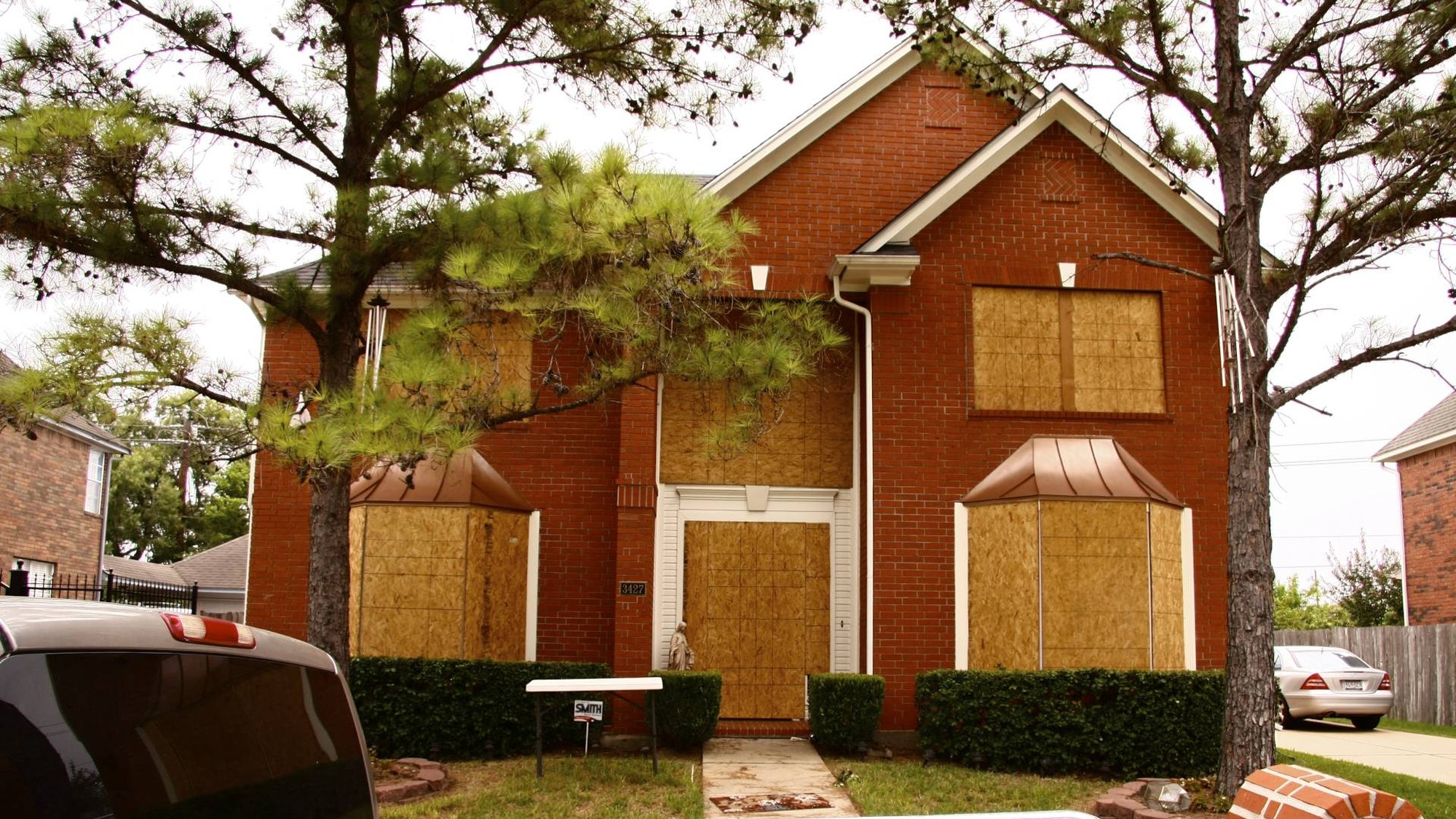
When floodwater swallowed the ground floor of a terraced house in Lincolnshire during Storm Bert in late 2024, the homeowner assumed the worst was behind her once the pumps arrived. Months later, with plaster still drying and a rebuilding bill north of £40,000, she learned her insurer was raising her annual premium by nearly a third. Her story is one data point inside a staggering national total: for the first time, UK property insurers paid out more than £6.1 billion ($8.2 billion) in a single year, with extreme weather behind roughly one in every four claims.
That ratio and the record payout figure are drawn from data compiled by the Association of British Insurers (ABI), though the trade body has not yet published the underlying dataset or a press release isolating the “one in four” statistic. The record landed in the same year the Met Office confirmed that summer 2025 was the warmest on record for the United Kingdom, surpassing every reading since systematic temperature tracking began in 1884. The collision of those two milestones is forcing a difficult conversation: as the climate shifts, who picks up the tab when homes and businesses take the hit?
What the numbers show
The ABI, whose member firms underwrite the vast majority of UK home and commercial property policies, aggregates claims data that functions as a near-census of insured losses rather than a sample estimate. Its 2025 total of £6.1 billion eclipses previous annual records, which had already been climbing. The ABI has described the figure as the highest on record, though independent verification requires access to the full historical dataset, which the trade body has not made freely available online.
Storms, flooding, and heat damage all contributed to the 2025 surge, though the ABI has not yet published a detailed breakdown by peril type. That distinction matters. Flood claims carry different policy implications than subsidence or wind damage, and each triggers different responses from planners, builders, and the government-backed reinsurance scheme Flood Re, which was created in 2016 specifically to keep flood cover affordable for high-risk households.
The link between the temperature record and the claims record is more than coincidence. Hotter summers intensify rainfall events, parch soils so they cannot absorb floodwater when it arrives, and stress roofing materials, pipes, and foundations. When the weather itself breaks records, the repair bills follow.
The cost lands on households
Record payouts do not stay on insurers’ balance sheets for long. The industry reprices risk after heavy loss years, which typically means higher premiums, steeper excess thresholds, or tighter terms for properties in flood-prone and subsidence-prone postcodes. For households already squeezed by elevated mortgage rates and energy costs, even a modest premium increase can force a painful choice: pay more, accept a larger deductible, or go without full protection.
“People don’t realise how quickly the ground shifts beneath them,” said Sarah Sherlock, a consumer policy adviser at Citizens Advice, in an April 2026 briefing on insurance affordability. “You can go from comfortably insured to priced out in a single renewal cycle, and the households most at risk are often the ones least able to absorb the shock.”
Flood Re offers a partial safety net. The scheme caps the flood element of premiums for eligible homes, and as of early 2025 it covered roughly 350,000 policies. But Flood Re is designed to wind down by 2039, and it does not cover commercial properties or new-build homes constructed after January 2009. Properties outside its scope face the full force of market repricing.
The Financial Conduct Authority, which regulates general insurance pricing in the UK, has not issued public guidance specifically addressing the 2025 claims spike. The regulator showed willingness to intervene on pricing practices with its 2022 ban on loyalty pricing penalties, but no comparable step has been announced in connection with weather-driven premium increases. Whether the FCA will act, or leave the market to adjust on its own, remains an open question heading into the second half of 2026.
Gaps in the picture
Several pieces of the puzzle are still missing. Without a peril-by-peril breakdown from the ABI, it is impossible to say whether one type of weather event dominated the record total or whether damage was spread across storms, floods, and heat in roughly equal measure. That granularity would shape policy responses: a flood-heavy year strengthens the case for extending Flood Re or tightening planning rules in floodplains, while a subsidence-heavy year points toward building standards and water management.
Forward-looking analysis is also thin. The Met Office publishes climate projections, and the Environment Agency maps flood risk, but neither agency has released a model that translates warming scenarios directly into expected annual insurance costs. That gap leaves insurers relying heavily on their own proprietary models, which are not subject to public scrutiny, and leaves consumers with little independent guidance on how fast their premiums might climb.
Regional data would help too. Areas hit by named storms in late 2024 and early 2025, along with parts of southern and eastern England prone to clay-soil subsidence, bore outsized damage according to local authority flood reports. But until the ABI or individual insurers release geographic breakdowns, the national total obscures wide variation in local experience.
Editor’s note: This article synthesizes publicly available data from the ABI, the Met Office, and government sources. It does not include original Freedom of Information responses or proprietary analysis. Readers seeking to verify the “one in four” weather-claims ratio or the record-year framing should consult the ABI’s forthcoming annual claims report, expected in mid-2026.
What 2025 signals for UK property insurance pricing
A single record year does not, on its own, prove that UK property insurance is heading toward a crisis. But 2025 is harder to dismiss as an outlier when it sits alongside a clear warming trend. Nine of the ten warmest years in the UK’s instrumental record have occurred since 2002, according to the Met Office, and climate projections point toward hotter summers and more intense rainfall becoming the norm rather than the exception.
That trajectory puts pressure on every part of the system. Insurers will keep refining pricing models as loss data accumulates. Regulators will face growing calls to ensure cover remains accessible without suppressing the price signals that encourage adaptation. And homeowners, particularly those in high-risk areas, will need clearer information about how their exposure is changing and what steps, from property-level flood resilience to better drainage infrastructure, can reduce it.
For now, the system is strained but still functioning: claims are being paid, cover remains broadly available, and Flood Re continues to absorb some of the sharpest cost spikes. The real test is whether that holds as the records keep falling.