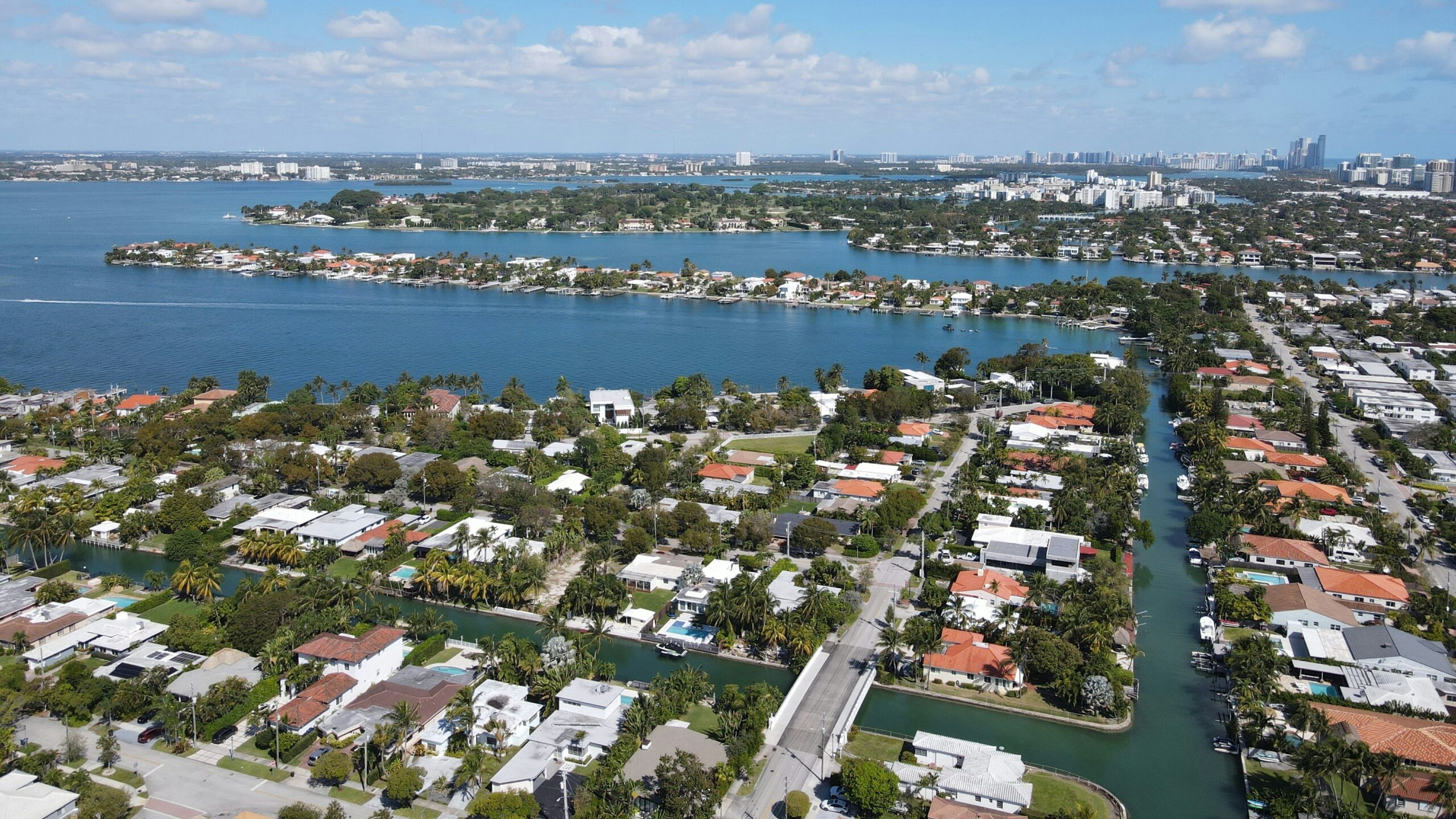
Seven months in a row. That is how long homes in Miami-Dade County have been selling faster than new listings can replace them. Broward County has tracked the same pattern. By March 2026, the two counties that anchor South Florida’s housing market were posting rising sales, falling inventory, and median prices that climbed well above year-ago levels, a combination that is making an already competitive spring season even harder for buyers.
Inventory keeps shrinking as sales climb
Federal Reserve Economic Data tracking Miami-Dade active listings shows year-over-year declines through February 2026, the most recent month available in the series. Broward County’s inventory followed the same downward path in the FRED time series, which draws on Realtor.com data. In both counties, the supply of homes available for sale has been contracting for months with no sign of reversal.
The MIAMI Association of Realtors reported that Miami-Dade countywide sales rose for the seventh consecutive month in March 2026, with gains in both single-family homes and condominiums. Broward recorded a parallel increase in closed transactions across both property types.
“Buyers continue to move quickly in South Florida because they understand that waiting has a cost when inventory is this limited,” said Ines Hegedus-Garcia, chair of the MIAMI Association of Realtors board, in the association’s March 2026 market report.
The numbers back that up. In Miami-Dade, the median sale price for existing single-family homes reached $630,000 in March, up 7 percent from a year earlier, according to the association’s report. The median condo price came in at $415,000, a gain of 5 percent over the same period. Broward’s single-family median rose to $575,000, while the condo median climbed to $280,000.
Supply remains thin. Miami-Dade had 3.5 months of single-family inventory and 5.8 months of condo inventory on hand. Broward posted similar figures: 3.2 months for single-family homes and 5.5 months for condos. For context, a balanced market is generally considered to have six months of supply. Single-family homes in both counties spent a median of 45 days on the market; condos sat closer to 65 days.
Cash purchases accounted for 38 percent of closed sales across both counties, according to the MIAMI Realtors report. The National Association of Realtors has pegged the national cash-buyer share in the mid-to-upper 20s in recent quarters, which means South Florida’s cash dominance runs 10 percentage points or more above the norm. That gap matters because it insulates a large share of local transactions from mortgage-rate swings that slow activity elsewhere in the country.
Condo regulations are reshaping the supply picture
Florida’s post-Surfside condominium safety reforms add a layer of complexity that does not exist in most U.S. markets. Following the 2021 collapse of Champlain Towers South in Surfside, the state legislature overhauled Chapter 718 of the Florida Statutes. Associations governing buildings three stories or taller must now complete milestone structural inspections and maintain fully funded reserves. Buildings 25 years or older within three miles of the coast faced an initial compliance deadline at the end of 2024, and the financial consequences of those inspections are still working through the market in spring 2026.
The practical effects touch every side of a condo transaction. Owners in older towers facing large special assessments may hold off on listing until the final numbers are set, pulling potential inventory off the market. Others, confronted with reserve contributions that can reach $100,000 or more per unit in buildings with significant structural or mechanical needs, may be forced into distressed sales. Lenders are scrutinizing association balance sheets and inspection reports more closely than at any point in the past decade, and some buildings have been disqualified from conventional financing altogether.
That regulatory drag helps explain why the overall inventory decline has been so persistent. Even as buyer demand stays strong, a meaningful slice of the condo stock is effectively frozen: owners are waiting for clarity, and financing barriers have narrowed the buyer pool for specific buildings. The result is a market where the supply squeeze is partly structural, not just cyclical.
Insurance costs add another layer of pressure
South Florida’s property insurance crisis compounds the affordability challenge. Florida homeowners already pay some of the highest premiums in the nation, and condo associations in older coastal buildings have seen coverage costs spike as insurers reprice risk. For buyers, higher insurance premiums raise the total monthly cost of ownership even when the purchase price stays flat. For sellers in buildings with ballooning insurance bills, the pool of willing and able buyers shrinks further. The insurance factor is difficult to quantify at the county level, but it is a constant undercurrent in conversations about affordability across both Miami-Dade and Broward.
Open questions heading into summer
Several important pieces of the picture remain incomplete. The pipeline of new construction is one. Development activity continues across both counties, particularly in the luxury condo and high-end single-family segments, but no county-level data quantify how many new units will actually reach the resale market in the second half of 2026. Without that figure, it is difficult to say whether today’s tight conditions are a temporary squeeze or the front edge of a deeper structural shortage.
How rate-sensitive buyers are adapting is another unknown. Cash purchasers clearly dominate parts of the market, but first-time buyers and move-up households who depend on financing face a double bind: elevated borrowing costs and shrinking choices. Whether those buyers are widening their geographic search, lowering their price ceiling, or stepping back entirely is not captured in the data currently available.
Foreign buyer activity, long a defining feature of Miami-Dade’s market, is also hard to track in real time. The MIAMI Realtors have historically reported that international purchasers account for a significant share of transactions, but the composition and volume of that demand can shift quickly with currency movements, geopolitical events, and visa policy changes.
Where leverage sits as spring turns to summer
The confirmed trends all point in the same direction: sellers hold the advantage, and that advantage is growing. Inventory is falling. Sales are rising. Cash buyers are absorbing more than a third of transactions, which limits the cooling effect that higher mortgage rates might otherwise provide.
For anyone shopping in Miami-Dade or Broward right now, the math is straightforward but unforgiving. There are fewer homes to choose from and more people competing for each one. Move-in-ready single-family homes near the median price point are drawing the most competition, with multiple offers increasingly common in sought-after zip codes.
Sellers who own in buildings or neighborhoods free of regulatory uncertainty are in the strongest position. Those in older condo towers face a more complicated decision: weighing the benefit of selling into a hot market against the risk that looming assessments or inspection findings could erode their asking price. For both groups, the window of maximum leverage depends on whether inventory continues to tighten or whether new supply, from construction completions or regulatory resolution, begins to ease the pressure later in 2026.