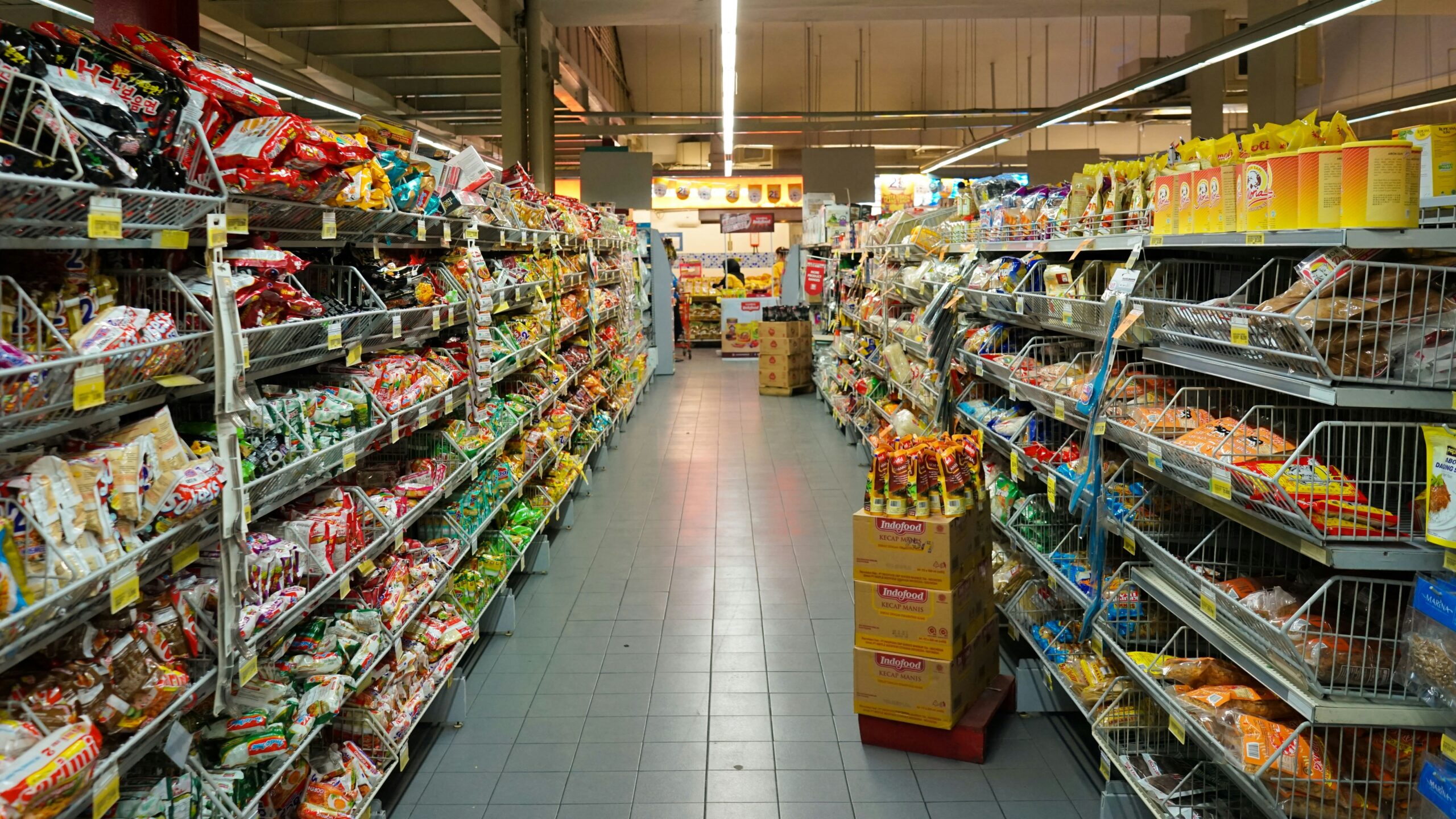
Two shoppers walk into the same grocery store, pick up the same box of cereal, and open the same retailer app to check the price. One sees $4.29. The other sees $3.79. Neither knows the other’s price exists.
That scenario is no longer hypothetical. Federal and state regulators are actively investigating a practice called surveillance pricing, in which companies use personal data – browsing habits, location history, credit profiles – to set individualized costs for everyday goods. The investigations, which span both Washington and Sacramento as of spring 2026, are forcing a question most shoppers have never had reason to ask: Is the price on my screen the same price everyone else sees?
For someone like a working parent in Sacramento juggling a tight weekly grocery budget, even a fifty-cent difference on a box of cereal adds up. Multiply that across a cart of thirty or forty items, week after week, and the invisible surcharge could quietly eat into hundreds of dollars a year. That possibility is what has consumer advocates alarmed and regulators digging deeper.
What the FTC uncovered
The Federal Trade Commission set the current wave of scrutiny in motion in July 2024, when it issued orders to eight major firms demanding detailed information about how they use consumer data to tailor prices. The recipients were not grocery chains themselves but the financial technology companies, consulting firms, and software providers that build the pricing tools retailers plug into their systems. Each company was required to disclose how it collects and deploys location data, demographics, credit history, and browsing behavior to adjust what individual consumers see at checkout.
Six months later, in January 2025, the FTC published an interim study that sharpened the picture considerably. The agency found that these data and software intermediaries collectively served at least 250 clients across multiple sectors, including grocery chains, big-box retailers, and travel companies. The behavioral signals feeding into pricing algorithms were granular: mouse movements on a webpage, whether a shopper abandoned an online cart, real-time browsing patterns. These inputs go well beyond traditional supply-and-demand factors or the standard loyalty-card discounts most shoppers are familiar with.
The implication was stark. If pricing algorithms can ingest that level of behavioral detail, consumers may have no reliable way to tell whether they are being charged more than the person standing next to them in the checkout line or browsing the same product on a different phone.
California puts retailers on notice
On January 27, 2026, California Attorney General Rob Bonta escalated the pressure by launching a compliance inquiry targeting businesses with significant online presence in the retail, grocery, and hotel sectors. The letters sent to companies were not accusations of wrongdoing. They asked whether each company’s use of surveillance pricing complies with the California Consumer Privacy Act (CCPA), which requires transparency about data collection, limits on how personal information can be used, and a right for consumers to opt out of the sale or sharing of their data.
No specific company has been publicly accused of violating the law. But the sweep puts retailers on formal notice: individualized pricing tied to personal data could trigger enforcement if it relies on opaque collection methods or fails to honor opt-out requests. The move carries national weight because the CCPA remains the strongest comprehensive consumer privacy law in the United States, and enforcement actions under it tend to set precedents that ripple far beyond California’s borders.
The hidden supply chain behind your price tag
Surveillance pricing does not happen in isolation. It depends on a sprawling ecosystem of data brokers, analytics firms, and software intermediaries that assemble detailed consumer profiles and pass them to retailers.
One case illustrates the pipeline. In early 2024, the FTC took enforcement action against InMarket, a location-data company, banning it from selling precise consumer geolocation data and requiring it to strengthen its privacy safeguards. InMarket’s business involved tracking where people live, shop, and commute, then packaging that information for commercial use. The case was not directly about pricing, but it exposed the kind of upstream data collection that can feed directly into individualized pricing tools.
The pattern works like this: location brokers and analytics firms build profiles; pricing intermediaries layer on purchase histories and online behavior; and the resulting price recommendations land in front of shoppers at checkout, often without any disclosure that the price was tailored to them specifically. The FTC’s willingness to intervene at the data-broker level signals that regulators view the entire supply chain, not just the final price tag, as fair game.
Why this feels familiar but is not
Consumers who have booked flights or hotel rooms online already know that prices can shift based on timing, demand, and browsing history. Airlines have used dynamic pricing models for decades. But grocery pricing has traditionally operated on a different logic: a box of cereal costs what the shelf tag says, and everyone in the store pays the same amount.
Surveillance pricing blurs that line. Unlike airline seats, where consumers broadly understand that prices fluctuate, grocery shoppers have had little reason to suspect that the price on their phone screen was calculated based on their personal data. That gap between expectation and reality is part of what has drawn regulatory attention. When a practice consumers do not know exists is also a practice they cannot easily detect, the usual market corrective of comparison shopping breaks down.
What grocery chains and trade groups have said
Major grocery retailers have largely avoided making detailed public statements about whether they use individualized, data-driven pricing. Industry trade groups, including the Food Marketing Institute (FMI), have broadly defended the use of data analytics in retail, framing personalized offers and digital coupons as tools that help shoppers save money rather than pay more. In public comments and industry conference remarks, trade representatives have argued that loyalty programs and targeted promotions reward frequent customers and that restricting data-driven pricing tools could reduce the discounts shoppers currently receive.
No major U.S. grocery chain has publicly confirmed deploying person-by-person price adjustments of the kind described in the FTC’s probe. Some retailers contacted by news organizations in the wake of the FTC’s January 2025 interim study declined to comment or pointed to their existing privacy policies. The silence itself has become part of the story: consumer advocates argue that if chains are not using surveillance pricing, a clear public denial would go a long way toward reassuring shoppers.
What regulators still do not know – and why it matters for your grocery bill
For all the investigative momentum, major gaps remain. No agency has yet published data showing exactly how much more a given shopper pays because of individualized pricing at a supermarket or big-box store. The FTC’s interim study confirmed that the data flows and technical capabilities exist, and that intermediaries are actively marketing these tools to grocery retailers. But the report stopped short of quantifying consumer-level price differences or naming which chains deploy the most aggressive strategies.
That leaves a critical distinction unresolved: the difference between “companies can do this” and “companies are doing this at scale in ways that measurably raise your grocery bill.” Without hard numbers, it is difficult to determine whether surveillance pricing is primarily used to offer targeted discounts to price-sensitive shoppers, to quietly charge higher markups to those deemed less likely to comparison-shop, or some combination of both.
Some related research adds nuance. An academic study cited by the Associated Press examined five years of price data at one grocery chain after electronic shelf labels were introduced and found only limited evidence of demand-based surge pricing. That result suggests the mere ability to change prices quickly does not automatically lead to widespread markups. But electronic shelf labels change prices for every shopper in a store simultaneously. They are a fundamentally different mechanism than the algorithmic, person-by-person pricing at the center of the FTC’s probe.
These gaps do not erase the concern. They sharpen it. The fact that regulators have confirmed the technical infrastructure for surveillance pricing exists, while not yet being able to measure its impact, means shoppers are left in a kind of informational limbo. The tools are real, the data pipelines are active, and the question of whether you are already paying a personalized price remains, for now, unanswerable from the outside.
Congress weighs new rules for algorithmic pricing
On the legislative side, members of Congress have introduced proposals aimed at regulating how automated systems influence consumer prices. In the 119th Congress, lawmakers put forward legislation that would require companies to document how algorithmic tools affect prices and wages, prohibit certain forms of discriminatory targeting, and give regulators clearer authority to demand algorithmic audits. None of these proposals have been enacted as of May 2026, but their introduction reflects a growing sense on Capitol Hill that existing antitrust and consumer-protection statutes were not written with individualized, algorithm-driven pricing in mind and may need updating.
What grocery shoppers can do now
Consumer advocates say there are practical steps shoppers can take while regulators sort out the legal boundaries:
- Review privacy settings on retailer apps and loyalty programs. Many apps collect location and browsing data by default.
- Exercise opt-out rights. Under the CCPA, California residents can submit requests to prevent companies from selling or sharing their personal data. Several other states, including Colorado, Connecticut, and Virginia, have enacted similar rights.
- Compare prices across devices or accounts to check whether you are seeing consistent pricing for the same items.
- Use browser privacy tools to limit the behavioral data retailers collect during online shopping sessions.
Privacy groups have pushed for a broader right: the ability to request a “baseline” price that does not depend on behavioral profiling. Retailers and industry trade groups counter that personalized promotions benefit deal-seeking consumers and that restricting these tools could reduce targeted savings or push overall prices higher. That tension between personalization as a benefit and personalization as a hidden cost sits at the center of the policy debate.
How the federal and state probes could reshape the way groceries are priced
Regulators at both the federal and state level appear focused on three core questions: whether companies are transparent about how they set individualized prices, whether they rely on data collected or shared in violation of privacy laws, and whether surveillance pricing produces outcomes that are unfair or discriminatory. The FTC’s ongoing study could yield more detailed findings in the coming months, and California’s CCPA compliance inquiry may result in enforcement actions if companies fail to demonstrate that their data practices meet the law’s requirements.
The stakes extend beyond any single grocery receipt. If regulators determine that surveillance pricing is widespread and harmful, the resulting rules could reshape how every retailer in the country uses personal data to set prices. If the investigations find that the practice is limited or largely benign, the political pressure may still produce new disclosure requirements, giving shoppers, for the first time, a clear view of whether the price on their screen was set just for them.